Best business travel credit cards for points, miles, and perks

Written byDia Adams

Reviewed by Robin Saks Frankel

Summary
- When choosing a business credit card for travel options range from flexible rewards points and flat-rate miles to co-branded airline/hotel cards and corporate cards with built-in spending controls.
- Annual fees should be weighed against your yearly travel volume and perks you will realistically utilize, rather than relying on marketed card values.
- Nav’s methodology emphasizes cost-efficient cards, essential travel protections, and strong ongoing rewards value over high-overhead luxury benefits.
The best business travel rewards credit card is one you can put to work without changing how you book trips. That could mean flexible points for whichever flight gets you there, flat-rate rewards without tracking spending categories, or an airline or hotel card for if you live near an airline hub or are trying to stay loyal to a specific hotel chain. Booking for employees, too? A corporate card can give you more control over spending.
Welcome offers and terms are subject to change. Offers vary, terms apply, and all cards are subject to issuer approval. Nav may earn compensation if you apply for cards through our credit card marketplace. That doesn’t affect which cards we feature or how we score them. All rates and fees valid as of Nov. 20, 2026 and subject to change. Nav is not a lender or a credit bureau. Credit information is provided by third-party sources.
Best business travel card
Card | Best for | Annual fee | Travel rewards rate | Welcome offer |
Chase Ink Business Preferred® Credit Card* | Travel and advertising spending | $95 | 3X points on travel and select business categories, on the first $150K in combined purchases each account anniversary year, then 1X, 1X on everything else | 100,000 points after $8K in purchases in the first 3 months |
U.S. Bank Business Altitude Connect Visa Signature Card* 4.7 | Travel, gas and dining | $0 the first year, then $95 | 5X points on prepaid hotels and car rentals through the Travel Center, 4X on eligible travel, gas, and EV charging, on the first $150K in combined spending per calendar year, then 1X. 2X on dining, 1X on everything else | 75,000 points after $6K in purchases on the Account Owner’s card in the first 180 days |
Bank of America® Business Advantage Travel Rewards World Mastercard® credit card 4.7 | No-annual-fee travel rewards with extra earnings for Bank of America customers | $0 | 3X points on eligible BofA Travel purchases and 1.5X on other purchases. Qualifying Preferred Rewards for Business members earn more | 50,000 points after $5K in purchases in the first 90 days |
Capital One VentureOne Business*, (formerly Spark Miles Select) 4.5 | No-annual-fee, flat-rate miles | $0 | 5X miles on hotels and rental cars through Capital One Business Travel. 1.5X on other purchases | 50,000 miles after $4,500 in purchases in the first 3 months |
Capital One Venture Business*, formerly Spark Miles | Earning 2X miles on everyday purchases | $95 | 5X miles on hotels and rental cars through Capital One Business Travel. 2X on other purchases | 100,000 miles after $10K in purchases in the first 3 months |
4.3 | Transferable points without an annual fee | $0 | 2X points on the first $50K in eligible purchases per calendar year, then 1X | As high as 50,000 points after $5K in purchases in the first 3 months. Offers vary, and you may not be eligible for an offer |
Business Green Rewards Card from American Express 4.3 | Transferable points with travel benefits | $95 | 2X points on flights and prepaid hotels through Amex Travel. 1X on other eligible purchases | 15,000 points after $3K in eligible purchases in the first 3 months |
*Information collected independently by Nav; not currently available through Nav.
How to choose a business travel card by how much you spend
A card's annual fee is a bill directly against your profits. The benefits listed next to it aren’t necessarily savings. Before choosing a business travel credit card, review a year’s worth of travel and other expenses to work out which fee tier makes sense.
- No annual fee: Start here if you travel occasionally or want to try a travel rewards program without paying to keep the card
- Mid-tier fee: A reasonable fit for moderate spending, especially when travel or other regular expenses earn bonus rewards
- Premium fee: Higher spending and frequent trips can make these cards worthwhile through rewards, credits, and lounge access — but only if you use those benefits
Be particularly skeptical of the dollar value attached to a benefit in the marketing materials. For example, consider airport lounge access. If you stop in for one drink and a buffet snack, count what you would otherwise have spent, not the lounge’s day-pass price or annual membership fee. If you would have filled your water bottle and waited at the gate, the visit hasn’t saved you money. A quieter place to work may still be worth paying for, but that’s a personal judgment, not a guaranteed return, especially if you travel quarterly rather than weekly.
Check guest rules, too. Your access may not cover the colleague traveling with you. For example, Venture X Business cardholders generally need $75K in annual account spending to unlock complimentary guests at Capital One Lounges and Landings. Paying a guest fee — or skipping the lounge to stay with your colleague — changes what that benefit is worth.
To estimate your annual return, multiply expected travel spending by the rewards rate, converting points or miles to dollars, then add the value of credits you’ll actually use and subtract the annual fee. Compare that result with a no-fee card on the same spending, counting a credit only to the extent it replaces an expense you would have paid anyway.
Best business travel cards for flexible points
You don’t have to choose an airline or hotel chain before you start earning travel rewards. Transferable points stay in your card’s rewards program until you move them to a participating airline or hotel program to book a trip. You can also redeem through the issuer, though the value depends on how you use them.
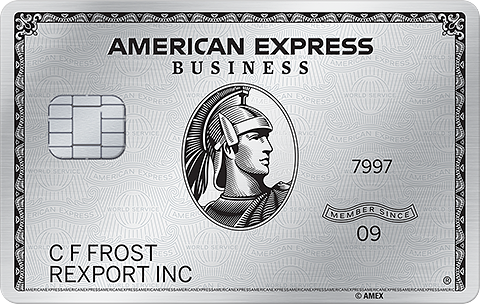
The Business Platinum Card® from American Express: Best for premium travel benefits
- Annual fee: $895
- Travel rewards: 5X points on flights and prepaid hotels on AmexTravel.com. 2X points on purchases at U.S. construction material & hardware suppliers, electronic goods retailers and software & cloud system providers, and shipping providers¹, as well as on each eligible purchase of $5,000 or more, up to $2 million of these purchases per Card account per calendar year. 1X points on other eligible purchases.
- Headline credits: Up to $600 per calendar year on eligible prepaid Fine Hotels + Resorts or The Hotel Collection bookings, split into $300 semiannual credits. The Hotel Collection requires a 2-night minimum, and Fine Hotels + Resorts bookings will require 2 nights starting January 1, 2027.Also includes up to $200 annually for incidental fees with one selected qualifying airline and up to $200 annually on eligible Hilton purchases, split into $50 quarterly credits after enrollment.
- Who it fits: Frequent travelers who can use the hotel credits without booking more expensive stays just to collect them. Travelers who value access to Centurion Lounges, Priority Pass lounges after enrollment, and 10 Delta Sky Club visits per benefit year on eligible Delta itineraries — but check access and guest restrictions before assigning those benefits a dollar value. Read Nav’s Business Platinum review for a closer look at the pros and cons.
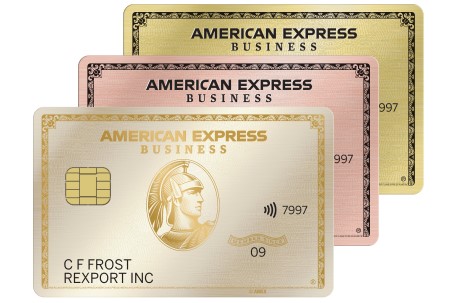
American Express® Business Gold Card: Best for category spending
- Annual fee: $375
- Travel rewards: Earn 4X Membership Rewards® points on the top two eligible categories where your business spends the most each month from 6 eligible categories. Earn up to $20 in statement credits monthly after you use the Business Gold Card for eligible U.S. purchases at Grubhub, Office Supply Stores, and shipments at UPS.com. This can be an annual savings of up to $240. Enrollment required.
- Headline credits: Up to $20 monthly for eligible U.S. purchases at Grubhub, office supply stores, and shipments at UPS.com, after enrollment.
- Who it fits: Owners who want to earn travel points from expenses such as airfare, advertising, software, or client meals. This is a spending-category pick, not a lounge card—Business Gold does not include airport lounge access.
Capital One Venture X Business: Best for premium perks at a lower annual fee
All information about the Capital One Venture X Business has been collected independently by Nav. This card is not currently available through Nav. To view available business credit cards, visit Nav’s credit card marketplace.
- Annual fee: $395.
- Travel rewards: 10X miles on hotels and rental cars and 5X on flights and vacation rentals booked through Capital One Business Travel. Earn 2X on other purchases.
- Headline credits: A $300 annual credit for bookings through Capital One Business Travel. You also receive 10,000 bonus miles each account anniversary.
- Who it fits: Owners who want lounge access and transferable miles without an annual fee approaching $800 or more. The $300 credit does much of the work here, so this card makes more sense if you’re comfortable booking through Capital One Business Travel. Read Nav’s Venture X Business review for a closer look at the trade-offs.
Ink Business Preferred® Credit Card: Best for travel and advertising spending
All information about the Ink Business Preferred® Credit Card has been collected independently by Nav. This card is not currently available through Nav. To view available business credit cards, visit Nav’s credit card marketplace.
- Annual fee: $95.
- Travel rewards: Earn 3 points per $1 on the first $150,000 spent in combined purchases on travel, shipping purchases, Internet, cable and phone services, advertising purchases made with social media sites and search engines each account anniversary year. Earn 1 point per $1 on all other purchases-with no limit to the amount you can earn.
- Headline credits: No broad annual travel credit. Current benefits include complimentary DashPass for at least 12 months when activated by December 31, 2027, plus a $10 monthly discount on an eligible nonrestaurant DoorDash order while enrolled.
- Who it fits: Businesses with regular travel or digital advertising expenses that want transferable points and travel insurance benefits without a premium annual fee. You don’t need to book through Chase Travel to earn the card’s standard 3X travel rate.
Chase Sapphire Reserve for Business: A newer premium option for direct bookings
All information about the Chase Sapphire Reserve for Business has been collected independently by Nav. This card is not currently available through Nav. To view available business credit cards, visit Nav’s credit card marketplace.
- Annual fee: $795.
- Travel rewards: 8X Ultimate Rewards points through Chase Travel and 4X on flights and hotels booked directly. Earn 3X on the first $1 million in social media and search engine advertising purchases each account anniversary year, then 1X.
- Headline credits: A $300 travel credit each account anniversary year, plus up to $500 per calendar year for eligible prepaid stays of at least 2 nights with The Edit, capped at $250 per transaction.
- Who it fits: Frequent travelers who prefer booking directly with airlines and hotels but who still want premium benefits. The primary cardholder’s lounge access includes up to 2 guests, which may be more useful for trips with a colleague than a card that charges for guests.
Best flat-rate business travel cards
Not every business expense fits a bonus category. These cards earn 2X on everyday purchases, whether you’re paying for a flight or restocking supplies. Venture Business has no earnings cap, while Blue Business Plus limits its everyday 2X rate to $50K in annual purchases.
Capital One Venture Business: Best for uncapped flat-rate miles
All information about the Capital One Venture Business has been collected independently by Nav. This card is not currently available through Nav. To view available business credit cards, visit Nav’s credit card marketplace.
- Annual fee: $95
- Travel rewards: Unlimited 2X miles on purchases, with 5X on hotels, vacation rentals, and rental cars booked through Capital One Business Travel. Miles can transfer to participating travel partners or reimburse eligible travel purchases.
- Headline credits: A $50 annual credit for Capital One Business Travel bookings and up to $50 annually for purchases at qualifying advertising or software merchants
- Who it fits: Owners who want one card for most business purchases and expect to spend more than $50K a year. Using both annual $50 credits would cover the fee, but only count them if they replace purchases you would make anyway.
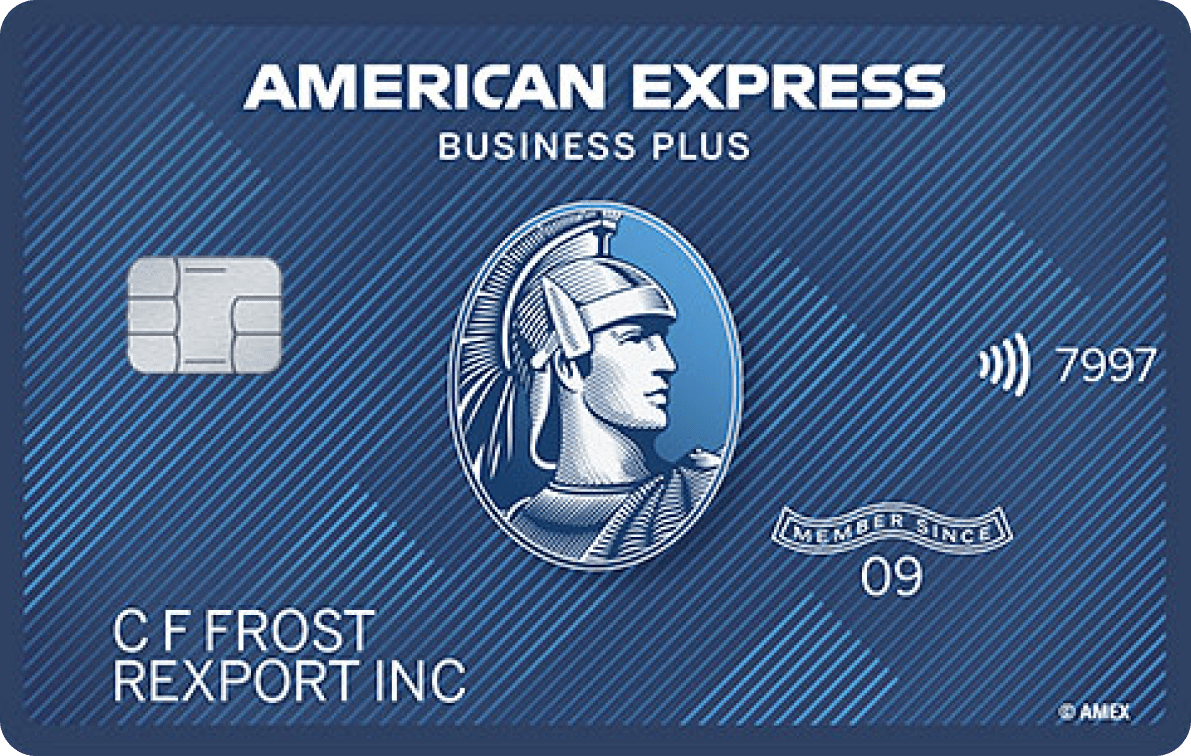
The Blue Business® Plus Credit Card from American Express: Best for transferable points without an annual fee
- Annual fee: $0
- Travel rewards: Earn 2X points on everyday business purchases such as office supplies or client dinners. 2X applies to the first $50,000 in purchases per year, 1 point per dollar thereafter. Terms and limitations apply.
- Headline credits: No standing annual travel credit
- Who it fits: Businesses spending up to $50K a year that want transferable points without paying an annual fee. It can also cover purchases that don’t earn bonus rewards on another card. Read Nav’s Blue Business Plus review for a closer look at the card.
Which airline business credit card is best?
The best airline business credit card is usually the one for the airline your business already flies most. An airline card decision is made for you if your business is located in or regularly has clients near a hub. An airline card earns its place through benefits you use on that airline—not a reason to book a less convenient flight. If you book several carriers depending on the route, schedule, or price, a flexible points card is generally a better fit.
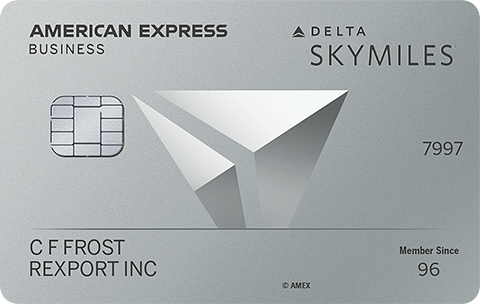
Delta SkyMiles® Platinum Business American Express Card: Best for a companion certificate at a lower fee
- Annual fee: $350
- Travel rewards: Earn 1.5X miles* on eligible transit and U.S. shipping purchases, plus single eligible purchases of $5,000 or more. Terms and miles cap apply.
- Airline perks: First checked bag free on eligible Delta flights, a second checked bag free on eligible domestic Delta flights, Zone 5 priority boarding, and 15% off the miles required for eligible Delta-operated award flights booked through Delta
- Other benefits: Annual companion certificate received after renewal, which covers an eligible Delta Main round-trip itinerary to domestic, Caribbean, or Central American destinations. Up to $200 annually for prepaid Delta Stays bookings
- Who it fits: Delta regulars who can use the Delta benefits and credits. This card does not include complimentary Delta Sky Club access.
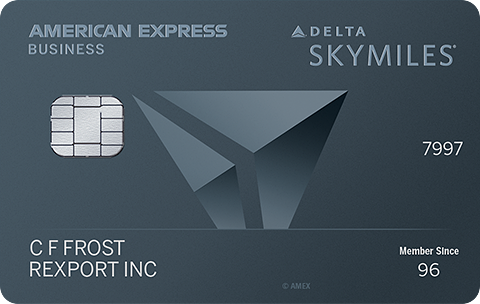
Delta SkyMiles® Reserve Business American Express Card: Best for Delta lounge access
- Annual fee: $650
- Travel rewards: Earn 3 miles per dollar on eligible Delta purchases.
- Airline benefits: First checked bag free on eligible Delta flights, a second checked bag free on eligible domestic Delta flights, Zone 5 priority boarding, and 15% off eligible Delta-operated award bookings through Delta, plus 15 Delta Sky Club visits per Medallion year on eligible itineraries and four one-time guest passes, along with unlimited Centurion Lounge access when flying Delta
- Other benefits: An annual companion certificate after renewal for eligible Delta First, Delta Comfort, or Delta Main round trips to domestic, Caribbean, or Central American destinations, plus up to $250 annually for prepaid Delta Stays bookings
- Who it fits: Frequent Delta flyers who check bags, use airport lounges, and can redeem the companion certificate for a trip they would otherwise pay for
Spending $75K on the card in a calendar year unlocks unlimited Sky Club visits. Before aiming for that threshold, consider whether those purchases would earn more valuable rewards on another card.
For the full Delta Card lineup, check out Nav’s guide to Delta business credit cards.
JetBlue Business Card: Best for JetBlue regulars
The $99 annual fee includes a first checked bag free for you and up to 3 eligible companions on the same reservation, plus 5,000 points after each account anniversary. Earn 6X points on eligible JetBlue and Paisly purchases, 2X at restaurants and office supply stores, and 1X elsewhere. You also get 10% of your redeemed points back after traveling on a JetBlue-operated award flight.
All information about the JetBlue Business Card has been collected independently by Nav. This card is not currently available through Nav. To view available business credit cards, visit Nav’s credit card marketplace.
United and Southwest flyers can also consider the United Business Card, Southwest Rapid Rewards Premier Business Credit Card, and Southwest Rapid Rewards Performance Business Credit Card. United Business includes 2 United Club one-time passes annually, while Southwest Performance Business offers Preferred seat selection at booking and Extra Legroom upgrades within 48 hours of departure, when available. All information about these cards has been collected independently by Nav. These cards are not currently available through Nav.
Best hotel business credit cards
A hotel business card makes the most sense when you already stay with that chain. Look beyond the points earned per dollar: An annual free night, useful elite benefits, or a room discount may do enough to cover the annual fee.
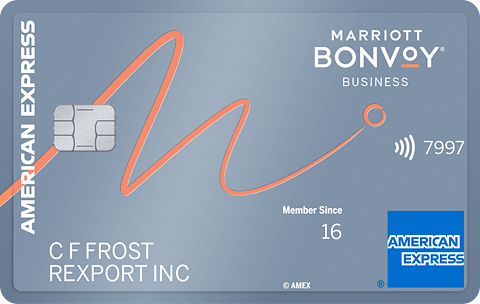
Marriott Bonvoy Business® American Express® Card: Best for Marriott regulars
- Annual fee: $125
- Travel rewards: 6x points on each dollar of eligible purchases at hotels participating in the Marriott Bonvoy® program. 4x points for purchases made at restaurants worldwide, at U.S. gas stations, on wireless telephone services purchased directly from U.S. service providers and on U.S. purchases for shipping. 2x points on all other eligible purchases.
- Headline benefits: An annual Free Night Award after renewal for a redemption of up to 35,000 points, complimentary Gold Elite status, 15 Elite Night Credits each calendar year, and a 7% discount on eligible direct bookings under the Amex Business Card Rate
- Who it fits: Owners who regularly stay at Marriott properties and who can use the annual award for a night they would otherwise pay for, keeping in mind that some hotels charge resort fees
Read Nav’s Marriott Bonvoy Business review for a closer look at the card.
If your work trips put you at Holiday Inn, Kimpton, or other IHG properties instead, consider the IHG One Rewards Premier Business.
Corporate cards for business travel
Once employees are booking flights and submitting receipts, spending controls may matter more than lounge access. Corporate charge cards can let you set employee limits, enforce travel policies, and track expenses without requiring a personal guarantee. You’ll need to pay the balance in full on the agreed schedule rather than carry it month to month.
Ramp pairs cash-back rewards with employee cards and expense controls. To apply, you need an eligible U.S. corporation, LLC, or limited partnership and at least $25K in a linked U.S. business bank account. Sole proprietors aren’t eligible.
Brex offers travel rewards and spending controls for eligible incorporated businesses. Funded startups generally need at least $50,000 in cash to qualify for monthly payments, though some partner referrals may qualify with less. Requirements differ for established companies and daily-payment accounts.
Compare both with other business credit cards without a personal guarantee. No personal guarantee doesn’t mean automatic approval—the business still has to qualify on its own finances.
What are the different types of business travel credit cards?
Business travel credit cards fall into 4 main categories. The right type depends on whether you regularly book with one airline or hotel brand, want more flexible rewards, or need to manage employee travel spending.
- General travel credit cards: These cards offer travel rewards you can typically redeem for different travel-related expenses without booking with a particular brand, and depending on the card, you may be able to use points to cover eligible travel purchases, book flights or hotels, or transfer rewards to participating loyalty programs
- Co-branded airline credit cards: Airlines partner with credit card issuers to offer rewards through their frequent flyer programs, and while these cards generally offer less flexibility than general travel cards, they often come with airline-specific perks such as companion certificates, priority boarding, or free checked bags
- Co-branded hotel credit cards: These cards offer rewards and perks with a specific hotel brand, letting you earn points in its loyalty program and redeem them for stays, with benefits that may include annual free night awards, elite status, or room discounts
- Corporate cards: These cards combine employee spending controls and expense tracking with rewards, typically require payment in full, and may approve eligible businesses based on company finances without a personal guarantee
One type isn’t better for every business, and you might consider holding more than one travel card. If you consistently fly one airline, its checked-bag benefits and other perks may justify keeping a co-branded card alongside a general travel card for other purchases.
If you don’t yet qualify for these options, compare business credit cards for fair credit.
How to get the most from a business travel credit card
Before you apply, consider the welcome offer’s spending requirement and deadline. Put planned business purchases on the card to meet it — not extra purchases made just to earn a bonus.
After that, use the card for expenses that earn bonus rewards. When booking a trip, compare the points required through the issuer’s portal with the cost of transferring to an airline or hotel partner, including any taxes and fees. Check availability before transferring.
Enroll in credits that require activation, and set reminders for ones you’ll actually use. Most importantly, pay your statement balance in full each month. Interest can cost more than the rewards you earn.
Do business travel credit cards include travel protections?
Some business travel credit cards include trip cancellation and interruption coverage, baggage protection, and rental car coverage. These benefits may reimburse eligible expenses if you cancel for a covered reason, your luggage goes missing, or a rental car is damaged or stolen.
Payment requirements matter. Some benefits require the full roundtrip fare or rental cost to be charged to the card, while others cover trips paid partly with the card or eligible rewards. Rental car coverage generally also requires declining the rental company’s collision insurance.
Check your card’s benefits guide before booking. Coverage limits, exclusions, eligible travelers, and claim deadlines vary by card — not every travel card includes every protection.
How we chose the best travel business credit cards: Methodology
Nav’s business travel card rankings are designed to evaluate credit cards from the perspective of a typical small business owner, particularly businesses with five or fewer employees that prioritize cost efficiency, practical travel utility, flexibility, and sustained return on investment over high-overhead luxury perks.
The methodology uses a weighted scoring model combining measurable card features with audience-fit adjustments intended to reflect the real-world needs of Nav readers. The goal of the methodology is not to highlight cards with outsized annual fees that require impractical spending thresholds to justify, but rather to identify the most accessible, valuable, and sustainable options for small business travel.
Core methodology
Each card receives a normalized score across key evaluation criteria. Raw values are converted into standardized 0–100 scores to ensure no single metric disproportionately skews the rankings before weighting is applied.
Primary scoring components include:
- Travel rewards value: Measures estimated ongoing net rewards earned annually across standardized business travel and everyday baseline spending.
- Annual fee value: Evaluates ongoing carrying costs, heavily rewarding low- and no-fee cards while penalizing steep recurring overhead.
- Travel benefits: Measures essential, business-relevant travel protections, insurance coverages, and fee waivers.
- Welcome bonus value: Measures the estimated cash-equivalent value of introductory sign-up offers.
- Category picks for frequent travelers are chosen separately from the scoring model.
Standardized spend assumptions
To ensure balanced and consistent comparisons across every product, the methodology applies the same hypothetical annual business spend profile:
- General business purchases: $7,500
- Dedicated travel purchases: $5,000
- Total modeled annual spend: $12,500
These spend assumptions were selected to represent typical spending patterns for smaller, growing enterprises rather than enterprise-level corporate budgets.
Rewards valuation
Points and miles are not created equal. To prevent inflated marketing claims and create a true apples-to-apples comparison between cash-back cards, flexible bank point currencies, airline miles, and hotel points, the model converts all rewards into estimated dollar-equivalent values.
- Valuations are derived from aggregated independent benchmarks (including The Points Guy, NerdWallet, Upgraded Points, and AwardWallet).
- We apply an estimated typical value to each currency (e.g., Chase Ultimate Rewards at 1.5¢, Amex Membership Rewards at 1.9¢, Capital One Miles at 1.8¢, and hotel currencies such as IHG One Rewards at 0.6¢).
- This approach prevents cards with high nominal point multipliers but low per-point valuations from artificially dominating the rankings.
The bottom line
Choose a business travel credit card based on how you book trips, whether that means sticking with one airline, shopping around, or managing travel for employees. Match the annual fee to your spending and the benefits you’ll actually use — not the advertised value of every perk. Compare current offers in Nav’s business credit card marketplace.