
Compare soft pull business credit cards for business owners in 2026

Summary
- When you apply for a business credit card, your personal credit could be impacted. A majority of small business cards run a hard inquiry on your personal credit report, which can temporarily lower your credit score by a few points.
- Soft pull credit cards typically run a quick prequalification check before formally considering your application — giving you a strong idea of whether or not you’ll be approved before committing without impacting your credit.
- A hard credit check impacts your credit scores while a soft credit check does not. No-hard-pull cards avoid the impact on your personal credit, but they’re rare and don’t always work the same way as a classic business card.
- This article will walk you through what to consider, what your best options are, and what to watch for if this is the route you choose.
Editorial note: Our top priority is to give you the best financial information for your business. Nav may receive compensation from our partners, but that doesn’t affect our editors’ opinions or recommendations. Our partners cannot pay for favorable reviews. All content is accurate to the best of our knowledge when posted.
Compare soft pull business credit cards in 2026
Though most small business cards require a full hard inquiry to run your application, here are a few cards that advertise as having no impact on your personal score. All applications are subject to credit approval.
Card | Best for | Card type | Credit check approach* | Personal guarantee | Credit reporting** |
BILL Divvy Card | Expense management + rewards | Charge card | Soft pull | No | Business |
Capital on Tap Business Credit Card | Cash back | Credit card | Soft pull | Yes | May report to personal |
Ramp Business Credit Card | Scaling businesses | Charge card | No personal credit check | No | Business |
Brex Card | Funded businesses | Charge card | No personal credit check | No | Business |
Rho Corporate Card | Startups designed to scale | Charge card | No personal credit check | No | Business |
*If your goal is building credit, look for a business credit card that reports to business credit bureaus.
**Reporting policies vary by issuer and may change based on account behavior or guarantees
BILL Divvy Corporate Card
Best for: Expense management with built-in rewards.
Eligibility: Although there aren’t strict published requirements, business owners are more likely to be approved if they have at least $20,000 in an active account and hold good or better credit.
Notable limitations: Cardholders must pay in full each month.
The BILL Divvy Corporate Card is popular for its robust expense management features. The issuer indicates the credit check is a soft pull and typically does not impact your credit scores.
It offers rewards, though the rate varies based on both purchase categories and how often you pay your bill: Up to 7x points, based on payment settings. All charges made on this charge card are due and payable when you receive your periodic statement
Note that business owners who apply are more likely to be approved if they have:
- At least two years in business, OR
- At least $50,000 in a business bank account, OR
- $500,000 or more in annual revenue,
- OR a credit score of at least 680
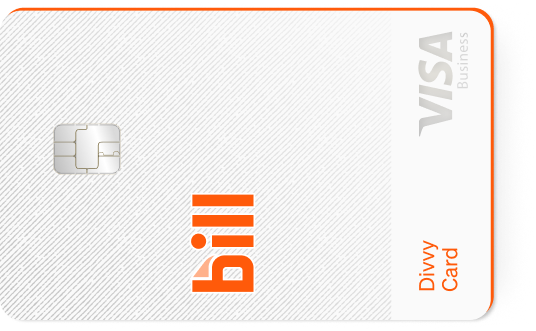
BILL Divvy Corporate Card
Eligibility based more on revenue, requires full repayments monthly.
Pros
- Free and flexible expense management platform
- No annual fee.
Cons
- No early spend bonus and lower rewards than other cards
- Must pay off all balances in full each month.
Intro APR
Purchase APR
Annual Fee
Welcome Offer
Capital On Tap Business Credit Card
Best for: Simple cash back with fast approvals (for those who qualify).
Eligibility: To qualify, you must:
- Have an active business that has been operating at least six months
- Have revenue of $2,500 or more per month.
- Make money mostly from goods or services
Notable limitations: As with most small business credit cards, a personal guarantee is required.
The Capital On Tap business card offers unlimited 1.5% cash back that can be boosted to 2% when using weekly AutoPay. It’s a strong option for businesses that don’t want to give up rewards while prioritizing lower-impact applications. The application process for the Capital On Tap Business Credit Card is fast and simple and the issuer states it will have no impact on your personal credit score.
Ramp Business Credit Card
Best for: Businesses with strong cash flow.
Eligibility: To qualify, you must:
- Be registered and hold a physical address in the U.S.
- Be a corporation, LLC, or LP (individuals, sole proprietors, and unregistered businesses do not qualify)
- Have a minimum of $25,000 cash in a bank account linked to your application
- Have most of your operations and corporate spending in the U.S.
Notable limitations: This card requires payment in full each billing cycle, as well as linking a bank account.
Approval for the Ramp Business Credit Card is based on your company’s cash balance and financial health, making it a good fit for owners who don’t want to affect their personal credit. Ramp also offers unlimited cash back, generous partner offers, and powerful expense management tools that automatically categorize transactions, collect receipts, and integrate with accounting platforms.
Brex Card
Best for: Funded startups or businesses with revenue.
Eligibility: Brex requires applicants to:
- Be incorporated in the U.S. with an employer identification number issued by the IRS
- Hold a physical U.S. address
- Show receipt (or a path toward) equity investments of any type and/or show more than $1 million in annual revenue
Notable limitations: Many Brex accounts require daily payments of their balance, unless business financials are established as strong enough to qualify for monthly payments.
Brex is one of the best-known corporate cards that doesn’t require a personal credit check or guarantee. Its card is designed for startups and high-growth companies. For companies that qualify, it offers strong rewards of up to 7X and strong expense controls and automations. Rewards rates and eligibility are subject to terms and conditions.
Rho Corporate Card
Best for: Startup teams looking for spending controls as they grow.
Eligibility: Only U.S.-based businesses are eligible. There are no stated minimum revenue requirements.
Notable limitations: Not available to sole proprietors or unincorporated businesses.
The Rho Card offers straightforward rewards paired with a full suite of financial tools, including real-time expense tracking, automated receipt capture, and integrations with accounting platforms like QuickBooks and NetSuite. However, the pay-in-full structure means it's best suited for companies with consistent cash flow, which can make it less flexible for newer or less predictable businesses.
What does “soft pull” mean for business credit cards?
A soft pull (or soft inquiry) is a credit check that doesn’t impact your credit scores. A hard pull does — and if your credit score is borderline, that margin might make a difference in applications.
Soft pulls are commonly used during:
- Prequalification tools
- Identity verification
- Account reviews
- Some corporate card applications
Many card issuers will use a soft pull first, but may still perform a hard pull later during final underwriting.
Soft pull vs. hard pull: What’s the difference?
Soft pull | Hard pull | |
Impacts credit score | No | Yes |
Visible to other lenders | No | Yes |
When it happens | During prequalification or ongoing monitoring | When submitting final application |
Commitment level | Low | High |
Do business credit cards do soft pulls?
Many cards use a business credit card soft pull process, but not exclusively. For instance, when you check your own credit score, receive a preapproved credit offer in the mail, or when your card issuer reviews your credit report to determine whether you are eligible for a credit line increase, they often run a soft inquiry.
It is much less common for a business credit card to only run a soft pull for final approval, though it often varies by card type:
- Traditional business credit cards most commonly include a hard pull on your personal credit for approval.
- Corporate, or charge-style, cards may avoid checking your personal credit entirely and instead make a decision based solely on your business finances. These cards are also lower risk to the issuer, since payment is due in full each billing cycle.
- Secured business cards are backed by a security deposit and thus may be easier to be approved for. Because of this, credit check requirements may vary and some may only require a soft pull with your application.
As you’re reading the fine print before applying, you may find some clues in how things are worded. Prequalification is almost always a soft pull, while a full application usually triggers a hard inquiry. If the card specifically advertises “no impact to your credit”, this often indicates a soft inquiry, but you should confirm terms before applying. However, any mention that the issuer “may check credit” means you should expect a hard pull.
Types of business cards that may avoid a hard pull
Corporate cards and spend management cards
Corporate cards focus on your business financial health rather than your personal credit history, which means you won’t see a hard inquiry on your account. In fact, many are EIN-only business credit cards. Applications may require additional information on your business cash balance, revenue, liabilities, and bank data.
For established businesses, this could be a good solution. However, common trade-offs may include that you need to pay in full each month and may need to link your bank account as part of the application process or for ongoing monitoring. Startups or businesses without proven, stable revenue and finances may not qualify.
Secured business credit cards
Secured business credit cards are backed by a deposit (which becomes your credit limit). Since the card issuer isn’t extending you a traditional line of credit or taking on the risk that your balance goes unpaid, some may avoid a hard pull. Nevertheless, secured cards may still include a hard inquiry, with policies varying by card.
Secured cards may help build credit over time, depending on reporting and usage because your activity is reported to credit bureaus.
On-time payments and using your card responsibly can also lead to improvements in your score over time when the card is used responsibly. However, you’ll need to front the deposit — and continue to pay your bill in full in order to access your full credit limit.
Business debit cards with controls
Business debit cards with controls aren’t a credit card at all. You’ll need to fully fund every transaction at the time of purchase, just like any debit card. However, the built-in controls can still be a useful tool for small businesses. You may be able to set spending limits on individual employee cards, restrict certain spending categories, freeze accounts, or block transactions. These can also be useful for tracking and organizing spending for accounting purposes.
Since these are debit cards, they generally don’t build credit for the future. But, you may get the expense tracking and management tools you need without engaging in a hard inquiry.
How to reduce hard pulls
You can minimize the number of hard pulls and impact on your credit score with this approach:
- Look for options that let you prequalify for a business credit card. This can help you estimate your odds of approval with no impact to your credit.
- Prioritize corporate-style cards, if applicable. These often avoid personal credit checks, if your business is a candidate for approval.
- Confirm whether your intended card requires a personal guarantee. Personal guarantees nearly always imply you will receive a hard pull.
- Apply strategically. Only apply for credit cards when they offer obvious benefits compared to your existing financial resources. Don’t apply if your approval is a long shot.
- Be prepared with financial data and records. Providing clear, accurate information on your business financial profile helps ensure your application isn’t denied for lack of detail.
How do soft pull credit cards affect business credit and personal credit?
Soft pulls themselves do not affect your credit, but any activity from accounts opened after a soft pull can still be reported to credit bureaus, impacting your score. Not all cards report to personal credit bureaus, though.
In general, responsible behavior like paying on time can improve your credit, while late payments or accounts turned over to collections could be reported negatively on your credit report.
Card type | Personal guarantee | Reports to business bureaus | Reports to personal bureaus | Biggest risk |
Business card | Yes | Yes | Often | Missed payments impact personal score |
Corporate card | Usually no | Yes | Rarely | Cash flow issues |
Secured card | Usually yes | Yes | Sometimes | Deposit tied up |
Soft pull credit card alternatives
If you’re a newer business, or otherwise have low or no business credit, aiming for a corporate card or other no hard pull business card might not be possible. Instead, you may want to focus on one or more of these strategies:
- Initiate and build your business credit by registering for an EIN and D-U-N-S profile
- Establish vendor accounts or trade lines that report to your business credit
- Consider a secured business card to build (or rebuild) your credit
If absolutely necessary, you may also consider using an existing personal card for your business expenses. This is best done as a temporary bridge rather than a permanent solution. When doing so, ensure there’s clear separation from your personal finances — try to use separate cards for personal and business expenses — and only use the personal card long enough to build your credit and business finances enough to later qualify for a distinct business card.
Bottom line
Soft pull business cards exist, but they’re rare (and often misunderstood). Very few credit cards truly avoid hard inquiries, though many start with a soft pull as a prequalification tool.
In most cases, a soft pull card will mean heading down the path of obtaining a corporate card, where only your business finances are evaluated. If you have steady cash flow, you may have more options than you think. If your business doesn’t qualify for a corporate card, you’ll most likely need to accept a hard inquiry, but strategically applying for the right card at the right time can help limit the number of overall pulls.
Frequently asked questions
Rate this article
This article has not yet been rated

Becky Pokora
Contributor
Becky Pokora is a credit expert and financial writer who specializes in helping people make smarter decisions with credit. She previously owned and operated a small business, giving her firsthand experience navigating cash flow, credit, and financial tradeoffs from a business owner’s perspective. Additionally, Becky has covered credit cards, lending, and personal finance for Forbes Advisor and other major publications, translating complex rules and fine print into clear, practical guidance. When she’s not writing, you’ll find her hiking in the mountains, traveling, or spoiling her dog.

Robin Saks Frankel
Senior Content Editor
Robin has worked as a personal finance writer, editor, and spokesperson for over a decade. Her work has appeared in national publications including Forbes Advisor, USA TODAY, NerdWallet, Bankrate, the Associated Press, and more. She has appeared on or contributed to The New York Times, Fox News, CBS Radio, ABC Radio, NPR, International Business Times and NBC, ABC, and CBS TV affiliates nationwide.
Robin holds an M.S. in Business and Economic Journalism from Boston University and dual B.A. degrees in Economics and International Relations from Boston University. In addition, she is an accredited CEPF® and holds an ACES certificate in Editing from the Poynter Institute.