

Business charge cards vs. business credit cards: What’s the difference?

Summary
- Business credit cards and business charge cards are two different financial tools that can help small business owners increase cash flow.
- The main difference between business charge cards vs. business credit cards is with payments.
- Charge cards require full payment at the end of the billing cycle while credit cards let you roll over your balance.
- Understand the similarities and key differences between credit cards and charge cards so you can choose the right card for your business.
Editorial note: Our top priority is to give you the best financial information for your business. Nav may receive compensation from our partners, but that doesn’t affect our editors’ opinions or recommendations. Our partners cannot pay for favorable reviews. All content is accurate to the best of our knowledge when posted.
Why business charge cards and business credit cards are often confused
Business charge cards and business credit cards are often confused because they’re both financial tools designed for business use, and they share some similarities. However, they also have significant differences in how they work and the terms associated with them.
The primary difference between business charge cards and business credit cards lies in how providers require you to handle payments. Charge cards require full payment monthly (or at the end of the billing cycle, which could be weekly or daily), while credit cards allow for revolving credit.
What is a business charge card?
A business charge card is a financial tool designed for businesses to help manage expenses, make purchases and access short-term credit without carrying a balance from month to month. Business charge cards require the cardholder to pay the entire balance in full each month (or weekly or daily, depending on the billing cycle). There may be no preset spending limit and no interest charged since you must pay off the full balance.
You’ll likely pay a fee for a late payment with a business charge card.
What is a business credit card?
A business credit card is another financial tool that provides businesses with a line of credit to make purchases and manage their finances. It offers the flexibility to carry a balance but comes with interest charges if the balance is not paid in full each month. Businesses can use business credit cards to streamline expenses, earn rewards, and build their credit history.
Business credit cards require cardholders to make a minimum monthly payment. They also come with a preset credit limit, which represents the maximum amount of credit that the business can use at any given time.
Similarities and differences between a business charge card and a credit card
Here’s an overview of the similarities and differences of charge cards vs. credit cards:
Similarities
Let’s first explore how charge cards and business cards are similar to each other.
Business use
Both business charge cards and business credit cards are intended for business expenses. They’re not personal credit cards and are meant to help businesses manage their finances, track expenses, and make purchases related to their operations.
Payment flexibility
One of the primary reasons for the confusion is that both types of cards offer payment flexibility. With both business charge cards and credit cards, businesses can make purchases without using cash upfront, which can be essential for managing cash flow.
Credit reporting
Both types of cards may report the cardholder’s payment history to credit bureaus, which can impact the business’s credit score. These two cards can affect a business’s credit profile similarly and help you build credit.
Qualification criteria
Qualification requirements for both types of cards can be similar, including the need for a strong credit history and a well-established business. However, there are cards that don’t have strict requirements for their cardholders.
Differences
Now let’s look at how charge cards and credit cards differ from each other.
Repayment requirements
The critical distinction between the two lies in how payments are made. With a business charge card, the balance must be paid in full every month, while a business credit card allows cardholders to carry a balance with interest charges.
Preset spending limit
Unlike credit cards, business charge cards typically do not have a preset spending limit. This means that cardholders have the flexibility to make purchases as long as they pay the balance in full each month. While charge cards don’t have a set credit limit, they do have an implicit spending limit based on the cardholder’s ability to pay off the balance.
Revolving credit
Business credit cards offer a revolving credit line while charge cards don’t. This means cardholders can carry a balance from month to month, and they only need to make minimum payments. They can also choose to pay the balance in full to avoid interest charges.
Interest rates
Charge cards don’t charge interest while credit cards do (in the form of an annual percentage rate or APR). Because you have to pay off a charge card’s balance in full at the end of the billing cycle, you won’t get charged interest. (You will likely have to pay a late fee if your payment comes in after the due date, however.) On the other hand, because credit cards allow you to hold a revolving balance, you’ll pay interest on any remaining statement balance.
Fees and perks
Both business charge cards and credit cards may come with annual fees and late fees, although the fees and the associated benefits can vary significantly. Their perks are usually quite different, however. Some business credit cards offer rewards programs, cashback, or travel benefits, while charge cards may not offer rewards.
-1440x1089.webp)
How to get a business charge card
Getting a business charge card is a process that involves several steps, including application, qualification, and approval.
Here’s a step-by-step guide on how to get a business charge card:
1. Shop around
Before applying for a business charge card, assess your business’s financial needs and requirements. Consider factors such as your spending habits, the type of expenses you’ll be charging to the card, and any specific benefits or features you want in a card (e.g., rewards, expense management tools).
2. Gather documentation
Card issuers will require specific documentation to verify your business’s information. Common documents may include:
- Business legal structure (e.g., sole proprietorship, LLC, corporation)
- Employer identification number (EIN) or Social Security number (SSN)
- Business financial statements (profit and loss, balance sheet)
- Personal and business tax returns
- Business registration and licenses
3. Check your creditworthiness
Your personal credit history can significantly impact your eligibility for a business charge card. Check your personal and business credit reports to ensure they are accurate and in good standing. Card issuers may use both your personal and business credit when evaluating your application. It is usually more challenging to get a business credit card or charge card with bad credit.
Although business credit may not impact your application, it’s important to learn how to establish business credit scores to increase your funding options in the future.
4. Research card options
Research different business charge cards offered by various card issuers. Compare features, benefits, annual fees, rewards programs, and terms to find a card that aligns with your business’s needs and preferences. Using Nav is the easiest way to find the best business card for you, from 90+ options.
5. Apply for the card
You may need to provide information about your business, personal details, and financial information. Complete the application accurately and thoroughly.
6. Wait for approval
The card issuer will review your application and may perform a credit check. This process can take a few minutes to a few weeks, depending on the issuer and their evaluation process.
7. Provide additional information (as needed)
If the card issuer requires additional information or documentation to process your application, be prepared to submit these promptly. Delays in providing requested information can affect the approval process.
8. Receive and activate the card
Once your application is approved, the card issuer will send you the business credit card by mail. Activate the card following the issuer’s instructions.
How to get a business credit card
The process of applying with a credit card issuer is very similar to the process explained above for business charge cards. Your personal credit score matters more than your business credit scores when you’re applying for business credit cards, so make sure you’re informed about your current credit score. You’ll also need to provide similar documentation during the application process.
Finding the best credit cards to fit your specific business needs is easiest by using Nav.
Make sure you manage any card responsibly. After receiving your credit card, make purchases within your means and pay the balance in full each month to avoid late payment fees and interest charges. Utilize the card’s features for expense tracking and management.
Remember that eligibility and approval for a business charge card may vary depending on the card issuer’s criteria and your business’s financial situation. It’s essential to choose a card that suits your business’s needs and to manage it responsibly to maximize its benefits while avoiding unnecessary fees and interest charges.
Best business cards available now
Here are some of the best business cards you can get today.
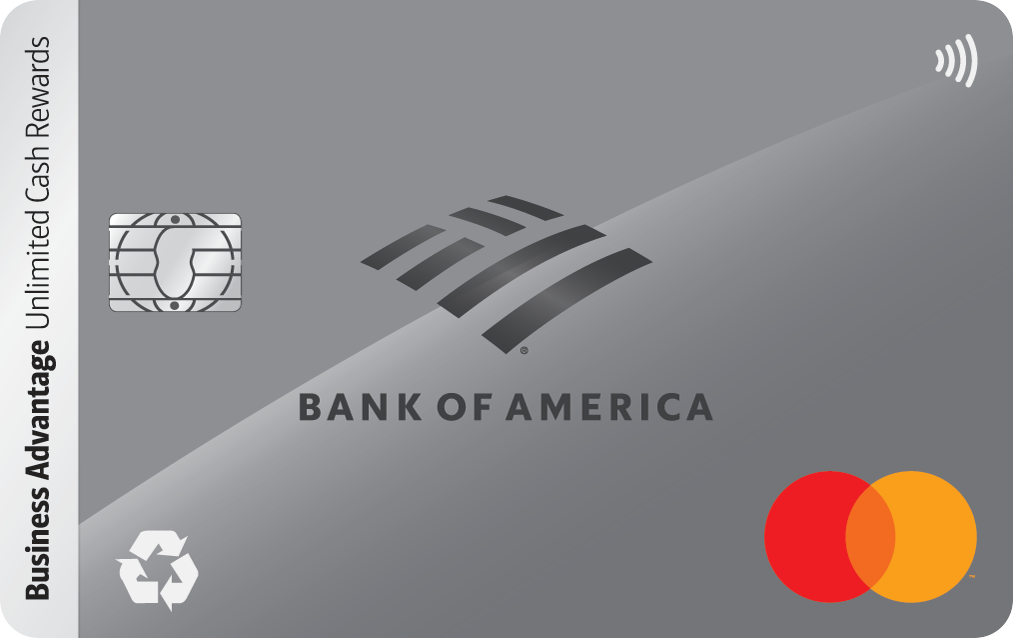
Bank of America® Business Advantage Unlimited Cash Rewards Mastercard® credit card
Intro APR
Purchase APR
Annual Fee
Welcome Offer
The Blue Business® Plus Credit Card from American Express
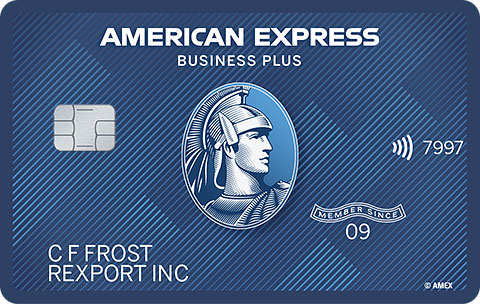
The Blue Business® Plus Credit Card from American Express
A great business card for flexible spending and travel rewards points.
Pros
- Competitive intro APR offer and rewards rate
- No annual fee
- For a limited time, earn Membership Rewards® points on initial spending.
Cons
- Foreign transaction fee.
Intro APR
Purchase APR
Annual Fee
Welcome Offer
BILL Divvy Corporate Card
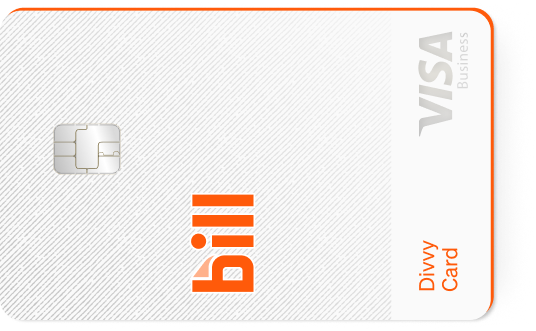
BILL Divvy Corporate Card
Eligibility based more on revenue, requires full repayments monthly.
Pros
- Free and flexible expense management platform
- No annual fee.
Cons
- No early spend bonus and lower rewards than other cards
- Must pay off all balances in full each month.
Intro APR
Purchase APR
Annual Fee
Welcome Offer
Which one should you get?
It depends on your needs. If you need to make large purchases, a charge card can offer more buying power than a credit card because of the lack of preset spending limits. However, you’ll have to make sure you can pay the balance in full by the end of the billing cycle. If you could benefit more from a strong rewards program, a credit card may be better for you.
Consistently making on-time payments and managing your credit responsibly with either card can help build and maintain a positive credit history for your business, which can be beneficial for future financing needs.
Frequently asked questions
Rate this article
This article has not yet been rated

Lyle Daly
Financial Writer
Lyle Daly has been a financial writer for over a decade, covering credit, investing, banking, and more. His work has appeared in The Motley Fool, USA Today, MSN, and Yahoo Finance. As a self-employed writer, he has firsthand experience with managing personal and business finances.

Robin Saks Frankel
Senior Content Editor
Robin has worked as a personal finance writer, editor, and spokesperson for over a decade. Her work has appeared in national publications including Forbes Advisor, USA TODAY, NerdWallet, Bankrate, the Associated Press, and more. She has appeared on or contributed to The New York Times, Fox News, CBS Radio, ABC Radio, NPR, International Business Times and NBC, ABC, and CBS TV affiliates nationwide.
Robin holds an M.S. in Business and Economic Journalism from Boston University and dual B.A. degrees in Economics and International Relations from Boston University. In addition, she is an accredited CEPF® and holds an ACES certificate in Editing from the Poynter Institute.