Best cash back business credit cards in 2026: We've plucked the top ones for you

Written byDia Adams

Reviewed by Robin Saks Frankel

Summary
- Cash-back business cards should make your spending work harder, not give you more homework. So, we pulled together the top options for 2026, from flat-rate earners to category-heavy cards with standout bonuses.
- Remember to keep in mind that the “best” credit card in any category is subjective — which is why we have specific spending profiles in mind when we rank cards. So even though a card technically has a higher score, it’s the card that matches your business’ purchases that is best for you.
- Our guide to the best cash-back business credit cards can help you find the best one for your business.
Best cash-back business credit cards of 2026
All rates and fees valid as of July 21, 2026 and subject to change.
Card name | Best use case | Cash-back rates | Annual fee | Key highlights |
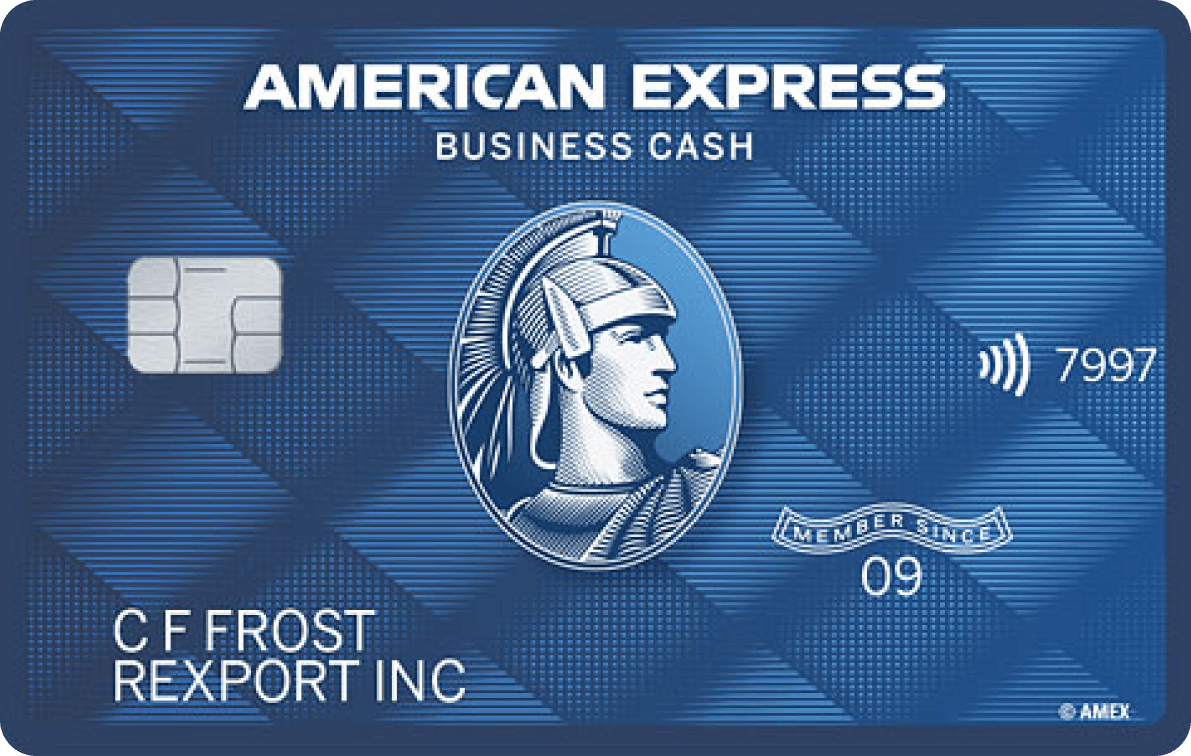
5 stars The American Express Blue Business Cash® Card | Best for businesses that want simple, flat-rate cash back with no annual fee | Earn 2% cash back on all eligible purchases on the first $50,000 of purchases each calendar year, 1% thereafter. | $0 | Strong everyday earn rate, robust benefits, and a 0% on purchases for 12 months from date of account opening |
4.7 stars U.S. Bank Triple Cash Rewards Visa Business Card | Best for businesses with spending in gas, EV charging, office supply, telecom, and restaurant categories | 3% cash back in select categories, plus 1% on other purchases | $0 | High welcome offer, strong category bonuses, 12 month 0% promo APR |
4.7 stars Evergreen Business Edition Credit Card | Best for businesses that want an uncapped flat-rate cash-back card | Unlimited 2% cash back on every purchase | $0 | 2% on unlimited spending, annual bonus points, 6 month 0% promo APR |
4.5 stars Chase Ink Business Unlimited® Credit Card | Best for businesses that want unlimited flat-rate rewards and robust benefits | Earn unlimited 1.5% cash back on every purchase made for your business. | $0 | High welcome bonus, 0% intro APR on purchases for 12 months, primary car rental coverage |
4.3 stars American Express Graphite™ Business Cash Unlimited Card | Best for businesses that have heavy-hitting spending and want no preset credit limit | Get more for your travels with 5% cash back* on flights and prepaid hotel bookings through American Express Travel® Online. Get unlimited 2% cash back* in Reward Dollars on all eligible purchases. | $295 | Premium benefits and a large welcome offer |
4.2 stars Truist Business Cash Rewards | Best for businesses that do all banking with Truist | 3% cash back on gas, 2% at restaurants and office supply (capped at $2K/month), 1% cash back on everything else | $0 | Loyalty bonus based on monthly balance, 9 month 0% promo APR, potential for a lower interest rate than other cards on this list |
4.2 stars Costco Anywhere Visa® Business Card by Citi | Best for Costco members who spend heavily on fuel, dining, travel, and warehouse purchases | 3% cash back on restaurants and eligible travel purchases and eligible travel, including Costco Travel. 2% cash back on all other purchases from Costco and Costco.com. 1% cash back on all other purchases. | $0 with active paid Costco membership | No annual fee, strong fuel rewards |
4.2 stars Sam’s Club Business Mastercard | Best for road warriors and Sam’s Club shoppers | 5% on gas up to $6K/year, 3% on Sam’s Club for Plus members, 3% on dining, 1% elsewhere | $0 with membership | High earnings on gas, dining and Sam’s Club |
4.1 stars Bank of America® Business Advantage Unlimited Cash Rewards Mastercard® credit card | Best for businesses that have significant holdings with Bank of America | 1.5% cash back on all purchases., tiered bonuses for Preferred Rewards Business members | $0 | Preferred Rewards for Business offers big clients strong rewards |
4.1 stars Capital One Spark Cash | Best for businesses with steady, high everyday spend | Unlimited 2% cash back | $0 for the first year, then $95 | Large welcome bonus and a first-year annual-fee waiver |
*Cash back is received in the form of Reward Dollars that can be redeemed as a statement credit and at Amazon.com checkout.
The American Express Blue Business Cash® Card: Best for businesses that want simple, flat-rate cash back with no annual fee
is the easy answer for owners who want no-brainer rewards. Earn 2% cash back on all eligible purchases on the first $50,000 of purchases each calendar year, 1% thereafter. The cash back is automatically credited to your statement.
Key facts
- Welcome bonus: As High As a $500 Statement Credit after you spend $5,000 in purchases on your new Card within the first 3 months of Card Membership. Apply and find out your welcome offer. Welcome offers vary and you may not be eligible for an offer.
- APR: 0% on purchases for 12 months from date of account opening, then a 16.99% - 28.74% Variable
- Annual fee: $0
- Foreign transaction fee: 2.7% of each transaction after conversion to US dollars.
U.S. Bank Triple Cash Rewards Visa Business Card: Best for businesses with category-specific spending
This card stands out because it rewards common business spending categories without charging an annual fee. The card earns 3% cash back at gas stations and EV charging stations, cellphone providers, office supply stores, and restaurants, plus 1% on other purchases. The card also comes with a $100 annual software credit and a hefty $750 welcome bonus.
Key facts
- Welcome bonus: $750 cash back after $6,000 in spend in six months
- APR: Introductory 0% APR for 12 billing cycles, then 17.24% to 26.24% variable
- Annual fee: $0
- Foreign transaction fee: 3%
Evergreen Business Edition Credit Card: Best for businesses that want an uncapped flat-rate cash-back card
Evergreen is built for simplicity: unlimited 2% cash back, no category restrictions, and no annual fee. It also includes a $200 welcome bonus, an annual spending bonus, and a 0% intro APR for the first 6 months.
Key facts
- Welcome bonus: $200 cash bonus after $3,000 in spend within the first 3 billing cycles
- APR: 0% introductory APR on purchases for 6 months; then 17.49% to 28.24% variable
- Annual fee: $0
- Foreign transaction fee: 3%
Chase Ink Business Unlimited® Credit Card: Best for businesses that want unlimited flat-rate rewards and robust benefits
With the Ink Business Unlimited® Credit Card you'll Earn unlimited 1.5% cash back on every purchase made for your business. It also offers a strong welcome bonus and a surprising level of protections for a no-annual-fee card. The card also plays well with others, earning Ultimate Rewards points that are not only worth cash but can also be combined with the points from other eligible Chase cards for outsize value.
Key facts
- Welcome bonus: Earn $900 bonus cash back after you spend $6,000 on purchases in the first 3 months from account opening.
- APR: 0% intro APR on purchases for 12 months, then 18.49% - 24.49% Variable
- Annual fee: $0
- Foreign transaction fee: 3% of each transaction in U.S. dollars
The American Express Graphite™ Business Cash Unlimited Card: Best for businesses that spend big and want no preset credit limit
The Graphite™ Business Cash Unlimited Card is the premium option in this group. The headline is the rewards: Get more for your travels with 5% cash back* on flights and prepaid hotel bookings through American Express Travel® Online. Get unlimited 2% cash back* in Reward Dollars on all eligible purchases.That, paired with a $295 annual fee and an enormous welcome offer along with no preset credit limit, makes it a compelling option for big-spending businesses.
Key facts
- Welcome bonus: Earn $1,500 Cash Back in the form of Reward Dollars after you spend $50,000 in purchases on your new Card within the first 6 months of Card Membership. Reward Dollars can be redeemed as statement credits and at Amazon.com checkout.
- APR: Pay-in-full card with a Pay Over Time option at an APR of 17.99% - 28.74% Variable
- Annual fee: $295
- Foreign transaction fee: None
What is a cash-back business credit card?
A cash-back business credit card is one that rewards business owners in the simplest of ways: giving a small percentage of your spending back to you, often in the form of a statement credit. Some cards keep it simple with one flat rate, while others pay more in the categories businesses hit most often, like advertising, office supplies, gas, or dining.
When used for spending you would do anyway, it’s a no-brainer way for your business to save. Just keep in mind that the interest rate on most credit cards will wipe out any earnings, so don’t buy anything you can’t afford just to get cash back.
Cash-back business credit cards also let you separate your personal and business expenses, which makes tracking things like inventory and supply purchases a lot simpler come tax time. They can come with business-friendly perks such as expense management and integration or free employee cards.
How do cash-back business credit cards work?
Cash-back business cards turn a piece of each purchase into rewards. In the simplest setup, you spend on the card, earn a percentage back, and later redeem that value as cash-like rewards such as a statement credit, direct deposit, paper check, or gift card.
The structure matters. Some cards pay the same rate everywhere, some pay more in selected business categories, and some mix both — a higher rate in bonus categories and a lower base rate on the rest. Most rewards are earned when a purchase posts, then credited to the rewards account or available for redemption according to the issuer’s rules.
Flat-rate cash-back cards
Flat-rate cards keep the math simple: every purchase earns the same percentage, whether it is a software subscription, a restaurant check, or office supplies. That can be a better fit for businesses with mixed spending, because there is no need to keep a running score by category.
Category bonus cash-back cards
Category bonus cards pay more where a business tends to spend most, such as fuel, dining, shipping, or office supplies. They can deliver stronger returns, but bonus rates often come with caps, so the highest earn rate may only apply up to a set amount before dropping back to the base rate.
Do business cash-back cards have rotating categories?
Not typically. Rotating-category cards are more common with personal cards than business ones. These cards change their bonus categories on a quarterly schedule, which can make them lucrative if the spending lines up and the categories are activated on time. The catch is that they ask for more attention—you have to track the calendar and remember to opt in.
Category caps are more common with business cards: for instance, a card may bonus gas spending up to $5,000 per year. With cards like these, tracking is important so you know when to switch to another card if you get close to that threshold.
How to choose the best cash-back business credit card
The best card to choose is the one that lines up with where and how your business already spends money. Start there, then work forward as you consider the hundreds of cards on the market.
Analyze your business spending patterns
Look at your top categories first, be they office supplies, advertising, travel, gas, shipping, dining, and internet or phone service. A three-to-six month expense review is enough to spot the pattern in most businesses, especially if your spending is steady from month to month. (Side note: if you can’t track your spending easily, clean that up before adding a credit card to the mix.)
Once you know where the money goes, match those categories to the card that pays best where you spend. That is usually where the real value shows up — not in the headline rate, but in whether the bonus categories fit what you actually buy.
If your spending is all over the place or you would rather not bother with tracking, consider a flat-rate card. The card will give you a decent rate on everything rather than relying on one type of spending.
In advanced mode, consider one of each: a category-linked card to maximize gas, dining, or other expenses and a flat-rate card to cover the rest.
Consider annual fees vs. rewards potential
A no–annual-fee card is easy to justify, but a premium card can still win if the rewards and perks are strong enough. The basic check is simple: estimate your annual spend in the bonus categories and how much you value the perks, compare the extra cash back and value to the annual fee, and see whether the difference clears the cost.
Higher-fee cards often bring stronger rates, richer welcome offers, and extra perks. That does not make them better by default—it just means they can make sense for businesses with enough spending to use them.
Evaluate welcome bonuses and sign-up offers
A welcome bonus can make a card worth more in year one than in year two. If the spending requirement lines up with expenses you already plan to make, the bonus can offset part of the annual fee or make a fee-free card even more attractive.
The catch is that bonuses usually require a fairly specific amount of spend in the first few months. That makes timing matter—the best time to apply is when you already have a normal wave of business purchases coming up. And some cards have really high thresholds to earn the bonus. Extra purchases that cause interest payments can easily negate any rewards, so think about what you can actually afford before you hit apply.
Review redemption options and flexibility
Cash back is most useful when you can actually use it without jumping through hoops. Common redemption methods include statement credit, direct deposit, and checks, but some cards put minimums or restrictions on when you can cash out.
If flexibility matters, look for cards that keep redemption simple and avoid hard thresholds. The more direct the redemption path, the less likely rewards are to sit unused.
Check credit requirements and approval odds
Most cash-back business cards still expect good to excellent personal credit, usually around 670 or higher. Issuers often review your personal credit even when the card is meant for business use, and they usually ask for business details like structure, industry, and estimated revenue too.
If your business is new or thin on credit history, that does not automatically rule you out. Some cards are built for newer businesses, and if you are honest on your application about your revenue, even if it’s $0 right now, you could be approved based on your personal credit.
Common cash-back bonus categories for business cards
The most common bonus categories are office supplies, internet/cable/phone services, gas stations, advertising, shipping, dining, and travel. These categories show up again and again because they map to everyday business costs, especially for small companies with a few major spending buckets.
Office supplies and telecom are often the easiest categories to use, because many businesses buy them every month. Gas, dining, shipping, and travel can be more useful for some businesses than others, but they are also where bonus rates tend to get capped or limited by annual spend.
The cap is where you need to pay attention. Many cards set a limit on how much spending qualifies for the highest rate in each category, so the goal is not just to find the biggest bonus — it is to make sure your normal spend falls under the cap often enough to matter.
Pros and cons of cash-back business credit cards
Cash-back cards are the easy answer when you want rewards you can count without doing math. The tradeoff is that simplicity usually comes with less upside than a well-used travel card or a niche business rewards card.
Advantages
- Straightforward rewards. You spend, you earn, and the value is easy to see.
- Flexible redemption. No worries about what to do with your rewards.
- No blackout dates. Cash back does not depend on airline seats or hotel inventory.
- Helps offset business expenses. Rewards can take a little sting out of the bills you were going to pay anyway.
Disadvantages
- May lag behind travel cards. If travel is part of the business rhythm, points or miles can sometimes stretch further. Travel cards can also add perks, like free checked bags, that add real value.
- Spending caps and bonus categories can get in the way. Category bonuses often stop at a ceiling, which limits upside on bigger spend.
- Not always the top earner. If a business spends heavily at one retailer or in a category sweet spot, a specialized rewards card may beat a plain cash-back card.
Maximizing your cash-back earnings
The easiest way to earn more cash back is to match each purchase to the card that pays best for that type of spend. The biggest wins usually come from pairing flat-rate cards with tiered cards, then using each one where it fits.
- Use more than one card. If your business has repeat spending in a few categories, one card for those bonus purchases and another for everything else can improve rewards without much extra work.
- Time your big purchases. A planned purchase can do more than cover an expense — it can also help you hit a welcome bonus or a limited-time offer.
- Watch for limited-time offers. Issuers often layer temporary bonuses on top of the normal earn rate, so a short promo can be worth more than a card’s everyday value.
- Put regular expenses on the right card. If a vendor accepts cards, recurring items like software, shipping, fuel, and subscriptions can quietly build rewards over time. Just watch for fees which can eat into your rewards.
- Keep the setup simple. The goal is not to build a complicated card stack; it is to use a system that keeps paying you back without becoming a chore. If you have a color-coded spreadsheet just for your rewards, you may want to dial it back a notch.
Cash-back redemption methods explained
Cash-back rewards usually give you a few straightforward ways to turn points or rebates into usable value. Simplicity is the charm of cash-back cards, so the usual options are statement credits, direct deposits, paper checks, and sometimes gift cards.
Statement credit
A statement credit is the simplest redemption path because it lowers your card balance instead of moving money elsewhere. It is the cleanest fit when you want to shrink the bill and keep the process low effort. It also helps come tax time because you can track your rewards directly to your business purchases.
Direct deposits
Some cards let you send cash back to a business bank account, which can help with cash flow and make the reward feel more like actual cash. That option is handy if you want rewards to sit outside the card account.
Checks
Paper checks are still around on some programs, although they are slower and less convenient than electronic redemption. They can be useful if you prefer a separate payout or do not want to route rewards through the card balance.
Gift cards
Some issuers offer gift cards as a redemption option, but that is usually more restrictive than cash. For most businesses, the better move is to keep the flexibility of a statement credit or deposit unless a gift card promo adds extra value at a retailer you already frequent.
Redemption value and thresholds
Most cash-back programs do not pay extra for redeeming one way versus another, but some issuers make certain options easier than others through their own rules or partners. Minimum redemption thresholds vary by card, so it is worth checking the fine print before assuming you can cash out right away.
Are business credit card cash-back rewards taxable?
For most businesses, cash-back rewards earned from spending are not taxable, because the IRS generally treats them as rebates or discounts on the purchase rather than income. The wrinkle is that not every bonus works the same way, so the tax result can change depending on how the reward is earned.
An easy rule of thumb: If you spend something to get the reward, the IRS generally considers it a rebate. That might include spending a certain amount on a card to earn a welcome bonus. If you got the bonus just by merit of getting the card — or if it’s something like a referral bonus — you might see a 1099 from the bank come tax time.
Keep the books clean
Track cash-back rewards separately from business expenses so you can match the reward to the purchase that earned it. That makes bookkeeping easier and helps avoid deducting a cost in full after you already got part of it back.
For instance, if you bought a $500 printer but redeemed $50 toward a statement credit, the effective cost of the printer for tax purposes is $450 since the $50 reward is treated as a rebate.
When to ask a pro
If the reward is unusual, large, tied to a referral, or reported on a form, a tax professional should review it. The IRS points to rebates as the general rule, but the edge cases are where people usually get tripped up.
How we chose the best cash-back business credit cards
Nav’s business cash-back card rankings are designed to evaluate credit cards from the perspective of a typical small business owner, particularly businesses with five or fewer employees that may prioritize affordability, simplicity, cash flow flexibility, and business credit-building opportunities.
The methodology uses a weighted scoring model that combines measurable card features with audience-fit adjustments intended to reflect the practical needs of Nav readers.
The goal of the methodology is not to identify the single highest theoretical rewards product for all consumers, but rather to identify the most useful and realistic options for small business owners in real-world use cases.
The methodology intentionally prioritizes long-term practical value over short-term promotional incentives.
Current weightings:
- Rewards score: 50%
- Annual fee score: 20%
- Intro APR score: 10%
- Benefits score: 10%
- Welcome bonus score: 5%
- Employee fee score: 5%