
What are the Capital One business credit card requirements?

Lyle Daly
Financial Writer

Robin Saks Frankel
Senior Content Editor

Summary
- Capital One does not publish official minimum credit score requirements. The ranges below are estimates based on applicant data and market observations.
- Capital One business credit card requirements are estimated to start at a FICO® Score of 580 to 640 for its entry-level cards. The issuer’s premium cards are generally aimed at those with credit score of 690 or higher.
- By picking a Capital One card that fits your credit profile, you’re more likely to be successful with your application. Approval and credit terms are subject to credit approval and issuer policies.
Editorial note: Our top priority is to give you the best financial information for your business. Nav may receive compensation from our partners, but that doesn’t affect our editors’ opinions or recommendations. Our partners cannot pay for favorable reviews. All content is accurate to the best of our knowledge when posted.
Capital One credit score requirements by card
Here are the credit score ranges that are commonly associated with approval for Capital One business credit cards.
Card | Credit score requirements* |
Venture X Business | 720+ |
Spark 2% Cash Plus | 720+ |
Spark 2X Miles | 720+ |
Spark 2% Cash | 720+ |
Spark 1.5X Miles Select | 690-719 |
Spark 1.5% Cash Select | 690-719 |
Spark 1% Classic | 580-640 |
*Requirements and policies may change at any time
Excellent credit (720+)
The most premium Capital One business cards include the Venture X Business, the Spark 2% Cash Plus, the Spark 2X Miles, and the Spark 2% Cash. Since these cards offer the most generous rewards, they generally have the strictest qualification requirements. It usually takes excellent personal credit (a FICO® Score of 720 or higher) and strong financial footing to qualify.
Good credit (690-719)
The Spark 1.5X Miles Select and the Spark 1.5% Cash Select are in Capital One’s midtier of business cards. They earn reasonable rewards, have $0 annual fees, and are aimed at those with at least a good credit score, which FICO generally defines as from 690 to 719.
Limited/fair credit (580-640)
Capital One’s entry-level business card is the Spark Classic. It’s the easiest Capital One business card to potentially qualify for, and it may be possible to get approved with a credit score in the 580 to 640 range.
Basic eligibility requirements
Capital One has a few requirements in order to apply for one of its cards.
Age and legal status
You must be at least 18 years old and authorized to do business in the U.S. to apply for a Capital One business card.
Income requirements
Capital One requires steady income for its business cards. The issuer doesn’t provide a specific minimum income requirement, but higher income may help your approval odds. You can qualify for a Capital One business card based on personal or business income.
Identification requirements
You need a Social Security number or an individual taxpayer identification number (ITIN) to apply for a Capital One business card.
Business information required
Capital One asks for the following details on your business during the application process.
Business structure and legal name
You’ll need to select one of the following business legal structures:
- Sole proprietorship
- Corporation
- Partnership
- Non-profit corporation
- Single-member LLC
- Multi-member LLC
Capital One also asks for the legal business name, unless you have a sole proprietorship, and the business name as you want it to appear on your credit card.
If you have a corporation, partnership, non-profit corp, or a multi-member LLC, you’ll need to provide the ownership structure: publicly traded, majority/wholly government-owned, or privately owned.
Business revenue and time in business
Capital One asks for the year your business was formed and its annual revenue. The issuer specifies last year’s approximate business revenue, so you can’t use projected income to get approved for business credit cards with Capital One.
Although it helps to have established business income, you can apply with $0 in annual revenue. Capital One also looks at your personal income and could approve your application based on that.
Federal tax ID (EIN)
Capital One asks for your business’s employer identification number (EIN). You can apply for an EIN for free, but if you don’t have one yet, it’s not necessarily a dealbreaker. If you have a sole proprietorship or a single-member LLC, you can check a box on the Capital One business credit card application stating “My business doesn’t have an EIN.”
Personal information required
Even though it’s a business card application, Capital One requires your personal information and will run a hard credit inquiry on you.
Contact information
You’ll need to provide your:
- Legal name
- Home address (must be a residential address, not a PO box)
- Phone number
- Email address
Financial information
Capital One asks for your total annual income and your monthly rent or mortgage payment. Your employment status is not specifically necessary here but you will need to show a source of income.
Personal guarantee
Capital One requires a personal guarantee for its business credit cards. You’re personally liable for paying off debt incurred on your card. If you default, Capital One could go after your personal assets.
Capital One application process and timeline
Here’s a full breakdown of the Capital One application process.
How to apply
You can apply for Capital One’s business credit cards online. If you want to see which cards you qualify for first with no impact on your credit score, Capital One offers a preapproval tool. Look for the “See if I’m preapproved” button on its business credit cards page.
When you’re ready to apply for a card, select “Apply now.” Fill out the required information and submit your application. Capital One will review it and run a hard credit check on you.
Approval timeline
Capital One’s automatic systems review your application immediately. If you meet the requirements for the card, you may get an instant approval.
If Capital One needs more time, it will put your application under review. The review process usually takes anywhere from a few days or a few weeks, and Capital One could ask you to provide additional documentation. Under federal law, issuers must notify applicants of approval, denial, or incomplete status within 30 days of receiving a credit card application.
What happens after approval
Capital One cards typically arrive within seven to 10 business days after the application is approved. You’ll need to activate your card when you receive it. If you already have a Capital One online account, you can log in and activate your card. If you don’t, you can set up one, and then go through the activation process.
What affects Capital One card approval
Several factors affect whether Capital One approves your application.
Personal credit history
Your personal credit history is extremely important when you apply for a Capital One business card. Capital One will look at your:
- Credit score: Capital One checks your FICO score, and it could pull your credit with any of the three consumer credit bureaus: Equifax, Experian, or TransUnion.
- Payment history: Any late payments can hurt your approval odds.
- Credit utilization: This is your current credit card balances divided by your credit limits. Lower utilization can help with getting approved. High balances or maxed-out credit cards hurt your credit and can negatively affect your application.
- Recent inquiries: If you’ve applied for any credit cards or loans in the last three to six months, Capital One may consider you more of a risk.
Business credit profile
Capital One may check your business credit during the application process. However, it normally gives much more weight to your personal credit. You could be approved for a card even if you haven’t established business credit yet.
Debt-to-income ratio
Your debt-to-income (DTI) ratio is your combined monthly debt payments divided by your gross monthly income. A low DTI ratio (36% or below) can show Capital One that your current debt is manageable and means you’re more likely to get approved. If your DTI ratio is on the high side, it could make an approval more difficult.
How to increase your chances of approval
There are a few simple ways to improve your Capital One business card approval odds.
Check your credit before applying
Review your credit reports – you can get them for free at AnnualCreditReport.com. If you spot any errors, file a dispute with the credit bureau that issued the report. Equifax, Experian, and TransUnion all offer an online dispute process. Getting errors taken off your credit report could quickly improve your credit.
You should also check your credit score, and there are many free online tools you can use to do this. With an understanding of your credit, you’ll have a better idea of which Capital One business cards you qualify for.
Use preapproval tools
Take advantage of Capital One’s preapproval tool. It only takes a couple of minutes to fill out the form and see which Capital One business cards are a match for your credit profile.
Start with entry-level cards
If you’re unsure which card to get, consider applying for the Spark Classic first. It’s aimed at those with fair credit, so you can use it to build a relationship with Capital One and apply for cards with more features later.
Reduce credit utilization
Pay down existing credit card balances before you apply for a card. This reduces your revolving credit utilization. Since that’s one of the most important parts of your credit score, lowering your utilization makes you a stronger applicant.
What is the easiest Capital One business card to get?
The most accessible Capital One business card is the Spark Classic. This card is marketed toward applicants with fair credit, which typically starts at a FICO Score of 580.
Although the Spark Classic is an entry-level card, it offers some valuable features, including:
- Unlimited 1% cash back on purchases
- $0 annual fee
- Free employee cards with customizable spending limits
- No foreign transaction fees
The Spark Classic can also serve as a stepping stone to better card options. If you consistently pay your credit card bill on time, your credit score will improve. Within a year or two, your credit may be good enough to qualify for Capital One’s premium cards.
Capital One credit card alternatives
If you don’t meet the Capital One business card qualifications, here are a few alternatives to consider.
Secured business credit cards
Secured business cards require a security deposit upfront. With many secured cards, the deposit is equal to your starting credit limit. In this case, if you deposit $1,000, your card will have a credit limit of $1,000.
Approval requirements are often less strict than unsecured cards because the deposit reduces issuer risk. Since secured business cards are easier to get, they’re a good way to build credit and open up better business financing options. But few secured business cards exist. Other potential options for high cash flow businesses to consider can include hybrid cards that function similarly to a line of credit and must be repaid more frequently than a traditional credit card.
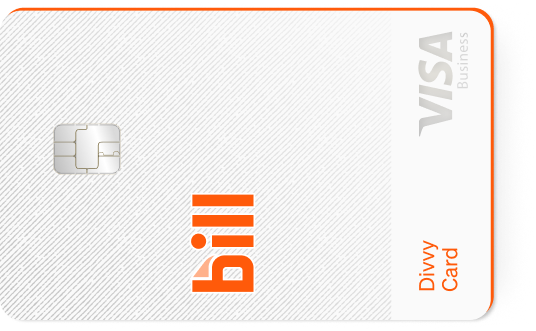
BILL Divvy Corporate Card
Eligibility based more on revenue, requires full repayments monthly.
Pros
- Free and flexible expense management platform
- No annual fee.
Cons
- No early spend bonus and lower rewards than other cards
- Must pay off all balances in full each month.
Intro APR
Purchase APR
Annual Fee
Welcome Offer
Business credit cards from other issuers
Other issuers may have cards that better fit your business’s needs. For example, if your credit score is too low for a Capital One card, you could look into business cards for bad credit. If you want to avoid a personal credit check entirely, there are some business cards that don’t require your Social Security number, such as corporate cards that rely primarily on business credit rather than a personal credit check. However, these EIN-only business credit cards typically require strong revenue and established business credit.
Building business credit first
A strong business credit profile opens up more credit card options. Here are the steps you can follow to build business credit:
- Register your business and apply for a D-U-N-S® Number and EIN. A D-U-N-S® Number is issued by Dun & Bradstreet.
- Open tradelines that report to the business credit bureaus.
- Always pay your tradelines on-time or early.
- Use a business credit monitoring service to track your progress.
When you have business tradelines that you use and pay on-time, your business credit will improve. Vendor accounts are one option for your business’s first tradeline. Nav Prime is designed to help business owners build business credit history by adding tradelines that may be reported to business credit bureaus.
Frequently asked questions
Rate this article
This article has not yet been rated
Lyle Daly
Financial Writer
Lyle Daly has been a financial writer for over a decade, covering credit, investing, banking, and more. His work has appeared in The Motley Fool, USA Today, MSN, and Yahoo Finance. As a self-employed writer, he has firsthand experience with managing personal and business finances.
Robin Saks Frankel
Senior Content Editor
Robin has worked as a personal finance writer, editor, and spokesperson for over a decade. Her work has appeared in national publications including Forbes Advisor, USA TODAY, NerdWallet, Bankrate, the Associated Press, and more. She has appeared on or contributed to The New York Times, Fox News, CBS Radio, ABC Radio, NPR, International Business Times and NBC, ABC, and CBS TV affiliates nationwide.
Robin holds an M.S. in Business and Economic Journalism from Boston University and dual B.A. degrees in Economics and International Relations from Boston University. In addition, she is an accredited CEPF® and holds an ACES certificate in Editing from the Poynter Institute.