Compare credit cards for small business expense management (2026)

Written byJasmin Baron

Reviewed by Robin Saks Frankel

Summary
- Managing employee expenses can quickly become messy for small businesses. Between tracking receipts, approving reimbursements, reconciling statements, and monitoring employee spending, even a small team can create hours of manual administrative work every month.
- The right business credit card can simplify expense management by centralizing spending, automating transaction tracking, setting employee spending controls, and integrating with accounting software.
- Some also include virtual cards, real-time alerts, and advanced admin tools that help you stay organized, avoid errors, and maintain tighter control over company spending.
- In this guide, we’ll compare credit cards for small business expense management in 2026 and explain the features that matter most when choosing a card for your business.
Compare business credit cards for expense management
All rates, fees and other card attributes are valid as of May 20, 2026 and subject to change.
Card name | Annual fee | Rewards rate | Expense management features | Best for |
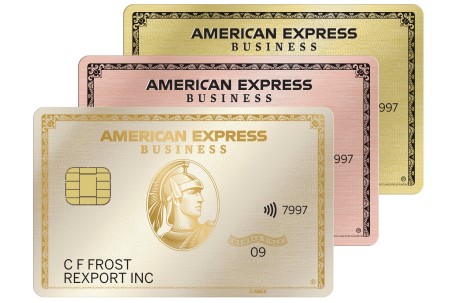
American Express® Business Gold Card | $375 | Earn 4X Membership Rewards® points on the top two eligible categories where your business spends the most each month from 6 eligible categories. Earn up to $20 in statement credits monthly after you use the Business Gold Card for eligible U.S. purchases at Grubhub, Office Supply Stores, and shipments at UPS.com. This can be an annual savings of up to $240. Enrollment required. | Employee cards, spend controls, accounting integrations, receipt matching | Overall expense management |
Capital One Spark Cash Plus | $150 | 2% cash back on purchases | Employee cards at no additional cost, spend limits, detailed reporting | Teams with high spending |
Ink Business Preferred® Credit Card | $95 | Earn 3 points per $1 on the first $150,000 spent in combined purchases on travel, shipping purchases, Internet, cable and phone services, advertising purchases made with social media sites and search engines each account anniversary year. Earn 1 point per $1 on all other purchases-with no limit to the amount you can earn. | Employee cards at no additional cost, QuickBooks integration, purchase tracking | Rewards for business spending |
Ramp Business Card | $0 | Up to 1.5% cash back on purchases | Built-in expense software, vendor controls, automated accounting | Modern expense automation |
BILL Divvy Corporate Card | $0 | Up to 7x points, based on payment settings. | Budget management, virtual cards, approval workflows | Teams with multiple employees |
Brex Card | $0 | Up to 7x points in select categories | Virtual cards, real-time controls, startup-focused tools | Startups and venture-backed businesses |
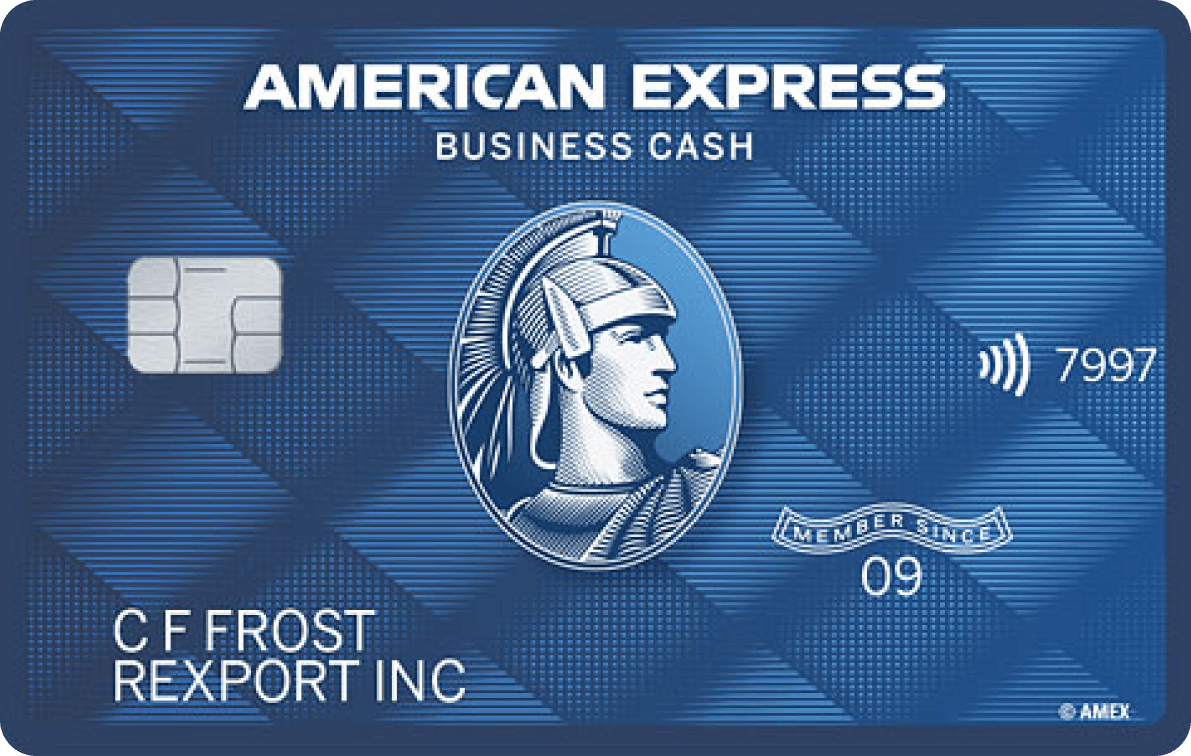
The American Express Blue Business Cash® Card | $0 | Earn 2% cash back on all eligible purchases on the first $50,000 of purchases each calendar year, 1% thereafter. | Employee cards at no additional cost, expense tracking | No-annual-fee simplicity |
U.S. Bank Triple Cash Rewards Visa® Business Card | $0 | 3% cash back on eligible purchases at gas and EV charging stations (transactions of $200 or less), office supply stores, cellphone service providers, and restaurants | Employee cards at no additional cost, expense tracking | Budget-conscious small businesses |
American Express® Business Gold Card: Best overall card for expense management
The stands out for businesses seeking a strong mix of rewards and expense-management tools.
It includes employee cards ($95 for the first five cards and $95 per card thereafter), customizable spending limits, detailed transaction reporting, receipt management, and integrations with accounting platforms such as QuickBooks. Businesses that spend heavily across multiple categories can also benefit from the card’s flexible rewards structure: Earn 4X Membership Rewards® points on the top two eligible categories where your business spends the most each month from 6 eligible categories. Earn up to $20 in statement credits monthly after you use the Business Gold Card for eligible U.S. purchases at Grubhub, Office Supply Stores, and shipments at UPS.com. This can be an annual savings of up to $240. Enrollment required.
The American Express® Business Gold Card works particularly well for established businesses that want premium expense-management capabilities without having to adopt separate expense software. However, it charges a $375 annual fee, which may be hard to justify for smaller businesses.
Capital One Spark Cash Plus: Best card for teams with high spending
The $150-annual-fee Capital One Spark Cash Plus is a strong choice for small businesses with high monthly expenses, thanks to unlimited 2% cash back on every purchase, with no category restrictions or earning caps. That straightforward rewards structure may provide strong value for businesses with high ongoing operating expenses on inventory, advertising, software, travel, or everyday operating costs. The card also offers flexible spending capacity with no preset spending limit, which may provide additional purchasing flexibility for some growing businesses.
Beyond rewards, the Spark Cash Plus includes useful expense-management tools for scaling businesses, such as free employee and virtual cards, customizable spending controls, recurring transaction tracking, and downloadable purchase records compatible with QuickBooks and Excel. These features can help simplify bookkeeping, monitor employee spending, and improve overall expense reporting.
Chase Ink Business Preferred® Credit Card: Best card for rewards on business expenses
The $95-annual-fee Ink Business Preferred® Credit Card is one of the strongest options for maximizing rewards on common business expenses. Earn 3 points per $1 on the first $150,000 spent in combined purchases on travel, shipping purchases, Internet, cable and phone services, advertising purchases made with social media sites and search engines each account anniversary year. Earn 1 point per $1 on all other purchases-with no limit to the amount you can earn.The categories eligible for the 3x Chase Ultimate Rewards® points on up to $150,000 in combined purchases per year (then 1x) include these popular spending areas:
- Shipping purchases
- Advertising purchases made with social media sites and search engines
- Internet, cable, and phone services
- Travel
Employee cards are available at no additional cost, allowing businesses to earn rewards across team spending while centralizing expense tracking. It also integrates with popular small-business bookkeeping software to simplify accounting.
Ramp Card: Best card for modern expense automation
The Ramp Card is a compelling choice for businesses focused on modern expense automation and spend control. Ramp combines corporate cards, expense management, bill pay, reimbursements, and accounting automation into a single platform designed to help streamline certain finance workflows. Features like automatic receipt matching, AI-powered expense categorization, real-time reporting, and customizable spending controls can help businesses streamline approvals, improve compliance, and simplify bookkeeping.
Ramp also stands out for affordability. The platform offers no annual fee and includes expense management tools, virtual cards, and integrations with platforms such as QuickBooks, NetSuite, Xero, and Sage, all at no additional cost for many businesses. That combination of automation, integrations, and low overhead makes Ramp especially appealing to startups and growing companies looking to modernize their finance operations without incurring the cost of expensive software subscriptions.
BILL Divvy Corporate Card: Best card for teams with multiple employees
The is designed specifically for businesses managing employee spending across teams or departments.
It allows administrators to create budgets, assign spending limits, generate virtual cards for individual vendors or subscriptions, and require approvals before purchases are made. Real-time visibility into employee spending can reduce overspending and simplify month-end reconciliation.
This type of platform can work especially well for businesses with remote employees, frequent travel expenses, or multiple departments managing independent budgets.
Brex Card: Best card for startups and venture-backed businesses
The Brex Card is popular among startups because qualification may rely more heavily on business financials than the owner’s personal credit profile.
The platform includes advanced expense management tools such as instant virtual cards, receipt capture, spend approvals, and automated accounting integrations. Startup founders may also appreciate the ability to issue cards quickly to employees and contractors.
Some newer ventures with limited credit history may find certain fintech-focused corporate card providers more accessible than traditional business credit card issuers, depending on underwriting requirements.
The American Express Blue Business Cash® Card: Best simple no-annual-fee card for expense management
The American Express Blue Business Cash® Card offers straightforward expense management tools without an annual fee. Business owners can issue employee cards, monitor spending activity, categorize purchases, and simplify bookkeeping through integrations with accounting software. The flat-rate cash-back structure also keeps rewards simple for smaller businesses that do not want to track bonus categories.
For companies focused primarily on organization and cost control, a no-annual-fee business card can provide many of the same benefits as premium cards.
Best card for budget-conscious small businesses: U.S. Bank Triple Cash Rewards
The U.S. Bank Triple Cash Rewards Visa® Business Card is a strong choice for budget-conscious small businesses thanks to its $0 annual fee and elevated cash back on common business expenses. Cardholders earn 3% cash back on eligible purchases at gas and EV charging stations (transactions of $200 or less), office supply stores, cellphone service providers, and restaurants, making it a practical option for businesses looking to maximize everyday spending.
The card also includes useful expense management features, including employee card controls, spend tracking, customizable alerts, and online account management tools through U.S. Bank Spend Management. Combined with no annual fee and a $100 annual software subscription credit for eligible accounting services, those features add value for small businesses focused on keeping costs low while simplifying expense tracking.
What to look for in a business expense management card
Not all business credit cards offer the same expense management features. When evaluating business expense tracking credit cards, consider how your business handles employee spending, bookkeeping, and reporting.
Key features to evaluate include:
- Employee card availability and fees
- Individual spending limits
- Merchant category restrictions
- Virtual card capabilities
- Real-time transaction alerts
- Receipt capture and expense categorization
- Integrations with platforms such as QuickBooks, Xero, or FreshBooks
- Mobile app functionality
- Approval workflows
- Rewards structure and redemption flexibility
- Annual fee vs. included tools
If your business is larger, you might prioritize admin controls and approvals, while sole proprietors may focus more heavily on rewards and bookkeeping simplicity.
What is business expense management?
Business expense management refers to the process of approving, tracking, categorizing, and reconciling company spending. It includes employee purchases, recurring subscriptions, vendor payments, travel costs, and operational expenses.
A structured expense management system helps businesses maintain accurate financial records while reducing the risk of fraud and administrative costs.
Why expense management matters
- Helps maintain accurate tax records
- Improves cash flow visibility
- Reduces unauthorized spending
- Simplifies reimbursements and audits
- Improves employee satisfaction with faster approvals
What should an expense policy include?
A small business expense policy should clearly define:
- Employee spending limits
- Approved expense categories
- Receipt submission requirements
- Reimbursement timelines
- Approval procedures
- Approved vendors or merchants
- Rules for travel and entertainment expenses
- Consequences for unauthorized spending
Putting your policy in writing can reduce confusion, save money, and improve consistency across teams.
How business credit cards simplify expense management
Many businesses start by tracking expenses manually or using spreadsheets. While that may work temporarily, it can get unwieldy fast as your business grows. Dedicated business credit cards often provide far more automation and visibility.
Here’s how different methods stack up:
Method | Pros | Cons |
Manual tracking | Low upfront cost | Time-consuming, error-prone, difficult to scale |
Expense apps only | Better organization | May still require manual reimbursements and reconciliation |
Business credit cards | Automated tracking, centralized spending, employee controls | Some cards charge annual fees |
Business credit cards can reduce reimbursement headaches by allowing employees to charge approved expenses directly to company accounts instead of paying out of pocket.
Spending controls and limits
Modern employee expense management credit cards often include spending controls that help business owners reduce misuse and maintain tighter oversight.
Depending on the issuer, administrators may be able to:
- Set individual employee spending limits
- Restrict purchases by merchant category
- Limit transactions to approved vendors
- Lock or pause cards instantly
- Require manager approvals
- Receive real-time spending alerts
Business credit cards with spending controls can be particularly valuable for companies with remote workers, traveling employees, or multiple departments handling separate budgets.
Virtual cards for online purchases
Virtual cards are digital card numbers linked to a primary account. Businesses can create separate virtual cards for vendors, subscriptions, contractors, or one-time purchases.
The best business cards with virtual cards can improve security because business owners can:
- Cancel cards instantly if compromised
- Limit cards to specific merchants
- Set expiration dates
- Create single-use card numbers
- Track spending by vendor more easily
They are especially useful for managing software subscriptions, online advertising expenses, and remote team purchases.
Integrations with accounting software
Many business credit cards now integrate directly with accounting platforms such as QuickBooks, Xero, and FreshBooks. These integrations can automatically sync transactions, categorize expenses, attach receipts, and reduce manual bookkeeping work.
Businesses that reconcile large volumes of transactions each month may help reduce manual bookkeeping tasks for some businesses by choosing a card with strong accounting integrations.
Expense management software vs. business credit cards
Some companies use standalone expense management software for small businesses, while others rely primarily on business credit cards with built-in tools. Platforms like Expensify, Ramp, and BILL combine expense management software with corporate card functionality.
Dedicated software platforms may offer:
- Advanced approval workflows
- Multi-level expense approvals
- Mileage tracking
- Reimbursement management
- Custom expense reporting
- Budget forecasting
However, you may not need separate software if your business credit card already includes robust small business expense management tools. For simpler operations, a strong business credit card with employee controls and accounting integrations may be sufficient.
How to set up an expense management system for your small business
If you’re just getting started with small business expense management (or looking to overhaul your current system), follow these steps to get set up.
1. Define your expense policy
Create written rules covering approved expenses, reimbursement procedures, spending limits, and receipt requirements.
2. Choose the right card or platform
Select a business credit card that aligns with your company's size, spending patterns, and reporting needs.
3. Issue employee cards with limits
Provide employee cards only to team members who need purchasing authority and assign appropriate spending controls.
4. Connect accounting software
Integrate your card with accounting tools to automate transaction syncing and reduce manual data entry.
5. Review and reconcile monthly
Regularly review employee spending, verify receipts, and reconcile transactions to maintain accurate records and identify unusual activity quickly.