
Sam's Club Business Credit Card review: Stock up with no annual fee and cash-back rewards

Summary
- The Sam’s Club Business Mastercard is a no-annual-fee option for business owners who frequently shop at Sam’s Club or spend heavily on gas and dining.
- High rewards rates for no annual fee make this card a great value, if it fits your spending.
- Some applicants may be able to apply using only their EIN without a personal guarantee, particularly when applying in-store. However, approval requirements vary and Synchrony Bank may require a personal guarantee.
- Learn more in this comprehensive review of the Sam's Club Business Credit Card
Editorial note: Our top priority is to give you the best financial information for your business. Nav may receive compensation from our partners, but that doesn’t affect our editors’ opinions or recommendations. Our partners cannot pay for favorable reviews. All content is accurate to the best of our knowledge when posted.
Sam's Club Business Credit Card overview
The Sam’s Club Business Mastercard is issued by Synchrony Bank and available to Sam’s Club members. You need a Club or Plus membership to apply, but it makes the most sense for Plus members, who earn a higher rate on Sam’s Club purchases.
This card is best for business owners with high fuel, dining, or Sam’s Club spending. If you’re a contractor who’s always on the road, or your work often involves meals with clients, then a Sam’s Club card will be a good match for your spending habits.
Key features at a glance
Here are the key features of the Sam’s Club Business Mastercard:
- Annual fee: $0
- Annual Percentage Rate (APR): 20.15% or 28.15% variable, current as of Feb. 19, 2026. Rates are subject to change.
- Credit score requirements: Good to excellent personal or business credit. While there is no published minimum credit score, applicants generally need good to excellent credit. In many scoring models, that typically begins around a FICO® Score in the high 600s.
- Rewards structure:
- 5% on gas (on first $6,000 per year, then 1%)
- 3% on Sam’s Club purchases for Plus members (Club members earn 1%)
- 3% on dining and takeout
- 1% on other purchases
- Welcome bonus: $50 statement credit when you open an account and make $30 in eligible Sam’s Club purchases within 30 days. Subject to change.
Rewards structure and earning potential
The Sam’s Club Business Mastercard earns tiered cash-back rewards, which means the base rate is 1%, but there are several bonus categories where you earn much more.
Rewards are earned as Sam’s Cash that gets loaded onto your membership every month. You can spend Sam’s Cash online, in the app, or at Sam’s Club locations. You can also use it to pay your membership fee or cash it out at the Member Services desk.
Gas rewards (5% cash back)
This card earns 5% on the first $6,000 in gas purchases per calendar year, and then 1% on gas purchases thereafter. Make sure to use the card for all your business gas spending, as the bonus rewards aren’t limited to just Sam’s Club – you earn 5% on gas anywhere Mastercard is accepted. If you max out that 5% rate, you’ll earn $300 back.
Dining and Sam's Club purchases (3% cash back)
This card earns 3% on dining, which includes takeout. Plus members also earn 3% on Sam’s Club purchases, compared to 1% for Club members. Consider opting for a Plus membership if you get this card so you can earn the higher rate. On $5,000 in annual Sam’s Club spending, it’s the difference between $150 back at 3% or $50 back at 1%.
All other purchases (1% cash back)
Like most credit cards with bonus categories, the base rate for non-bonus spending is 1%.
Annual rewards cap
There’s an annual rewards limit of $5,000 in Sam’s Cash per calendar year. When you reach that limit, you can’t earn more rewards for the rest of the year. If your business has significant expenses, you may want to get another business credit card instead of or in addition to this one.
Fees and costs
Here are the fees associated with the Sam’s Club Business Mastercard.
Annual fee
The Sam’s Club Business Mastercard has no annual fee.
APR and interest rates
The Sam’s Club Business Mastercard has a variable APR of 20.15% or 28.15% on purchases, subject to change. It doesn’t offer an intro APR for new cardholders.
Foreign transaction fees
The Sam’s Club Business Mastercard has no foreign transaction fees, and you can use it anywhere Mastercard is accepted.
Other fees
The Sam’s Club Business Mastercard charges the following fees:
- Late payment: Up to $40
- Returned payment: Up to $41
- Cash advance fee: $5 or 3% of the transaction amount, whichever is greater
Welcome bonus and sign-up offer
The welcome bonus for the Sam’s Club Business Mastercard is a $50 statement credit. To qualify, as of this writing, you must open an account between Feb. 5 through 25, 2026 and use it to make at least $30 in eligible Sam’s Club purchases within 30 days.
Compared to other business credit cards with no annual fee, this welcome offer is on the small side. Some cards have welcome offers worth $500 or more.
Sam’s Club credit requirements and approval
The credit requirements for a Sam’s Club Business Credit Card depend on whether you apply using your personal credit or business credit. If you provide your Social Security number (SSN), Synchrony Bank will run a hard credit inquiry on you. If you apply at Sam’s Club, you might be able to apply using your company’s employer identification number (EIN) without your SSN, but there are no guarantees. In this scenario Synchrony will only check your business credit.
Minimum credit score
You typically need good to excellent credit, which generally means a FICO® Score of 670 or higher, to qualify for the Sam’s Club Business Mastercard. Keep in mind that issuers consider a range of factors in addition to your credit score to determine approval.
Business requirements
During the application process, you’ll need to provide the following information about your business:
- Name
- Address
- Phone number
- EIN
- Monthly estimated spend
- Number of employees
If you’re able to apply with only your EIN, then approval will depend entirely on your business’s finances and credit history. Your business will likely need established revenue and positive payment history on one or more tradelines.
Hard pull and credit bureau
Synchrony Bank may report account activity to one or more of the major consumer credit bureaus, Equifax, Experian, and TransUnion, which would result in a hard credit pull. Reporting practices can change, and not all data is guaranteed to appear on a business credit report. Contact the issuer directly for current reporting policies
Sam’s Club Card benefits and perks
The Sam’s Club Business Mastercard has a few additional benefits beyond cash-back rewards.
Mastercard benefits
This card has the following Mastercard benefits:
- MasterRental Insurance Coverage provides complimentary damage and theft coverage for eligible car rentals.
- Mastercard ID Theft Protection (IDT) detects potential identity and fraud threats, alerts you to suspicious activity, and helps resolve identity threats. Enrollment is required.
Purchase protection and extended warranty
The Sam’s Club Business Mastercard doesn’t have purchase protection or extended warranty coverage.
Additional cardholder cards
You can add employees to your account and set them up as cardholders. Here’s how:
- Sign in to your Sam’s Club account.
- Open the “Account” page.
- Select “Manage Memberships.”
- Choose to add a cardholder.
- Enter the required information and select “Save.”
- Pick up the card at the Sam’s Club Membership Desk. The additional cardholder must be present with a valid ID.
Sam’s Club Business Credit Card pros and cons
Here’s a look at the pros and cons of the Sam’s Club Business Mastercard.
Pros
- Strong gas rewards starting at 5% back (on first $6,000 in yearly gas spending)
- 3% at Sam’s Club (for Plus members) and on dining
- No annual fee
- No foreign transaction fees
- Doubles as your membership card
Cons
- No intro APR offer
- No balance transfers
- Requires Plus membership for 3% at Sam’s Cub
- $5,000 annual rewards cap
- Limited benefits beyond cash back
Sam's Club Business Mastercard vs. Sam's Club Business Store Card
When you apply for a business credit card with Sam’s Club, you’re first considered for the Sam’s Club Business Mastercard. If you’re not approved, then you’ll be considered for the Sam’s Club Business Store Credit Card, which has more lenient requirements.
The main differences are where you can use these cards and the rewards each earns. You can use the Sam’s Club Business Mastercard anywhere Mastercard is accepted, and it earns Sam’s Cash. The Sam’s Club Business Credit Card is a closed-loop store card, meaning it can only be used at Sam’s Club and Walmart. It also doesn’t earn Sam’s Cash.
These are both no-annual-fee business cards. In addition, they both double as your Sam’s Club membership card.
The Sam’s Club Business Mastercard offers broader usability and rewards, which may make it more appealing for many businesses. But if you’re approved for the Sam’s Club Business Credit Card, that can also be a good starting point. You can use the card for your business’s Sam’s Club spending, and you may be able to upgrade to the Mastercard version in the future.
Who should get the Sam’s Club Business Credit Card?
The Sam’s Club Business Mastercard is well-suited for Sam’s Club members, especially those with a Plus membership. It’s also a great choice if you spend heavily in the areas where it earns bonus cash back.
Best for
Business owners who:
- Regularly shop at Sam’s Club
- Have high gas expenses
- Spend on dining frequently
- Want an EIN-only business card without a personal guarantee (approval requirements vary and Synchrony Bank may require a personal guarantee)
Not ideal for
Business owners who:
- Need a 0% intro APR to finance expenses
- Want a large welcome bonus
- Are looking for premium travel perks
- Don’t have a Sam’s Club membership
How to apply
You can apply for the Sam’s Club Business Mastercard online or at any Sam’s Club location. However, if you apply online, you’ll need to provide your Social Security number and a personal guarantee. If you want to get a business credit card with no personal guarantee, you can apply at Sam’s Club and explain to the associate that you only want to use your business’s EIN. Your mileage may vary and it’s possible you’ll have to show proof of your business income and other assets.
Here’s how to apply in person:
- Visit Sam’s Club and go to the Member Services Desk.
- Ask to apply for the Sam’s Club Business Credit Card. Make sure to tell the associate if you want to apply without a personal guarantee.
- Provide your membership number.
- Provide the required information. The associate will go through the application on an iPad with you.
To apply online with a personal guarantee, go to www.samsclub.com/credit. Scroll down to the “Apply for the Sam’s Club Business credit card” banner and select “Apply Now.” Provide your membership number, first name, and last name, and then fill out the application.
The application asks for the following information:
- Company name
- Business address and phone number
- Year business established
- Monthly estimated spend
- Number of employees
- Type of business
- Dun & Bradstreet number
This is an instant approval card, and Synchrony often makes decisions on applications immediately. If it needs more time, it will put your application under review, which generally takes up to seven to 10 business days.
Sam’s Club Credit Card alternatives
If a Sam’s Club Business Credit Card isn’t right for you, here are a few more small business credit cards.
Wells Fargo Signify Business Cash® Card
The Wells Fargo Signify Business Cash® Card is recommended if you want more upfront value from your business card. It has a $500 cash rewards welcome bonus when you spend $5,000 in purchases in the first three months. Purchases have a 0% intro APR for the first 12 months.
This card has straightforward rewards, earning an unlimited 2% cash rewards on purchases. It also doesn’t have an annual fee.
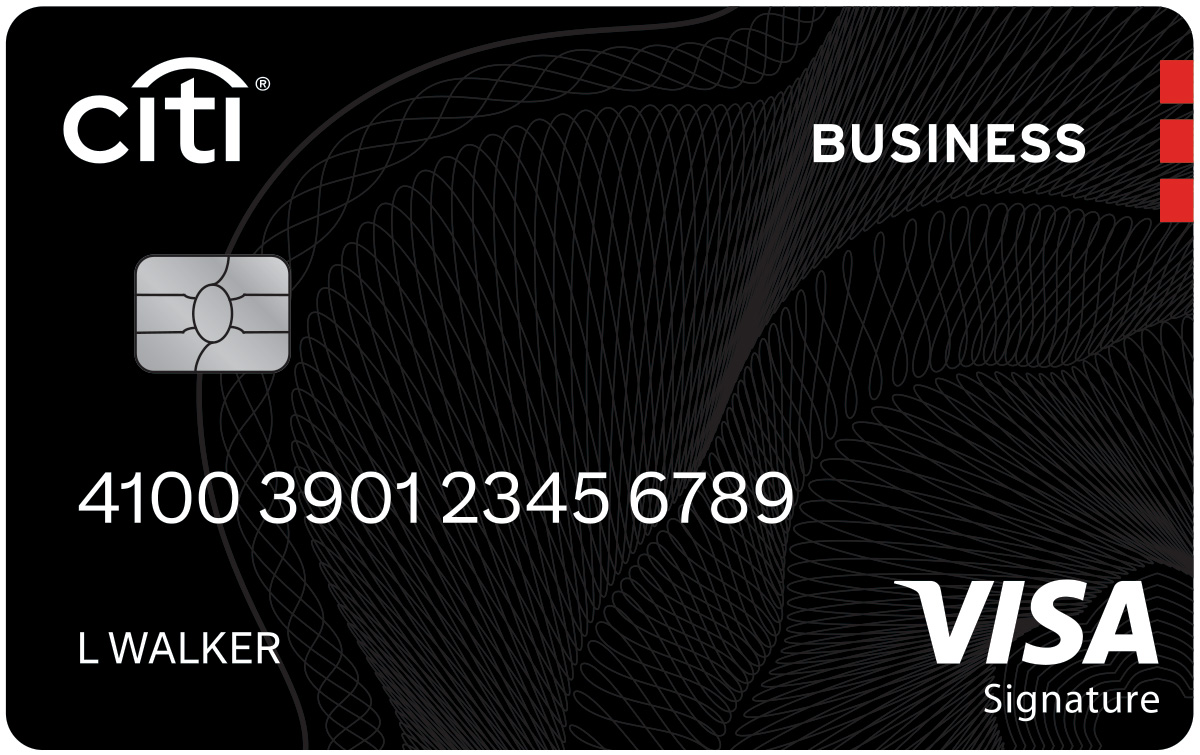
Costco Anywhere Visa® Business Card by Citi
If your business spends more at Costco than Sam’s Club, the Costco Anywhere Visa® Business Card by Citi is likely the better choice. These warehouse club business credit cards have similar rewards structures, with this Costco card earning 3% cash back on restaurants and eligible travel purchases and eligible travel, including Costco Travel. 2% cash back on all other purchases from Costco and Costco.com. 1% cash back on all other purchases.
It doesn’t charge an annual fee. You only need to pay for a Costco membership, and that starts at $65 for a Gold Star or Costco Business membership or $130 for an Executive membership. Membership fees are subject to change.
Intro APR
Purchase APR
Annual Fee
Welcome Offer
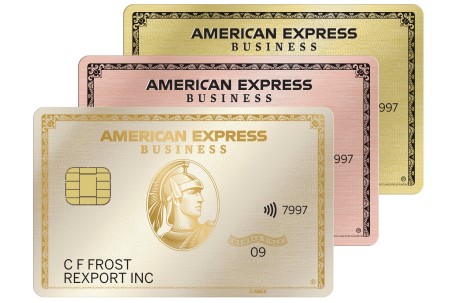
American Express® Business Gold Card
The American Express® Business Gold Card is a premium option with points you can use for travel. It currently has a generous Welcome Offer: Earn 100,000 Membership Rewards® points after you spend $15,000 on eligible purchases with the Business Gold Card within the first 3 months of Card Membership.*It also earns high rates in bonus categories. The annual fee is $375, but this card has spending credits that can deliver up to $240 in annual savings if used. It’s worth considering if you want a card with a wide range of benefits and bonus opportunities.
High annual fee, best for large purchases in consistent categories.
Pros
- This card has a great rewards program and offers flexibility compared to true charge cards.
Cons
- High annual fee
- Only 1x rewards outside of your top categories.
Intro APR
Purchase APR
Annual Fee
Welcome Offer
Frequently asked questions
Rate this article
This article has not yet been rated

Lyle Daly
Financial Writer
Lyle Daly has been a financial writer for over a decade, covering credit, investing, banking, and more. His work has appeared in The Motley Fool, USA Today, MSN, and Yahoo Finance. As a self-employed writer, he has firsthand experience with managing personal and business finances.

Robin Saks Frankel
Senior Content Editor
Robin has worked as a personal finance writer, editor, and spokesperson for over a decade. Her work has appeared in national publications including Forbes Advisor, USA TODAY, NerdWallet, Bankrate, the Associated Press, and more. She has appeared on or contributed to The New York Times, Fox News, CBS Radio, ABC Radio, NPR, International Business Times and NBC, ABC, and CBS TV affiliates nationwide.
Robin holds an M.S. in Business and Economic Journalism from Boston University and dual B.A. degrees in Economics and International Relations from Boston University. In addition, she is an accredited CEPF® and holds an ACES certificate in Editing from the Poynter Institute.