

What is Creditsafe? Business credit reports and scores explained

Written byGerri Detweiler

Reviewed by Robin Saks Frankel

Summary
- Creditsafe is a global business data company that primarily provides business credit reports, business credit scores, and risk data on businesses around the world, including in the U.S.
- In the U.S., Creditsafe has a strong focus on trade credit that may help your business get better terms or lead to business opportunities.
- Learn what Creditsafe does, how it compares to other business credit bureaus in the U.S., and how to build a strong credit report with this commercial credit bureau.
If you’ve been researching ways to build business credit, you may have come across Creditsafe. Similar to major commercial credit bureaus like Dun & Bradstreet (D&B), Equifax Business, and Experian Business, Creditsafe collects, packages, and sells data and insights to help companies make credit and other business decisions.
Learn in this guide how Creditsafe can help your business build and leverage business credit.
What is Creditsafe?
Launched in 1997 in Oslo, Norway, Creditsafe was created to use the then-emerging internet to help modernize business credit reporting. Its focus was on small and mid-sized companies that it considered underserved by legacy commercial credit bureaus. It expanded globally, entering the U.S. in 2012.
Creditsafe describes itself as the world's most-used provider of business credit reports, with ratings and credit limits that are endorsed by major credit insurers, and which can predict up to 70% of insolvencies up to twelve months in advance.
In the U.S., it holds over 119 million company profiles across all 50 states, and gets data from over 13,400 sources.
One of its strengths in the U.S. is trade credit data. Many companies use these credit reports to evaluate customers for supplier relationships and payment terms, for example. Examples range from businesses with worldwide clients including Nestle and Samsung to local businesses like Bobcat of Knoxville.
How does the Creditsafe score work?
Creditsafe creates its own proprietary credit scores, rather than selling scores created by FICO® or VantageScore®.
Creditsafe Risk Score
The Creditsafe Risk Score ranges from 1 to 100 and is designed to predict how likely a company is to fail in the next twelve months. A higher score is better in that it represents lower risk. This is a country-specific score; in other words, it can be used for customers in the U.S. or other countries where Creditsafe operates.
The scoring model can take into account hundreds of pieces of information such as financials (if available), payment information (collected by suppliers); court information such as suits, liens and bankruptcies; collection data; related businesses; and industry.
Here’s an overview from Creditsafe that describes how the Creditsafe Risk Score breaks down:
Score range | Risk level | Creditworthiness label |
71–100 | Very low risk | Very good creditworthiness |
51–70 | Low risk | Good creditworthiness |
30–50 | Moderate risk | Creditworthy |
21–29 | High risk | Credit against collateral |
1–20 | Very high risk | Caution — credit at your discretion |
The Creditsafe Risk Score is designed to score as many businesses as possible. It can be applied to all sizes of businesses, from publicly traded companies to micro businesses. Businesses without payment data from tradelines may be scored using other factors including the age of the business and employee count, as well as public record data such as adverse legal filings.
It’s possible for a company to show no rating if the business has been liquidated or dissolved, or if the information on file is too old to evaluate.
Creditsafe International Score
In addition to the domestic Credit Risk Score, Creditsafe also offers the Creditsafe International Score with a range of A—E, with A representing very low risk and E indicating a risk score can’t be calculated.
It also sells an Enhanced Score that can evaluate information from financial accounts such as business term loans, corporate cards, or lines of credit. (Specific account information about these loans or cards will be anonymous.) Not every company can purchase a report with an Enhanced Score. It’s available to companies who are screened and credentialed to get a report with this type of data.
What's in a Creditsafe business credit report?
A Creditsafe report provides information about the company’s credit history, including company background, credit history, and available public record (court) information.
A Creditsafe credit report typically includes:
Company details/demographics
Registered address, phone number, website, industry code (NAICS or SIC codes), principals, number of employees and other identifying information.
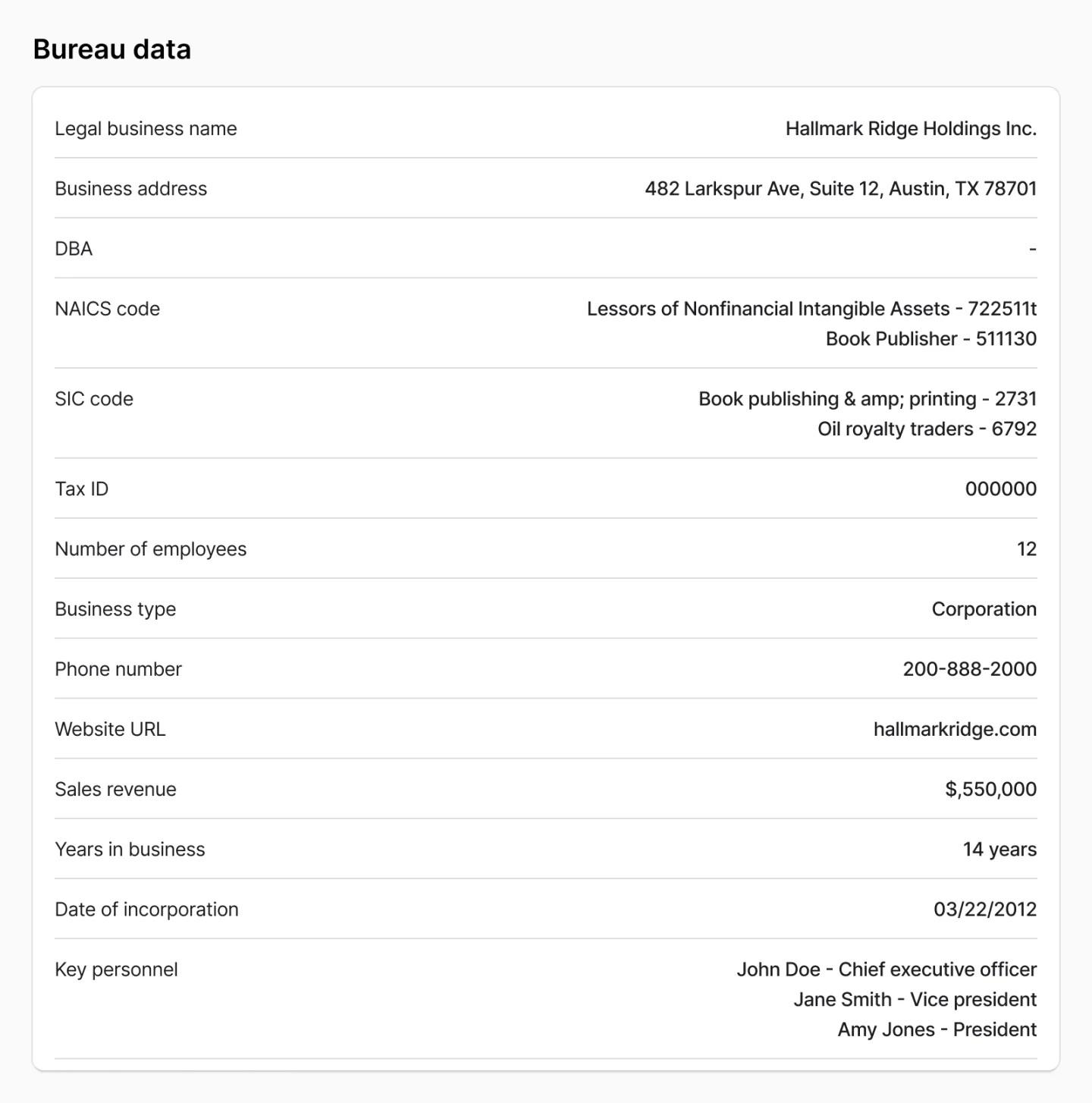
It can also link the business to its related businesses such as subsidiaries. This tends to apply to larger companies rather than individual small businesses.
Financial data
If financial data is available about the company, it may be included here. (This data is not typically available for non-publicly traded businesses in the U.S.)
Public filings
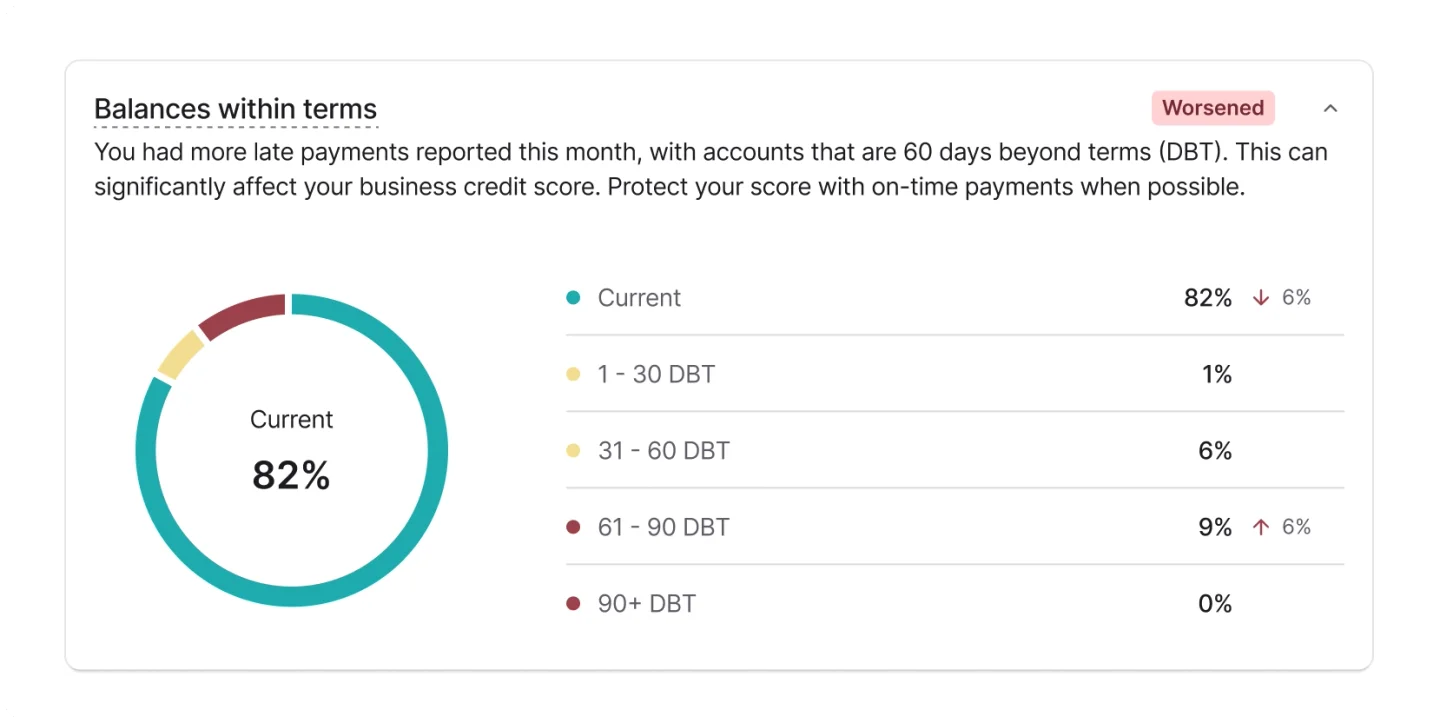
This can include adverse legal filings such as judgments or liens in the previous six months and nine years; and bankruptcy in the last nine years and nine months. It can also include UCC liens which are liens against property of the business.
Payment history
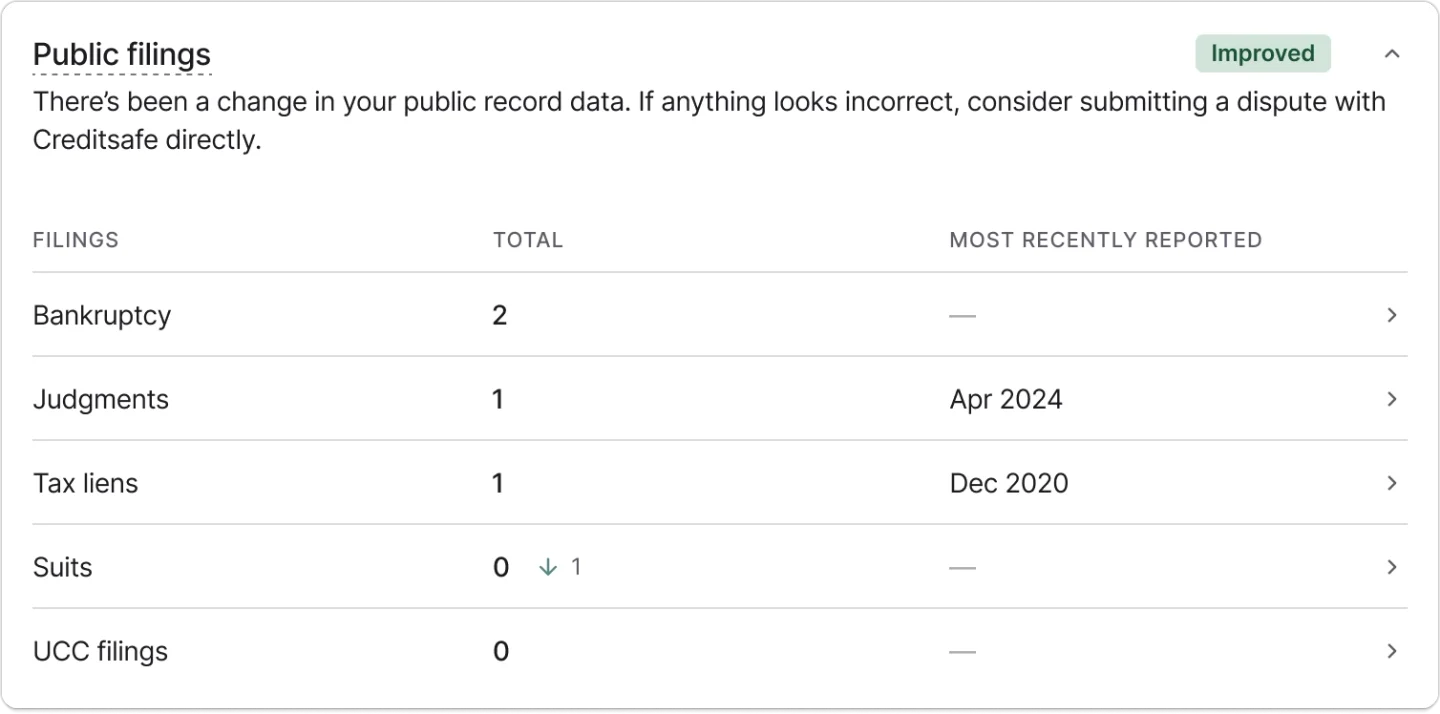
This is one of the most important parts of the Creditsafe credit report. It covers how the business pays reported accounts, including Days Beyond Terms (DBT), which shows how many days beyond the due date a company pays. It also shows the average DBT over the last 12 months and comparisons to industry averages. DBT is dollar weighted, so larger balances have more impact.
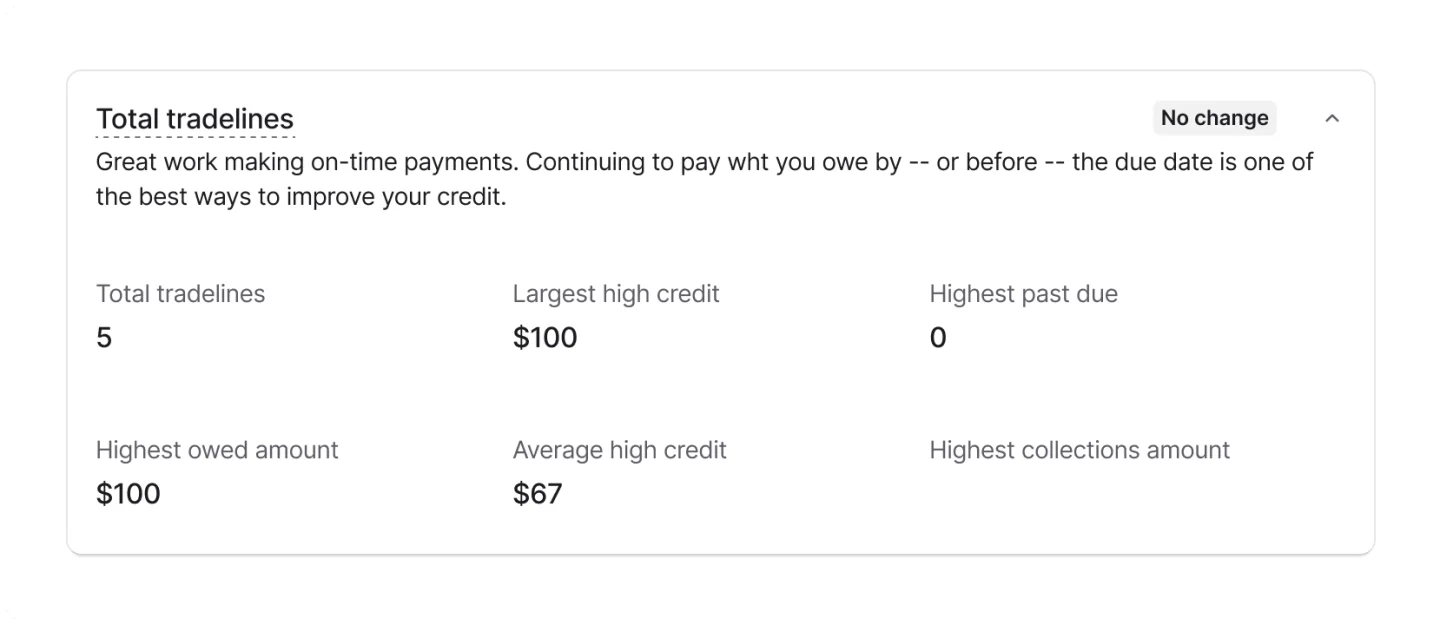
Creditsafe collects accounts receivable data from many sources including customers, industry groups, non customers and partners. Data is anonymized.
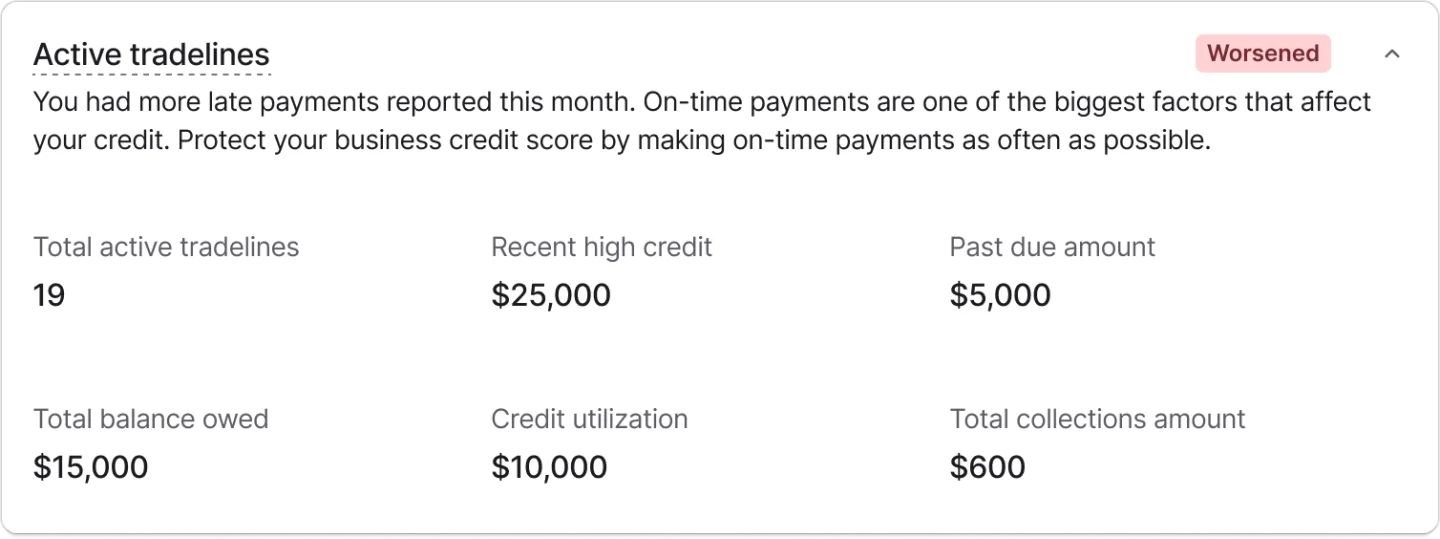
Collection accounts: If available, collection accounts may also be included.
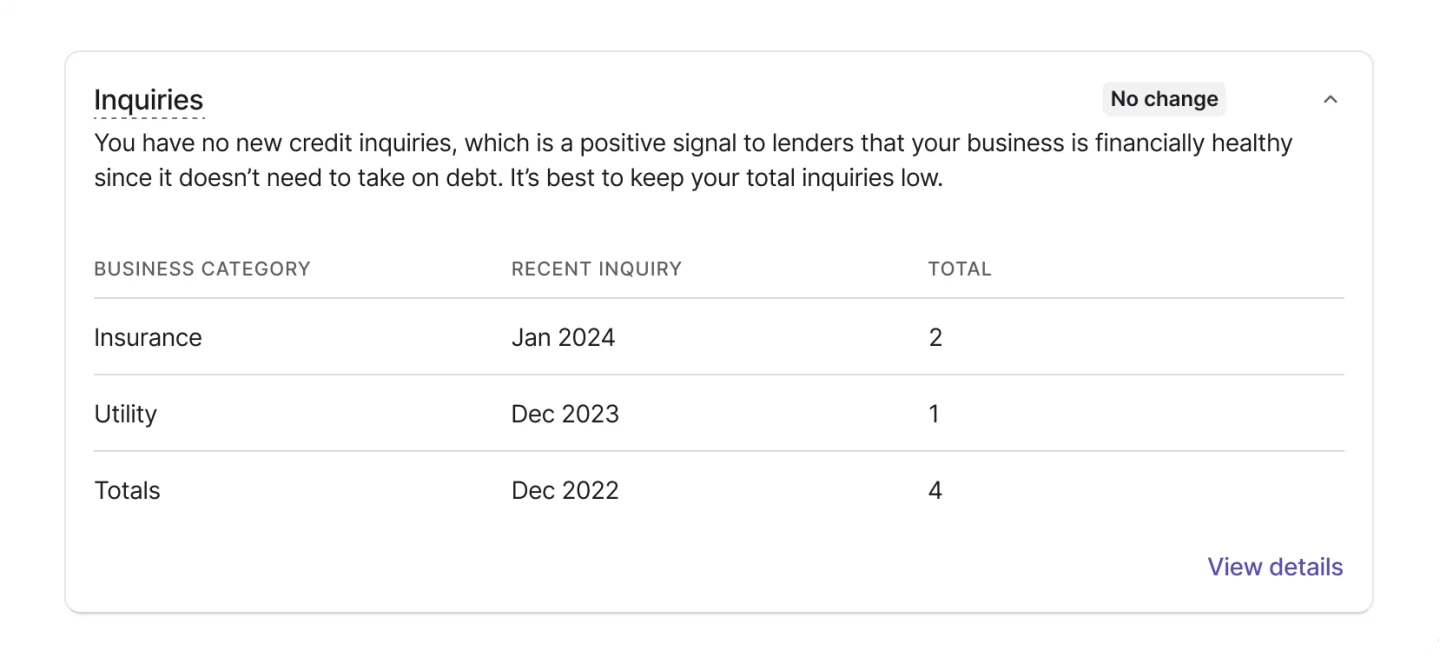
Inquiries: Creditsafe lists the number of inquiries (credit checks) for each month over the most recent twelve months as well as a timeline of the number of searches to show how interest has changed over a 12–month period.
Credit scores and limits
Creditsafe credit reports include a suggested credit limit based on the risk assessed from the information in the credit report.
Is Creditsafe legitimate?
Creditsafe is a commercial credit bureau that sells reports and scores to business customers. In other words, it’s not an “educational score” designed just to teach business owners about business credit. It may be used by suppliers, lenders or other companies you do business with.
Reviews of Creditsafe are generally positive. On TrustPilot, for example, customers frequently cite accurate, up-to-date payment data and useful credit monitoring alerts. On G2, reviewers generally find it easy to use, though some mention the dispute process took time.
How does Creditsafe compare to the other bureaus?
Creditsafe, Dun & Bradstreet®, Experian® Business, and Equifax® Business each use their own scoring models with different score ranges and different underlying data, so a score from one bureau doesn’t necessarily translate directly to another.
Bureau | Best-known score | Score range | What it primarily measures |
Creditsafe | Creditsafe Risk Score | 1 – 100 | Probability of bankruptcy within 12 months |
Dun & Bradstreet | PAYDEX® Score | 1 – 100 | Trade payment performance (how promptly a business pays suppliers) |
Experian Business | Intelliscore Plus℠ (V1/V2) | 1 – 100 | Payment history, credit utilization, company information |
Experian Business | Intelliscore Plus℠ V3 | 300 – 850 | Same factors as V1/V2, on an expanded scale |
Equifax Small Business | OneScore for Commercial (Financial Model) | 300 – 660 | Likelihood of severe delinquency (91+ days past due) |
There are many more business credit scores than those listed above. See a more complete list of business credit scoring models here.
Nav is not a lender or a credit bureau. Credit information is provided by third-party sources.
Who uses Creditsafe data, and why does it matter for getting approved?
Businesses can use Creditsafe reports and scores in a variety of ways, including:
- To decide whether to extend credit,
- The terms of credit to offer,
- To evaluate potential suppliers or business partners,
- For marketing purposes
For business owners, a strong Creditsafe report and score may help your business get trade credit from suppliers, get better terms or renewals on vendor terms, or even to access certain types of small business financing.
How do you check your Creditsafe report?
You can check your businesses’ Creditsafe credit report and score through Nav. With a free Nav account, you’ll see business credit grades. With select Nav Prime plans you’ll see your detailed Creditsafe Risk Score and detailed report.
How to build credit with Creditsafe
Building business credit may help businesses get better terms with suppliers, improve their chances of landing contracts with other businesses, and to qualify for certain types of financing.
In the general sense, building business credit with Creditsafe isn’t much different from building it with other bureaus. You need to set up your business, then ideally get credit with companies that report, such as suppliers that report to Creditsafe.
If a business doesn’t have trade data, it will be evaluated as a company with no trade data, using other public information about the business, such as how long it’s been in business, if verifiable.
“Trade payment data improves and sharpens the score where it exists, as long as payments are made on time,” explains Mark Laube, Creditsafe product director North America.
Ready to get started building business credit with Creditsafe? Nav Prime reports to multiple credit reporting agencies, and Nav’s net-30 marketplace can help you find trade credit accounts that report to business credit bureaus, including Creditsafe.