

12 recession-proof businesses that can quietly make their owners rich

Written byGerri Detweiler

Reviewed by Robin Saks Frankel
Summary
- The best recession-proof businesses often solve problems customers can’t easily postpone, from tax preparation and bookkeeping to auto repair, plumbing and pest control.
- Recurring or repeat demand can help make revenue more predictable, especially for businesses such as bookkeeping, medical billing, commercial cleaning and pest control.
- Some so-called boring businesses show surprisingly strong economics. We look at real revenue and owner-earnings benchmarks for established businesses where reliable data are available.
- Recession resistance isn’t the only consideration. Startup costs, licensing, physical demands, and financing needs can vary dramatically, so the right recession-proof business depends on your skills, capital and goals.
A recent viral Reddit thread asked people to name boring businesses that quietly make their owners rich. The answers ranged from septic pumping and laundromats to HVAC companies and other businesses most people rarely think about until they need to use them.
This is a useful idea underneath the anecdote: Some of the best recession-proof business ideas aren’t glamorous. They perform jobs customers need done regardless of whether they want to spend money on them or not.
No business is literally recession-proof. During the Great Recession, even industries that provide essential services sometimes saw revenue or employment decline. For example, IRS data show that sole-proprietor auto repair receipts fell about 7% from 2007 to 2009. But that was substantially less than the roughly 24% decline in receipts for specialty trade contractors over the same period.
The businesses below stand out after evaluating essential or mandated demand, recurring or repeat demand, profitability and cost structure, discretionary exposure, and the ability to serve a diverse customer base. Where financial figures are included, they come primarily from business marketplace BizBuySell’s data on established businesses sold through its marketplace: they shouldn’t be read as averages for every U.S. business in that industry.
Essential site services
1. Septic pumping and service
What it is: Septic businesses inspect, pump, maintain and sometimes repair onsite wastewater systems.
Why demand may survive a recession: Septic systems provide basic sanitation for properties that are not connected to municipal sewer systems. EPA guidance says the average household septic system should generally be inspected at least every three years, with tanks typically pumped every three to five years. Some alternative systems require more frequent inspection or maintenance.
That makes septic service a good example of repeat demand without subscription revenue. A household may go years between pump-outs, but the maintenance cannot be postponed forever without increasing the risk of system problems.
Economics: This business tends to require more capital than desk-based businesses. Operators need trucks, pumping equipment and disposal arrangements.
2. Commercial janitorial cleaning services
What is it? Commercial janitorial services provide recurring cleaning services to offices, medical facilities, and other business properties.
Why demand may survive a recession: Basic cleaning does not become unnecessary when the economy slows, and commercial cleaning commonly operates through repeat service arrangements. But these businesses can be vulnerable if customers shrink cleaning frequency or negotiate more aggressively during a downturn.
Economics: BizBuySell analyzed established cleaning and janitorial businesses sold through its marketplace and reported five–year median revenue of about $433,000 and median owner earnings of about $136,000, equivalent to about 31% of reported revenue.
This business may offer a lower entry cost than others in this category but will still require an investment in equipment and operating capital.
3. Water, fire, and mold restoration
What it is: Restoration businesses respond to property damage from water intrusion, fires, or mold.
Why demand may survive a recession: A burst pipe or damaged roof, a fire, or a mold problem often requires immediate attention. Putting it off may lead to more damage and higher expenses. Large-scale damage from a natural disaster can often keep these companies busy for months or even years.
This type of business does not typically offer recurring revenue, but when residential or commercial companies need this service, they need it quickly. Insurance may cover some or all of the cost.
Economics: Restoration may require specialized equipment, labor, and relationships with insurers or referral partners. Licensing may be required.
Repair and maintenance
4. Vehicle repair
What it is: Vehicle and auto repair businesses diagnose, maintain and repair vehicles for consumer or commercial customers.
Why demand may survive a recession: For many households and businesses, transportation is an essential expense. Repairs can allow an owner to keep an existing vehicle operating rather than having to purchase another one.
This type of business isn’t immune to recessions, but it can weather one better than some businesses. IRS Schedule C data show aggregate sole-proprietor auto repair receipts fell from 7% from 2007 to 2009. By contrast, sole-proprietor trade contractor receipts fell about 24% over the same period.
Economics: BizBuySell reports that auto repair businesses sold from 2021 to 2025 had median revenue of about $819,000 with median owner discretionary earnings of about $182,000.
5. Appliance repair
What it is: Appliance repair businesses service household appliances such as refrigerators, washers, dryers or stoves. They may serve residential customers as well as businesses.
Why demand may survive a recession: A broken refrigerator or washing machine may need immediate attention, and it may be cheaper to repair than to replace. These companies may also service appliances under warranty reducing the out of pocket cost for customers.
Economics: Appliance repair businesses generally have lower startups and operational costs. According to Coherent Market Insights, the average appliance repair ticket is between $175 and $240 which can lead to about an estimated annual income of about $192,000 for a single operator.
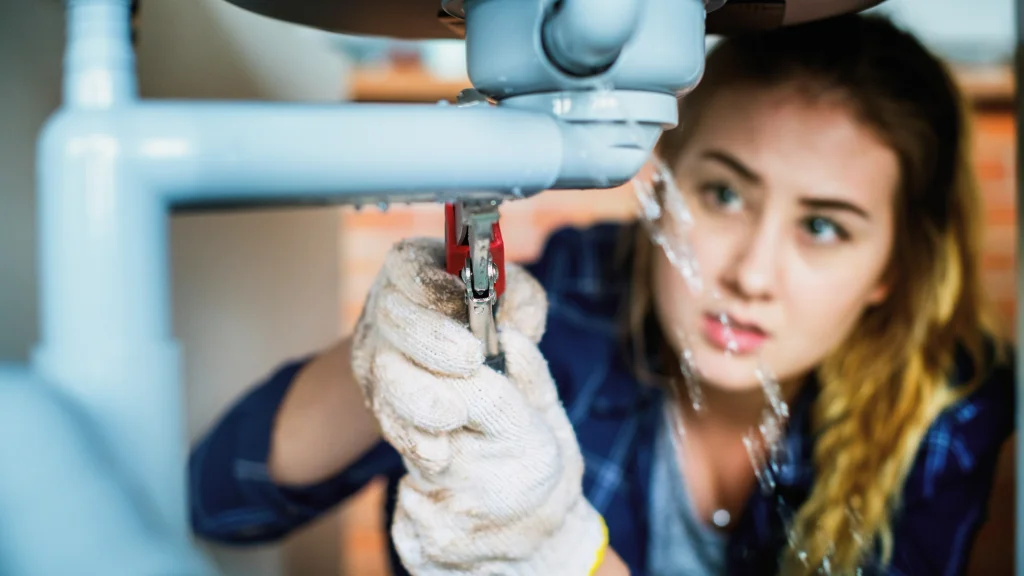
6. Plumbing repair and drain service
What it is: These businesses focus on repairs, leaks, clogged drains, failed fixtures, and other plumbing problems rather than primarily installing plumbing in new construction.
Why demand may survive a recession: Fixing a leaking pipe or sewage backup is a very different decision financially from deciding whether to remodel a bathroom. Emergency and repair work tends to be less affected by the economy than new construction which was hit especially hard during the Great Recession.
Economics: Among plumbing businesses sold through BizBuySell from 2021 to 2025, median revenue was approximately $1.17 million and median owner earnings approximately $312,000.
7. HVAC repair and maintenance
What it is: HVAC repair and maintenance businesses keep heating and cooling systems functioning and perform scheduled maintenance.
Why demand may survive a recession: When air conditioning or heating fails, homes or businesses often can’t wait long to get it fixed. Similar to plumbing, it’s important to distinguish between repair and maintenance versus new construction which can be more sensitive to economic changes.
Economics: BizBuySell reports median revenue of approximately $1.48 million and median owners earnings of about $304,000 for HVAC businesses sold from 2021 to 2025.
8. Pest control
What it is: Pest control companies provide preventive treatments and respond to infestations involving insects, rodents, and other pests.
Why demand may survive a recession: Pest problems can threaten property and sanitation, while scheduled preventative treatment can create recurring or repeat customer relationships. This category can offer a combination of recurring service opportunities, and emergency remediation services.
Economics: BizBuySell reports median revenue of approximately $264,000 thousand and median owners earnings of about $124,000 for pest control businesses sold from 2021 — 2025.
Health and personal care
9. Medical billing and revenue-cycle management
What it is: Medical billing and revenue-cycle management businesses help healthcare providers submit claims, process billing information and manage the administrative steps required to get paid.
Why demand may survive a recession: Billing is fundamental to healthcare providers that want to get paid. Whether they are billing Medicare or insurance companies, providers must follow specific rules when submitting and managing claims. Healthcare showed unusual resilience during the Great Recession compared to many other industries.
Economics: BizBuySell reports median revenue of approximately $614,000 thousand and median owners earnings of about $180,000 for medical billing businesses sold from 2021 to 2025.
Recurring and mandated services
10. Tax preparation
What is it? Tax preparation services prepare federal, and where applicable, state and local tax returns for individuals and businesses.
Why demand may survive a recession: Taxes must still be filed whether the economy is great or in the dumps. Paid federal tax preparers generally need a Preparer Tax Identification Number (PTIN) but becoming a tax preparer doesn’t require an accounting degree, or CPA certification.
Economics: BizBuySell’s accounting and tax practice data show attractive economics among established businesses sold through its marketplace, though the category combines accounting, bookkeeping, and tax businesses rather than just tax preparation.
Bonus: Tax professionals can apply their expertise to their own business to help build a financially successful business.
In addition to professional credentialing— a CPA or EA designation can make services more valuable but is not easy to achieve — the biggest drawback is seasonality. Tax preparation can offer highly repeatable demand, but work is often concentrated around filing deadlines.
11. Bookkeeping
What it is: help companies maintain financial records and may handle other functions such as accounts payable or payroll.
Why demand may survive a recession: Similar to tax preparation, bookkeeping is required regardless of how well a business is doing. Clean, up-to-date books may also be required for businesses trying to get a business loan.
Economics: Again, BizBuySell's accounting and tax practice benchmarks show strong owner economics among established businesses sold through its marketplace, although the data combine bookkeeping, accounting and tax practices.
AI automation and bookkeeping services may affect this sector in the future, but demand currently remains strong.
12. Commercial accounts-receivable management and collections
What it is: These businesses help other companies follow up on unpaid invoices, manage receivables, and in some cases, collect delinquent commercial debt.
Why demand may survive a recession: When customers pay slower, businesses may place greater emphasis on cash flow and collecting outstanding receivables.
The legal environment also differs from consumer debt collection. The CFPB states that the federal Fair Debt Collection Practices Act primarily covers consumer debts, not business debts. Commercial collection activity may still be subject to state laws and licensing requirements, however.
Economics: The U.S. leads the world in commercial debt, and the global debt collection market is expected to reach 44.8 billion by 2036, according to market research company Fact.MR.
Land and route businesses
Land and route businesses such as laundromats, parking businesses, car washes, and vending machines are often described as boring businesses that can make their owners a lot of money. But they generally did not fare as well as other businesses featured here in the last recession.
While laundromats, for example, offer repeat business and serve as an essential service for customers without access to their own laundry equipment, they require significant investments in equipment, utility, maintenance, and real-estate costs. And broader historical laundry services (not just laundromats) did not fare as well during the Great Recession.
What makes a business recession proof?
A recession-proof business is one whose demand and economics make it less vulnerable to a broad decline in consumer or business spending. No company is completely protected from recessions, so recession-resistant is often the more accurate description.
“Every recession is different, but generally speaking, what makes a business recession-proof is that customers won't stop buying from it if money gets tight for them,” says Elaine Pofeldt, independent journalist and author of “The Million-Dollar, One-Person Business” and “Tiny Business, Big Money”.
Here are four main characteristics to look for:
Need-based or legally mandated demand. Customers are less able to eliminate spending when the service protects health, safety, property, business operation or satisfies a legal requirement.
Recurring revenue with strong profitability. Repeat customers, scheduled maintenance or ongoing B2B relationships can make revenue more predictable, but repeat demand only matters if the underlying economics are strong enough to absorb a downturn.
Low discretionary exposure. A clogged drain, broken refrigerator, or a tax deadline is harder to defer than a remodel, vacation, or other optional purchase.
Insulation from consumer confidence in the target customer base. Businesses that sell necessary services to companies, healthcare providers, property owners, or other customers with continuing obligations may be less dependent on whether consumers feel optimistic enough to spend.
These characteristics aren’t guarantees, but they can offer a framework for comparing which business models may be more recession-resistent.
How to start and fund a recession proof business
The right financing strategy depends on the business.
A bookkeeping business may need little more than technology, marketing and working capital. A line of credit and a business credit card may be sufficient to handle cash flow fluctuations.
Businesses such as auto repair or HVAC repair have much higher capital needs. They often need equipment, supplies, vehicles, and may even need a physical location. Owners starting these types of businesses may need a combination of business loans, business lines of credit, and equipment loans.
Start by estimating how much capital you will need before the business can reliably cover its own operating expenses. Then compare business loan options based on whether you are funding a startup, equipment, working capital, or an acquisition.
Remember that high revenue alone doesn't necessarily make a business attractive. Capital requirements, margins, fixed expenses, and repeat demand all affect how well a company may handle a downturn. For additional ideas, see Nav’s guide to high cash flow businesses.
How to buy a recession-proof business
Buying an existing recession-resistent business can offer something a startup cannot: an operating history, existing customers, and an established business model. This can be attractive both as a future owner and to potential lenders.
Seller financing may be one way to finance an acquisition. But many business owners want to cash out on their sale, and that’s where a business acquisition loan can be helpful. These may be available through banks, credit unions, and private lenders. In addition, SBA 7(a) loans have traditionally been a popular way to finance a small business purchase.
“Banks are much more willing to lend under the SBA program because a 75% government guarantee lets them offer more capital at a lower interest rate and with a longer payback period than a traditional lender could,” says Hensel. “However, new SBA rules effective October 1st [2026] are tightening loan requirements, making it more difficult, especially for first-time buyers who don't have meaningful liquidity.”
Note that the SBA guaranty is 75% for standard 7(a) loans over $150,000, but 85% for loans of $150,000 or less.
Be sure to take a close look at whether the company’s resilience comes from the business itself. A company that receives most of its business from a small number of customers is usually much more risky than one with a diverse customer base. Similarly, an HVAC repair company with a strong service base may behave differently in a recession from a contractor who is heavily dependent on new construction.
Finally, think twice about purchasing a business just because it appears to be recession proof.
“I have found that there is a lot of hype around ‘boring’ businesses, like laundromats,” warns Pofeldt. “I would not recommend that anyone buy or start a business they don't have an aptitude for running, experience, or extensive training in running, or a passion to run, even if it is supposedly profitable.
“Running a successful business is not as easy as it looks. Someone who knows what they are doing and genuinely enjoys running a business will usually outperform someone who simply buys a business to earn money from it, but has no skills and experience in the industry, and no passion for what the business does.”
How to recession proof a business you already have
You don’t have to own one of the businesses on this list to make your business more resilient. Start with four practical moves:
1. Build cash reserves. Liquidity gives the business room to absorb a temporary decline in revenue without immediately cutting critical operations.
2. Establish credit before you need it. Establish strong business credit to help your business get better terms with suppliers, as well as potentially increase the number of options you may have for small business loans and financing.
3. Increase recurring or repeat revenue. Maintenance agreements, repeat service, ongoing B2B relationships and other forms of predictable demand can reduce dependence on constantly replacing customers.
4. Keep cash flow strong. Focus on reviewing and improving cash flow, managing expenses, and looking for options to build more flexibility.