Intuit Business Credit Card review 2026: Ideal for QuickBooks users

Written byKatherine Fan

Reviewed by Robin Saks Frankel
Summary
- The new Intuit Business Credit Card pays unlimited 2% cash back and syncs natively with QuickBooks.
- Those who already use QuickBooks can earn up to 5% cash back on eligible Intuit products. For those who don’t use QuickBooks, the card may not be a fit compared to other 2% cash-back cards.
- Read more about the card, its pros and cons and if it’s right your business in this full review
The new Intuit Business Credit Card is a cash-back credit card for small business owners. All transactions automatically sync with QuickBooks, making this card best for companies that use QuickBooks for accounting and want spending, bookkeeping and credit management in one place. Issued by WebBank, the Intuit Credit Card earns unlimited 2% cash back on everyday purchases and 5% on eligible Intuit products and services.
Intuit Business Credit Card: Pros and cons
Pros | Cons |
Unlimited 2% cash back on most purchases | 5% cash back excludes transaction fees such as merchant services processing |
Unlimited 5% cash back on eligible Intuit products and services including QuickBooks, TurboTax, MailChimp, and more | Cash back can only be redeemed as a statement credit |
No annual fee | Not as useful for businesses that don’t use QuickBooks |
Automatically syncs with QuickBooks | New card doesn’t yet have customer reviews or service track record |
Automated receipt matching | |
Unlimited employee cards with spending controls | |
Instant virtual card upon account approval | |
Dedicated mobile app with Apple Pay | |
Freeze/unfreeze card at any time |
How do Intuit business cards rewards work?
Intuit Business Credit Card users earn unlimited 2% cash back on everyday purchases; 5% unlimited cash back on eligible Intuit products and services; and can earn a welcome bonus of $300 if they spend $3,000 on the card in the first three months of card ownership.
2% cash back on everyday purchases
The Intuit Business Credit Card keeps its rewards structure simple: Cardholders earn unlimited 2% cash back on everyday purchases, with no annual spending cap. This is beneficial for businesses that want a single credit card for all company-related spending.
In simple math, a company that spends $50,000 yearly on the card for everyday business purchases will earn $1,000 in cash back.
5% cash back on eligible Intuit products and services
Cardholders earn elevated rewards on eligible Intuit products and services such as QuickBooks, TurboTax and Mailchimp. However, the 5% cash-back earnings do not apply to transaction fees such as merchant services processing fees through QuickBooks Payments.
$300 welcome bonus
New cardholders who are approved for the Intuit Business Credit card can earn $300 after spending $3,000 in purchases within the first three months of account opening. This information was collected Sept 21, 2026 and subject to change.
Redeeming Intuit Credit Card rewards
Cash back earned from the Intuit Business Credit Card can only be redeemed as statement credits, which can be limiting for some business owners. You cannot redeem cash back for direct deposit, gift cards, or other forms of redemption such as travel.
QuickBooks sync: The Intuit Card’s true product
The Intuit Business Credit Card automatically syncs all transactions with your QuickBooks accounting system. This integration is the card’s most valuable feature, providing business owners with a real-time record of all company spending.
The Intuit Credit Card also supports receipt capture through its mobile app, allowing cardholders to upload receipts and automatically sync them with accompanying transactions for efficient recordkeeping. This is invaluable for tax records and bookkeeping, especially if you utilize employee credit cards for different team members.
Unfortunately, the native QuickBooks sync can also be the Intuit Business Credit Card’s biggest limitation if you do not use QuickBooks or move to a different accounting platform. Without this built-in benefit, the Intuit card’s 2% cash back with limited redemptions makes it a mediocre choice among the best business credit cards for business owners.
Employee cards and spend controls
The Intuit Business Credit Card’s expense management tools are particularly helpful for small businesses with trusted employees or contractors who are authorized to make purchases on behalf of the company.
Intuit Credit Card users can issue employee cards with built-in spending limits. Business owners can monitor employee spending in real time, and adjust limits through the account dashboard. For example, you can issue an employee card for upcoming travel, one-time supplies, or recurring expenses without offering unrestricted access to the entire credit line.
Credit limit and how approval works
The Intuit Business Credit Card offers credit lines from $1,000 to $50,000. If approved, your limit will be determined by your creditworthiness and business profile. Intuit does not publish a minimum credit score requirement for guaranteed approval.
The application process is relatively straightforward. Business owners can apply online in minutes, and there is no impact to your personal credit score to apply. However, business cardholders are personally responsible for outstanding balances if your company cannot pay back what it owes.
Applicants for the Intuit Credit Card can see their approval or denial results immediately. Approved cardholders can get a virtual card in as little as three minutes after approval, which can be used for immediate spending before the physical card arrives in the mail.
While WebBank may report credit card account information to credit bureaus, Intuit’s cardholder agreement does not explicitly state that positive payment history will be reported to business credit bureaus. Nav is not a lender or a credit bureau. Credit information is provided by third-party sources.
If building business credit is a priority for you, compare the Intuit Business Credit Card's reporting terms against other business credit cards before applying. Nav's guide to what makes a good business credit score can help you better understand your options.
Intuit Business Credit Card fees
The Intuit Business Credit Card does not charge an annual fee, and there is no fee for employee cards. The card’s interest rate is a variable purchase APR of the current Prime Rate of + 7.49% to Prime Rate + 28.49% (14.49% to 35.49% as of Sept. 21, 2026). The rate you receive will depend on your business credit profile and other underwriting factors. The agreement also states that variable APRs cannot exceed 36%.
Other current fees include:
- 2.7% foreign transaction fee
- Up to $39 late payment fee
- Up to $39 returned payment fee
- No over-limit fee
The Intuit Business Credit Card’s 2.7% foreign transaction fee makes this card a poor choice for businesses with significant international spending.
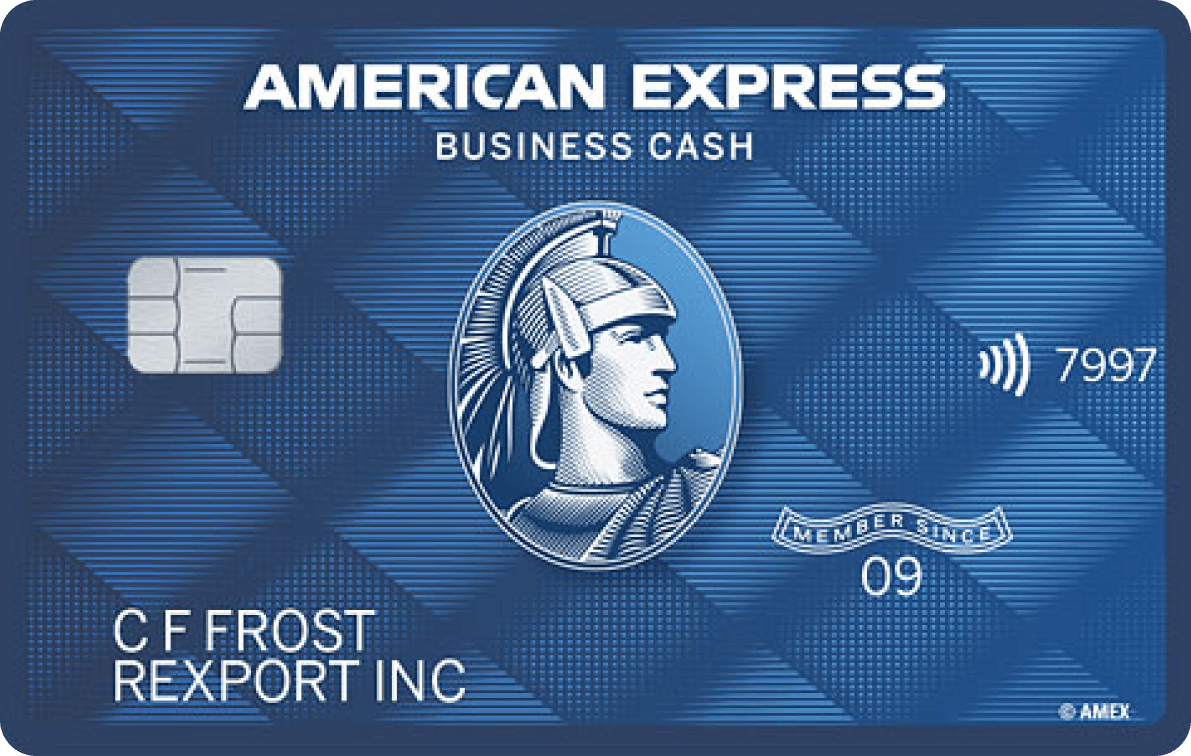
Intuit Business Credit Card vs. The American Express Blue Business Cash® Card
is a great alternative to consider for the Intuit Business Credit Card since both cards earn 2% back on most purchases and do not charge annual fees.
The Intuit card is best for businesses that want unlimited flat-rate cash back, already use QuickBooks and Intuit products for accounting and customer outreach and don’t need 0% intro APR benefits. The American Express Blue Business Cash® Card is better for companies that don’t spend more than $50,000 annually and do not use QuickBooks, want more flexible reward redemptions, and need a zero-interest period for paying down large purchases.
Intuit Business Credit Card | Amex Blue Business Cash | |
Annual Fee | $0 | $0 |
Earning rates | Unlimited 2% cash back | 2% on first $50,000 per calendar year, then 1% |
Intuit/QuickBooks rewards | 5% on eligible Intuit products and services | 2% on first $50,000 per calendar year, then 1% |
Introductory APR period | None | 0% intro APR for purchases in the first 12 months |
Foreign transaction fee | 2.7% | 2.7% |
Intuit business card alternatives
The Intuit Business Credit Card is a great option for many business owners, but it isn’t the only or best choice for everyone. Here are three alternative business credit cards that may better suit your company’s needs.
The American Express Blue Business Cash® Card for cash back and 0% intro APR
The American Express Blue Business Cash® Card is Nav’s top pick for a business cash-back card with very similar benefits. Earn 2% cash back on all eligible purchases on the first $50,000 of purchases each calendar year, 1% thereafter.The card has no annual fee and a 0% on purchases for 12 months from date of account opening, which makes the card particularly appealing for businesses that want financing flexibility.
Ramp Business Credit Card for spend management
If spend management controls are important for your business, the Ramp Business Credit Card may be a good fit for your company. This dedicated business spend-management platform does not charge annual fees for you or employees with access to your credit card account. Ramp offers detailed approval workflows, expense policies, and accounting controls that can be useful for small businesses with multiple employees or contractors who make purchases on behalf of the business.
If neither of the card alternatives above is a good fit for your company, Nav's guide to business credit cards can help you compare other options based on features like travel rewards vs. cash back, annual fees, financing terms and other features.
Is the Intuit Business Credit Card worth it?
The Intuit Business Credit Card is worth considering for companies that use QuickBooks for accounting, pay off all expenses in full each month, and that want a primary business credit card for all company spending.
The card’s 2% unlimited flat rate earnings are competitive, even if the rewards can only be redeemed as statement credits. And the 5% bonus rate on eligible Intuit expenses adds value for companies that already pay for QuickBooks and other Intuit products such as MailChimp and TurboTax. Finally, the QuickBooks integration can save hours of time and account frustration by automatically reconciling transactions and tracking receipts.
If your company uses a different type of accounting software, however, you should look elsewhere for a business credit card since the Intuit credit card’s primary benefit is of no use to you. There are many other strong business credit cards to consider, whether for cash back or travel rewards, which offer more value and redemption flexibility.
You should also avoid the Intuit credit card if you value customer feedback and reviews when considering business financial products. Since the Intuit Business Credit Card just launched in July 2026, there isn’t much data currently available regarding applicant approvals, the customer service experience, credit-line increases or account management features.
How to apply for the Intuit Business Credit Card
You can easily apply for the Intuit Credit Card online via the dedicated application page. The form is straightforward and requires the applicant’s personal information as well as information about the business. A virtual card and credit limit information will be available immediately upon approval.
You can check your approval odds for the Intuit Business Credit Card through Nav before applying for the card.