

Compare business credit cards of 2026
Find the right business credit cards with Nav. See customized business credit card options from our trusted partners using your unique details — no hard credit check required.
Explore business credit cards
Showing 1 - 6 of 20 results
One of the highest cash back rates available for small business cards.
Pros
- Attractive intro financing offer
- High rates of cash back for business spending
- No annual fee.
Cons
- No rewards bonus for initial spending
- Foreign transaction fees.
Intro APR
0% on purchases for 12 months from date of account openingPurchase APR
16.74% - 26.74% VariableAnnual Fee
$0Welcome Offer
Earn a $250 statement credit after you make $3,000 in purchases on your Card in your first 3 months.Intro APR
0% for 7 billing cycles on purchasesPurchase APR
16.74% - 26.74% Variable APR on purchasesAnnual Fee
$0.00Welcome Offer
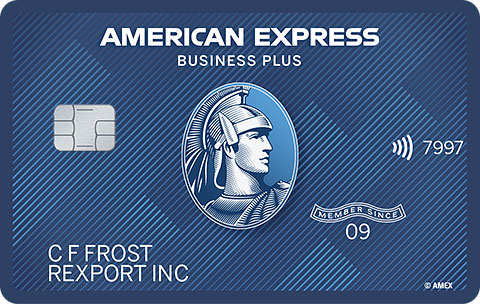
$500 online cash rewards bonus after you make at least $5,000 in purchases in the first 90 days of your account opening.The Blue Business® Plus Credit Card from American Express
A great business card for flexible spending and travel rewards points.
Pros
- Competitive intro APR offer and rewards rate
- No annual fee
- For a limited time, earn Membership Rewards® points on initial spending.
Cons
- Foreign transaction fee.
Intro APR
0% on purchases for 12 months from date of account openingPurchase APR
16.74% - 26.74% VariableAnnual Fee
$0Welcome Offer
Earn 15,000 Membership Rewards® points after you spend $3,000 in eligible purchases on the Card within your first 3 months of Card Membership.Intro APR
0% for 7 billing cycles on purchasesPurchase APR
16.74% - 26.74% Variable APR on purchasesAnnual Fee
$0.00Welcome Offer
50,000 online bonus points after you make at least $5,000 in purchases in the first 90 days of your account opening.Intro APR
0% for 7 billing cycles on purchasesPurchase APR
16.74% - 26.74% Variable APR on purchasesAnnual Fee
$0.00Welcome Offer
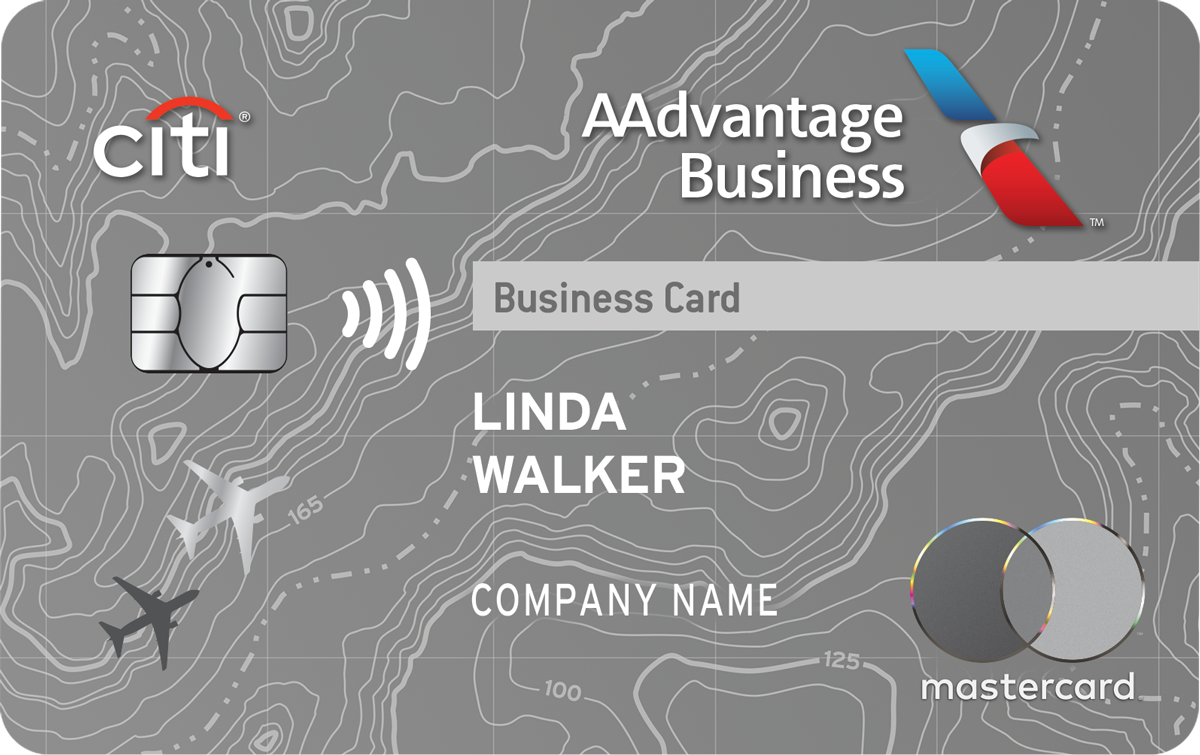
$500 online cash rewards bonus after you make at least $5,000 in purchases in the first 90 days of your account opening.American Airlines flyers earn travel perks and build business credit.
Pros
- Provides great benefits with American Airlines and increased rewards on gas, telco and cable.
Cons
- Limited rewards on spending outside of specific categories.
Intro APR
N/APurchase APR
19.49% - 28.49% (Variable)Annual Fee
$99, waived for first 12 monthsWelcome Offer
For a limited time, earn 75,000 American Airlines AAdvantage® bonus miles after spending $5,000 in purchases within the first 5 months of account opening.
Showing 1 - 6 of 20 results
Compare your options
Showing 1 - 6 of 20 results
| Compare your options | Purchase APR | Annual Fee |
|---|---|---|
 | 16.74% - 26.74% Variable | $0 |
 | 16.74% - 26.74% Variable APR on purchases | $0.00 |
 | 16.74% - 26.74% Variable | $0 |
 | 16.74% - 26.74% Variable APR on purchases | $0.00 |
 | 16.74% - 26.74% Variable APR on purchases | $0.00 |
 | 19.49% - 28.49% (Variable) | $99, waived for first 12 months |
Showing 1 - 6 of 20 results
Make sure it's a match before you apply
Compare your best options from 90+ card options with just a few clicks. Nav matches you based on your business profile.
Business credit cards
Compare rates and rewards for your small business.
Business financing
Funding options based on your unique business data.
Compare small business credit cards of 2026
Choosing the right business credit card isn’t so different from picking the right personal credit card. However, business owners need to thoroughly research their options to understand exactly how this financial tool can be used to help their business and to make sure it doesn’t backfire on their personal finances. The majority of business owners in the U.S. — regardless of size — use their own personal credit to access capital for their business. Whether you’re a new business or an established one, business credit cards can be a vital tool for funding your business.
Portable, flexible, and leveraging a tool most business owners have established already (a personal credit score), business credit cards are a must-have for business owners. But with dozens of options, how do you pick the right one for your business?
No single business credit card will be the best choice for all business owners across the board. Just like the business financing options available to your business, the best credit card for your business will depend on the benefits crucial to your business, what you are likely to qualify for based on your income and personal credit score, and how much cost you’re willing to incur to access capital. In this in-depth guide, we’ll cover all of the essentials to choosing the right business credit card for your business, with insights and advice from our unbiased business and credit experts.
Why get a business credit card?
Business credit cards offer your business numerous benefits, including:
- Access to a line of credit for short-term financing needs. A line of credit is available on most cards, except those that require payment in full each month.
- Financing for startups. As we discuss in this article, most cards don’t require any specific time in business to qualify. Brand new businesses may be able to get a business credit card if they meet the minimum credit score and income requirements, and other qualifications.
- The ability to build business credit if you pay on time. Most cards report account activity to business credit bureaus.
- The ability to separate your personal credit. Most cards don’t report to personal credit unless you default.
- Cards for employees, often with spending controls.
If your business operates under a formal business structure, such as an LLC, S Corporation or C Corporation, it’s essential you use a business credit card, rather than a personal credit card, for business expenses. Commingling business and personal finances may jeopardize the asset protection benefits of your entity at risk.
Business credit cards vs. personal credit cards
A business credit card and personal credit card operate in many similar ways. Both can offer bonus points, rewards points, introductory APR offers and a sign-up bonus, but there are a few distinct differences between how they’re regulated. That means there can be different terms and conditions for business cards and personal cards, and a savvy credit card shopper needs to understand those differences before they apply. First, let’s review how business and personal credit cards are similar.
1. The way they’re used
Whether it’s a chip and PIN or a swipe, business and personal credit cards can be used for purchases online and in stores in the exact same way personal credit cards are. The fundamentals still remain the same and they include the same security features as personal cards like CVV/security codes, expiration dates, signatures, etc.
2. They rely on a personal guarantee
Nearly every major business credit card relies on a personal guarantee (PG) from the applicant. A personal guarantee means that if you default on the credit card or make late payments, the issuer can try to collect from the cardholder, and not just the business. That can even mean suing the cardholder personally to get a judgment.
3. Personal credit scores are key to getting approved
While a business credit card is for business purposes, a personal credit score is still a key qualifying factor across nearly every major business credit card. For business owners with great credit, this is awesome news — you don’t have to worry about establishing a business credit score, submitting business tax returns or financial statements, or getting someone to believe in the vision of your business as you’d need to do for other business financing options. A great credit score helps power approvals and opens up a plethora of options for the applicant to choose from. However, if you have a bad personal credit score or not enough data to produce a credit score — a major problem for the small business community, as Nav noted in its study a few years ago on credit ghosts — it can prove extremely problematic. Since businesses are already viewed as riskier borrowers from the lender’s perspective, credit requirements for business credit cards are sometimes even tighter than the personal credit card realm. There are just a handful of options from the major business credit card issuers for business owners with bad or no credit.
Major differences between personal and business credit cards
1. Credit reporting
When you apply for a personal credit card, your payment and account history is generally reported to at least one, if not all three major consumer credit bureaus — Experian, Equifax and TransUnion. But when you apply for a business credit card, the issuer may not report to any of the consumer credit bureaus except in the case of default or late payment. Each issuer has its own policy in terms of whether it will report positive payment history or just negative information to consumer credit bureaus. A few don’t report to personal credit at all. (Check out this guide to the major business credit card issuers’ consumer credit reporting policies here).
This means shopping the issuer is just as important as shopping the card. If you have bad credit or limited credit history and are making on-time payments and not maxing out the card on a regular basis, having a business credit card report to the personal credit bureaus can be fantastic news — the card may potentially help you establish a business credit rating. However, if you don’t need a positive account on your personal credit history and/or plan to max out the card regularly (business owners often put larger spending balances on their credit cards, as a Nav study found), you may want to opt for an issuer that only reports if you pay late or default on the card. This way, you can take advantage of the new credit line for business purposes, but not have to worry about the credit utilization impact. (Get more insights on how credit utilization impacts your personal credit scores in this article).
The consumer credit bureaus aren’t the only ones you need to consider when selecting a business credit card, though. Business credit card issuers can also report your payment and account history to major business credit bureaus such as Experian or Equifax.
Each issuer has its own policy on which business credit bureaus to which it reports your payments and account history (you can see an which credit cards help build business credit here). The key takeaway here though is that a business credit card is often the first business financing option new businesses access and it can be a quick way to begin establishing credit with the major business credit bureaus if you choose a card that reports to all three bureaus. Establishing business credit early can help you access better net terms with vendors and suppliers, and opens up larger-dollar, lower-rate and longer-term business loans down the road. If you’re going to open a new business credit card to help fund your business or make daily purchases, you might as well choose one that can help you build business credit in the process. It’s never too early to start planning for a successful business and how you’ll take it to the next level.
2. Terms
Federal regulations for consumer credit cards are quite different from those for business credit cards. Business credit cards aren’t covered by the Credit CARD Act, the federal law that protects cardholders from double-cycle billing, rate increases at any time and for any reason, and floating due dates, among other “gotchas.” By and large, the major business credit card issuers have self-regulated and implemented some or all of the same policies on rates and fees. But protections vary by issuer, so make sure you read your cardholder agreement carefully.
3. Debt collection
Third-party debt collectors collecting personal debts must follow the federal Fair Debt Collection Practices Act (FDCPA). That law offers a variety of protections including specific requirements to notify individuals about the debt, preventing debt collectors from discussing the debt with people other than the debtor, and the right for the debtor to request validation of the debt. Business credit cards don’t fall under the FDCPA and therefore debt collectors may be much more aggressive when collecting small business debts. (It’s worth noting the FDCPA does not apply to card issuers collecting their own debts, including personal credit card debt. But states may have laws that apply to those consumer debts.)
How business credit cards build business credit
Whenever anyone applies for a credit card, there’s always a key question they ask — how will it impact my credit? That question is doubly complicated when it comes to business credit cards, as business credit cards may impact your personal and/or business credit scores.
Most business cards report to business credit reporting agencies which can help build business credit.
Getting a card from credit card issuers that report can help ensure you’re building your business credit profile with all major bureaus. However, it also means that if you default, pay late or have other negative information on the card account, it can have a negative impact on your business credit score. Below are some quick tips that may help improve business credit with your business credit card.
It may seem obvious, but selecting a card that helps you build business credit means choosing one that reports to business credit bureaus. This is crucial to the real goal of building business credit — being able to leverage it down the road to establish better vendor/supplier relationships, better net terms and access larger-dollar, longer-term and lower-rate financing options like traditional bank loans and SBA loans. When considering business credit scores, a lender doesn’t have to disclose the bureau that they’re using in the lending decision.
Pay on time
Just like your personal credit scores, payment history is a huge component of your business credit scores. Missing payments or making late payments consistently will help you establish a business credit score, but it likely won’t be a good one. Consistent on-time payments are crucial to building a positive business credit profile that you can leverage when the time is right.
Monitor business credit scores
Just because an issuer reports your account to the major credit bureaus doesn’t mean that they won’t make mistakes or clerical errors. If you’re building business credit, keeping an eye on the accounts that appear on your reports and scores is vital. A “set it and forget it” policy isn’t ideal as you never know when a potential partner, lender, or investor can pull your business credit report — that’s right, unlike personal credit, there is no permissible purpose required to purchase or access your business’s credit report. There are often fees, but any private individual can pull your business’s report at any time. You can monitor and manage your business credit scores with major commercial credit bureaus with a free Nav account, which includes alerts so you can monitor your credit as you build your scores.
Types of business credit cards
Choosing a business credit card can feel overwhelming but ultimately the decision boils down to what’s right for your business and its goals. The main factors you’ll want to evaluate are:
- Costs: What does the card cost and how does that impact what you’ll pay?
- Rewards: If your goal is rewards you’ll want to make sure you make sure you maximize the right types of rewards.
- Features and benefits: These can range from flexible spending limits, to controls on employee accounts, to expense management tools.
We’ll dive into those in just a moment.
As we’ve mentioned, you need to focus on the costs, rewards and features that are most relevant to your business. Take time to think this through, and review the cards you carry annually.
Costs
If you know you will carry a balance from time to time, finding a card with a low interest rate— perhaps even a 0% introductory rate offer for purchases and/or balance transfers— will be paramount to keeping interest charges down. Most credit cards carry a variable APR that will change as interest rates in the economy change. And most will base your interest rate, at least in part, on your credit scores and other qualifications; the better your credit, the more likely you will be offered a low-rate card.
If, on the other hand, you will pay the balance in full each month, you may be most focused on maximizing the rewards you earn. In that case, you’ll weigh the cost of the annual fee against the rewards you’ll accrue. Keep in mind that some cards waive the annual fee the first year to get you in the door; make sure the ongoing cost is net positive.
If you travel overseas, or regularly make purchases from companies based outside the U.S., you’ll also want to look for a card that does not charge foreign transaction fees.
Rewards
Take time to think through which rewards are most valuable to you and your business. For some, that will be travel points and other travel-related benefits such as free checked bags, airport lounge access or bonus miles. If you’re loyal to a particular brand (Delta or American Airlines, or Hilton or Marriott hotels, for example) a co-branded card will help you maximize those benefits. But if you are flexible and book travel based on cost or convenience, then a more general purpose card such as Chase Ultimate Rewards may be a better pick.
If you’re unsure, you can always choose a card with cash back rewards. You’ll earn cash back that you can use as you choose. Even then you will need to have a good handle on the types of purchases you plan to put on the card because some cards will offer higher cash back rewards for bonus categories, such as purchases at office supply stores or fuel. For some cards, bonus categories may rotate. These higher cash back rewards may work for some entrepreneurs; for others, it will be too much work.
Features and benefits
More and more business cards are making it easier for cardholders to track and categorize spending. Some take it a step further with integrated expense reporting. If you will give cards to employees, you’ll likely want to have spending controls so you can minimize unauthorized or fraudulent purchases by employees.
Who is eligible to apply for a business credit card?
The vast majority of business credit card issuers make the decision to issue personal credit cards based on a personal credit score and income from all sources, not just the business. Most cards require good credit, which means a personal credit score of at least 680 or higher.
And when filling in the income section of a credit card application, you will likely be asked to provide household income, not just income from the business. If you have other income sources— including a member of your household who would pitch in and make the payments if necessary— you can include that income.
That means these cards are often available to brand new businesses as well as established businesses that qualify.
There are some cards that base the decision solely on business revenues, and not household income. Those cards are usually called “corporate cards” and they will typically not extend credit to sole proprietorships.
How to apply for a small business credit card
The process of applying for a small business credit card is very similar to that of applying for a personal credit card. Often that means applying online. You’ll provide information about yourself and your business, and a decision can typically be made almost instantly.
It is a good idea (though not always required) to have an Employer Identification Number (EIN) before you apply. If one of your goals is to build business credit, it is also a good idea to make sure your business has a D-U-N-S® number from Dun & Bradstreet before you apply. As part of the CDD regulation to prevent money laundering and other types of fraud, the applicant for the business credit card isn’t the only one who needs to provide information on the application. If you have any business partners who own more than 25% of the business or are a beneficial owner (such as Senior Manager, General Partner, Owner, Chief Executive, President/Chairperson, Treasurer, or Vice President) , they will likely need to provide personal information to make sure they are actual persons and not on a government watch list. (They will not necessarily be subjected to a credit check however.)
Find the right credit cards
Now, on to the business credit card selections!
Compare credit cards for startups
Not all business credit cards are created equal and startups have some very unique needs that a business credit card can help solve. Whether you’re a sole prop startup or have already incorporated or formed a partnership, there are business credit cards that can help you access a line of credit quickly while leveraging your personal credit.
A few key considerations startups should make when choosing a business credit card:
- How much working capital do you need?
- If you’re in a partnership or have a co-founder, whose name will be on the application?
- Who will need access to the card?
- How will it impact your personal and business credit scores?
Here's one great option for a credit card for startups:
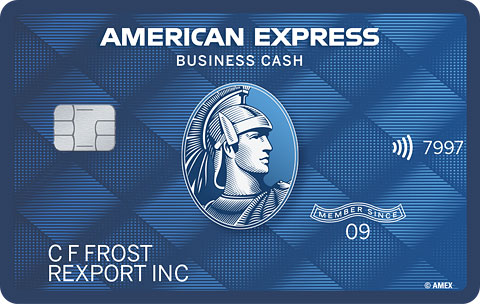
The American Express Blue Business Cash™ Card
With 0% on purchases for 12 months from date of account opening and $0 annual fee, this cash-back card is a great business credit card for entrepreneurs and business owners who are just starting out. Earn a $250 statement credit after you make $3,000 in purchases on your Card in your first 3 months.AmEx also offers a high level of customer service and digital expense tracking tools that can help you get your business started on the right foot.
Compare business credit cards for travel
If you’re traveling often for your business and have a good personal credit score, it makes sense to consider a travel rewards credit card to earn points and perks or cash-back that make life on the road that much easier. Popular travel rewards include:
- Points or miles that can be redeemed for flights and/or hotel rooms
- Bonus points for purchases in specific spending categories
- Free checked bags on flights
- Priority boarding
- Collision damage waiver when you rent a car.
In recent years, travel perks from major co-branded credit cards have lost some of their luster as mergers and rewards program rebrands and restructurings have eliminated some of the perks road warriors know and love. For example, across most major travel cards (even business travel options) the fares and room options available for free or at a discounted rate when using points have become fewer and fewer and the points don’t go as far anymore. However, business travelers can still benefit greatly from the rewards of a travel card, especially if other business rewards cards don’t offer cash back or rewards points for purchases in categories where you spend often.
A few key considerations you should make when choosing a business credit card for travel:
- Are you loyal to a specific airline or hotel chain or do you want to be able to use your rewards with any hotel/carrier?
- Will the card be used for international travel or domestic only?
- Who gets to use the perks/points?
- Does the card carry travel insurance or other travel-specific support or protections?
- What’s the annual fee?
Here's one great option for a business credit card for travel:
The Business Platinum Card® from American Express
The Business Platinum Card® from American Express offers a variety of valuable rewards for travelers. 5X points on flights and prepaid hotels on AmexTravel.com. 2X points on purchases at U.S. construction material & hardware suppliers, electronic goods retailers and software & cloud system providers, and shipping providers, as well as on each eligible purchase of $5,000 or more, up to $2 million of these purchases per calendar year. 1X points on other eligible purchases Plus:
- Get 50% more Membership Rewards® points. That’s an extra half point per dollar, on each eligible purchase of $5,000 or more. You can get up to 2 million additional points per year
- Use Membership Rewards® Pay with Points for all or part of a flight with your selected qualifying airline, and you can get 35% of the points back, up to 1 million bonus points per calendar year when you book on amextravel.com.
- Breeze through security with CLEAR® where available and get up to $209 back per year on your membership when you use your Card.
Read our full list of the best business credit cards for travel here to learn more about other options.
Compare business credit cards for bad credit
Business credit cards for entrepreneurs with a poor personal credit score are very limited. If you’re in between the bad and fair credit categories, taking some time to work on improving your personal credit scores opens up more options with better rates, terms and fees. (If your credit score is in the 500s or below, you may want to look into a secured card instead.)
A few key considerations you should make when choosing a business credit card for bad credit:
- What’s the APR for purchases?
- Is there a penalty APR if I pay late?
- What’s the annual fee?
- How much working capital do I need?
- Would a no-personal-guarantee business credit card be a better option for my needs
- How can this card potentially impact my personal and business credit if I’d like to qualify for better financing down the road?
Read our full list of the best business credit cards for bad credit here to learn more about our other top picks.
Compare high-limit business credit cards
The key unknown that causes many business owners frustration when finding a business credit card is not knowing how big of a credit line they can access before they apply. While other business financing options like lines of credit and term loans have screening processes and prequalification tools that can help you determine if you’ll likely be approved for the credit line you need before you apply, these generally are not available until you get approved for a business credit card. Issuers often do not share maximum limits or even ranges in their marketing, which can make it a real guessing game for business owners who know they would charge large-dollar bills to the card if they had a large-enough limit.
A few key considerations if you need a card with a high credit limit:
- How much working capital do you need?
- If you’re in a partnership or have a co-founder, whose name will be on the application?
- Who will need access to the card?
- How will it impact your personal and business credit scores?
Here's one great option for a business credit card for high credit limits:
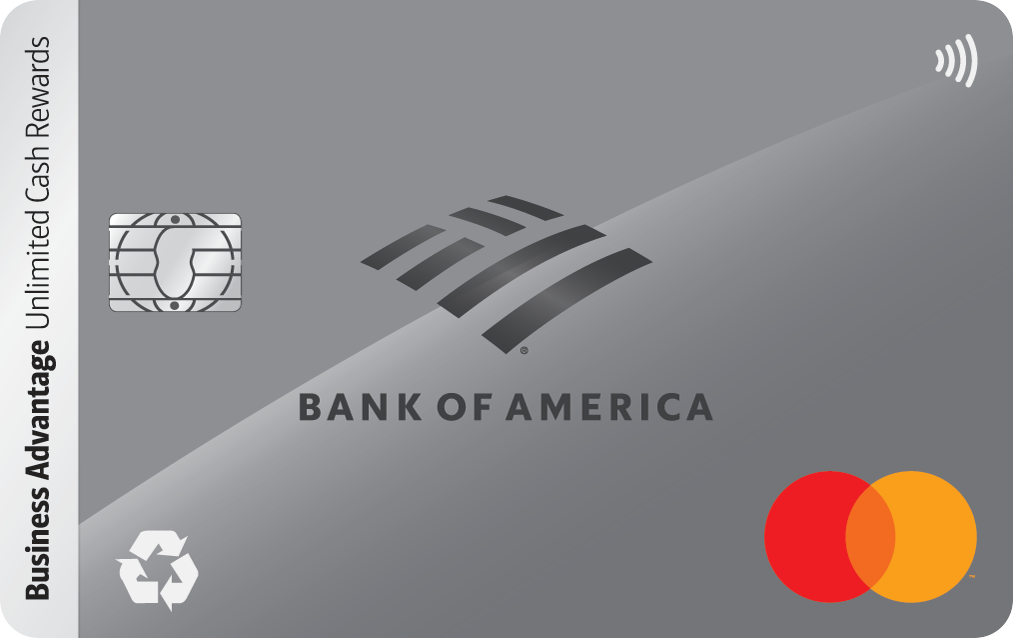
Bank of America® Business Advantage Unlimited Cash Rewards Mastercard® credit card
The Bank of America® Business Advantage Unlimited Cash Rewards Mastercard® credit card offers a host of extras on top of their 0% for 7 billing cycles on purchases introductory APR and $0.00 annual fee. You can earn1.5% cash back on all purchases. There are flexible rewards options, too. Earn even more with a Bank of America business checking account.
Compare business credit cards for LLCs
Structuring your business as an LLC doesn’t by default narrow your business credit card options, but it can make the process of applying for a business credit card a bit more laborious if you have partners.
A few key considerations you should make when choosing a business credit card for your LLC:
- Do you have partners who own 25% or more of the business? (This will require additional documentation when you apply)
- Which owner/founder (if multiple) will be the main account holder?
- What’s your EIN? (Keep it handy — you’ll need this when applying for a business credit card in the name of your LLC.)
Here's one great option for a business credit card for LLCs:
Capital On Tap
Capital on Tap bills themselves as the credit card for small business, and the Capital On Tap is their flagship card for just that purpose. Their application takes as little as two minutes with a response within two business days, and applying won’t affect your credit score. Plus, the $0 annual fee and 1.5% cash back make it attractive for LLCs who need purchasing power fast.
All information about the Capital On Tap card has been collected independently by Nav. This card is not currently available through Nav. To see what business credit cards are available, please visit Nav’s credit card marketplace.
Compare credit cards for multiple employees
If you have employees, you may want to give them credit cards so they can make business purchases directly, rather than coming to you for each request. If you earn rewards from these purchases, the rewards you earn can add up quickly.
Keep in mind that once you authorize an employee to use your business credit card, you become liable for any charges even if the employee makes purchases you do not approve.
A few key considerations you should make when choosing a business credit card for your LLC:
Here are some factors you’ll want to consider when giving cards to employees:
- Is there an annual fee for employee cards? If there is, you’ll want to weigh that cost against rewards you’ll earn.
- Can you set employee spending limits, or control the types of purchases they make? This can help your business avoid or minimize non-approved spending.
- How easy is it to manage employee cards? Can you easily add or remove employees? Can you get notifications of employee card spending?
- Does the card offer virtual card numbers? These single-use card numbers can be helpful for specific purchases, or to manage employee spending.
Here's one great option for a business credit card for multiple employees:
Capital One Spark Cash Select
Capital One Spark cards offer numerous benefits when it comes to employee cards, including:
- Free employee cards
- Customized spending limits
- Account manager access to add or remove employees and manage accounts
- Lock and unlock cards
- Robust notifications
The Capital One Spark Cash Select offers a solid reward rate of 1.5% Cash Back on every purchase and 5% Cash Back on hotels and rental cars booked through Capital One Travel with $0 annual fee.
All information about the Capital One Spark Cash Select has been collected independently by Nav. This card is not currently available through Nav. To see what business credit cards are available, please visit Nav’s credit card page.
Compare Chase business credit cards
Chase is not only one of America’s largest national banks, it also has a plethora of business credit card options and can be an easy and simple solution for existing Chase business banking customers as well as small businesses looking for a bank with a large national presence. All Chase business credit cards are on the Visa network, which has one of the largest payment networks in the world and gives you plenty of flexibility when making purchases in the U.S. or abroad and Chase offers several co-branded credit cards with popular airlines like United and Southwest to round out its standard business credit card offerings.
A few key considerations you should make when choosing a Chase business credit card:
- Do you already bank with Chase or do you plan to?
- Do you want a card to build business credit?
- What rewards structure do you prefer?
- Is there an annual fee?
Here's one great option for a Chase business credit card:
Ink Business Unlimited® Credit Card
With a $0 annual fee, a strong welcome offer and a generous intro APR, this card will appeal to many cardholders. Earn $900 bonus cash back after you spend $6,000 on purchases in the first 3 months from account opening. Plus get 0% Intro APR on Purchases for 12 months.
Ongoing rewards a solid and straightforward. /dEarn unlimited 1.5% cash back on every purchase made for your business. However, be aware of the foreign transaction fee of 3% of each transaction in U.S. dollars.
Compare American Express business credit cards
American Express has long carved out its own special niche in the business credit card space, offering high-end rewards and perks for established businesses while also innovating its online account management tools and services to make it a natural consideration for any business credit card shopper. American Express is both the issuer of its business credit cards and the payment network on which its cards operate, and the company offers a variety of cards suited to different types of small business owners and their business card needs. Most American Express cards also offer a tremendous sign-up bonus, as well as opportunities to earn rewards points and bonus points for qualifying purchases.
A few key considerations you should make when choosing an American Express card:
- Do you have excellent credit?
- Do you want a high annual fee with extra rewards or a lower/$0 annual fee with limited rewards?
- Do you want a charge card or credit card?
- Do places where your business normally make purchases already accept American Express cards?
Here's one great option for a American Express business credit card:
The American Express Blue Business Cash™ Card
The American Express Blue Business Cash™ Card offers a 0% on purchases for 12 months from date of account opening, making this a great pick for business owners looking to improve cash flow. The annual fee is $0. Standard rewards are competitive: Earn 2% cash back on all eligible purchases on the first $50,000 of purchases each calendar year, 1% thereafter.
Read our full list of the best American Express business credit cards here to learn more about our other top picks.
Compare Citi business credit cards
Citi’s suite of business credit card options can be a great fit for businesses of all types, but especially for those looking to build business credit. Citi is one of only two major business credit card issuers that reports account data to all three major business credit bureaus and the SBFE.
Here's one great option for a Citi business card:
Costco Anywhere Visa® Business Card by Citi
Costco club members enjoy a $0 annual fee with their paid warehouse membership. A competitive cash back rate on fuel makes this card a top pick for business owners who drive often: 3% cash back on restaurants and eligible travel purchases and eligible travel, including Costco Travel. 2% cash back on all other purchases from Costco and Costco.com. 1% cash back on all other purchases.
Rewards are paid out annually and can be used on in-store merchandise, with the balance given out as cash upon request. Other spending categories range from 1-2% without the need to enroll in bonus spending promotions. There is no limit to rewards, and your credit card doubles as your Costco membership card. Show it at checkout to get great deals on Costco merchandise, charge your purchase to your account, and build those rewards for an unlimited payout when your reward certificate is issued in February. This card has a lower rate than some other retail and warehouse club cards, so use it for your in-store purchases, online at the Costco website, and wherever you shop. You’ll be getting points for all your business purchases, and team members and employees who are issued cards can be added to your account for even faster reward earnings.
Compare Discover business credit cards
While Discover offers popular consumer credit cards known for no annual fees, straightforward rewards and strong customer service, it has currently stopped offering the Discover it® Business Card.
Compare Capital One business credit cards
The Spark line of business credit cards from Capital One has long been a favorite of business owners looking for quick approvals that serve a wide variety of personal credit scores. Capital One has one of the best all-purpose travel rewards cards as well, meaning its line of cards can be a great fit for business owners looking for cash back or miles and those who travel often but aren’t loyal to a specific airline or hotel chain. Capital One also has business credit cards that operate on both Mastercard and Visa payment networks, which provides some flexibility if you have a preference.
A few key considerations you should make when choosing a Capital One business credit card:
- What’s your personal credit score?
- Do you need employee cards?
- What’s the APR for purchases? (if you plan to carry a balance regularly)
- Who gets to use the perks/points?
Here's one great option for a Capital One business credit card:
For a no-nonsense cash back reward card, this is a popular pick. Part of the impressive line of Spark business cards from Capital One, it offers an annual fee with a solid cash back rewards structure.
Use the cash back for whatever you want, with almost no restrictions on how and where you can earn. If you’re a fan of Capital One and its business-friendly credit model, this is a pick you can be proud to carry.
Right now it’s also offering an excellent intro APR. This makes it an appealing option for short-term financing. An annual fee gives this card an extra boost, and the included welcome offer can give you cash to pay down your account balance or to spend on whatever you want. Rewards don’t expire as long as long as you keep your account in good standing.
All information about the Capital One cards has been collected independently by Nav. This card is not currently available through Nav. To see what business credit cards are available, please visit Nav’s credit card marketplace.
Compare Bank of America business credit cards
Bank of America has over 4,600 branches and close to 16,000 ATMs across the U.S., making it one of the largest banks in America and positioning it well to serve small business customers, especially those who already have a consumer banking relationship with BofA. Bank of America has business credit cards on both the Mastercard and Visa payment networks, which are extensive in the U.S. and abroad.
A few key considerations you should make when choosing a Bank of America business credit card:
- Do you already bank with BofA or do you plan to?
- Do you need access to BofA branch locations?
- What’s your personal credit score?
- Do you want flexible travel rewards that can be used at multiple airlines and hotels?
Here's one great option for a Bank of America business credit card:
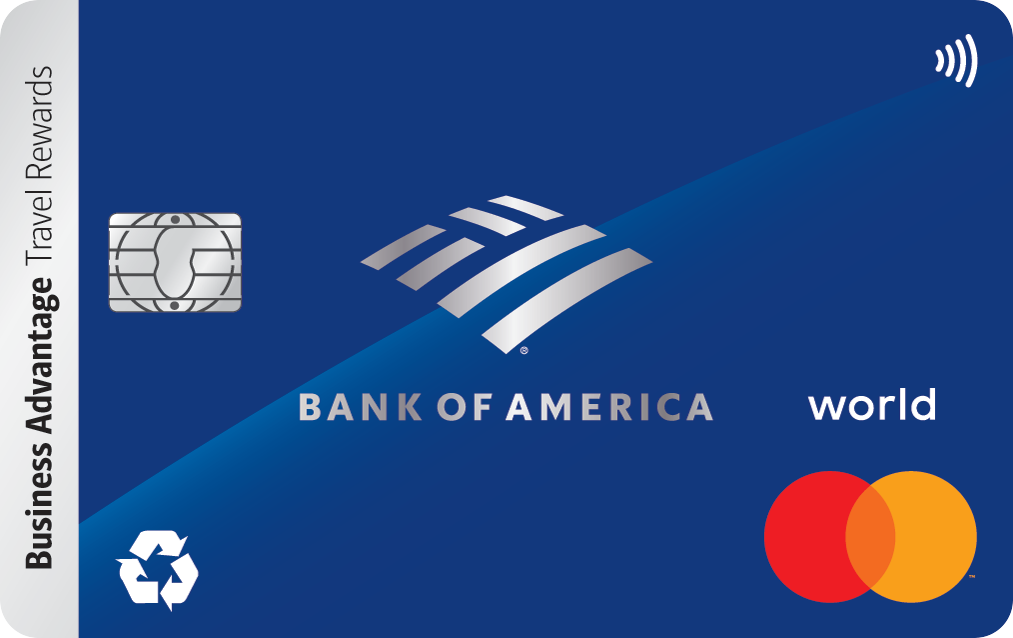
Bank of America® Business Advantage Customized Cash Rewards Mastercard® credit card
The Bank of America® Business Advantage Customized Cash Rewards Mastercard® credit card credit card offers tiered rewards: 3% cash back in the category of your choice (for the first $50,000 in combined choice category/dining purchases each calendar year, 1% thereafter), 2% cash back on dining purchases (for the first $50,000 in combined choice category/dining purchases each calendar year, 1% thereafter), and 1% cash back on all other purchases.
And if you’re a BofA customer, you can earn even greater rewards. You can earn up to 75% more cash back on every purchase, if you have a business checking account with Bank of America and qualify for its highest Preferred Rewards for Business tier. At that level the card is a top contender for cash back rewards. And right now it’s offering an intro APR of 0% for 9 billing cycles on purchases.
Compare Wells Fargo business credit cards
Wells Fargo is a premier American bank with a foothold in nearly every state, making it a top option for most American business owners shopping for a credit card.
A few key considerations you should make when choosing a Wells Fargo business credit card:
- Do you already bank with Wells Fargo or do you plan to?
- Do you need access to Wells Fargo branch locations?
- What’s your personal credit score?
Here's one great option for a Wells Fargo business credit card:
Wells Fargo Business Platinum Credit Card
The Wells Fargo Business Platinum Credit Card offers a choice between cash back or rewards points. Choose the cash back option and earn 1.5% cash back on qualifying purchases. Choose the rewards points option to earn 1 point on every $1 spent and receive 1,000 bonus points every billing cycle when you spend at least $1,000 on qualifying purchases. (Redeem points for gift cards, merchandise, airline tickets and more.) There’s no annual fee and a 0% introductory rate for the first nine months.
All information about the Wells Fargo Business Platinum Credit Card has been collected independently by Nav. This card is not currently available through Nav. To see what business credit cards are available, please visit Nav’s credit card page.
Compare U.S. Bank business credit cards
U.S. Bank has a well-rounded offering of business credit cards, with options for nearly all business owners depending on your rewards preference and whether you are interested in an intro offer. U.S. Bank offers some of the healthiest intro offers for business cards and truly designed its entire program to craft cards that are more custom, rather than a one-size-fits-all mentality.
A few key considerations you should make when choosing a US Bank business credit card:
- Is an intro offer important to you?
- Do you want a simple rewards structure or is complexity OK?
- What’s your personal credit score?
Here's one great option for a U.S. Bank business credit card:
U.S. Bank Triple Cash Rewards Visa® Business Card
As far as rewards cards go, the U.S. Bank Triple Cash Rewards Visa® Business Card is a solid pick. Earn up to 3% cash back on eligible gas station, office supply store and cell phone/service provider net purchases. Earn 1% cash back on all other eligible net purchases.
For business owners looking to maximize cash flow, there is a 0% Intro APR on balance transfers for 12 billing cycles. After that, a variable APR currently 17.99%–26.99%. And the annual fee is $0.
All information about the U.S. Bank Triple Cash Rewards Visa Business Card has been collected independently by Nav. This card is not currently available through Nav. To see what business credit cards are available, please visit Nav’s credit card page.
Advertising Disclosure
The credit card, financing, and service products that appear on this site are from credit card, financing, and service companies from which this site receives compensation when a customer clicks on a link, when an application is approved, or when an account is opened. This may influence how and where products appear. However, it does not affect our evaluations or recommendations. Nav strives to provide accurate, up-to-date information, but you should always review the full terms and conditions on the issuer’s website before applying.
Personal FICO® credit scores and other credit scores are used to represent the creditworthiness of a person and may be one indicator to the credit or financing type you are eligible for. Nav uses the Vantage 3.0 credit score to determine which credit offers are recommended which may differ from the credit score used by lenders and service providers. However, credit score alone does not guarantee or imply approval for any credit card, financing, or service offer.
Editorial Disclosure
Our top priority is to provide accurate, unbiased financial information for your business. Nav may receive compensation from partners, but this does not influence our editors’ opinions or recommendations. Our partners cannot pay for favorable reviews. All content is accurate to the best of our knowledge when posted. Any views expressed are the author’s alone and have not been reviewed, approved, or endorsed by the companies mentioned.