Compare 0% intro APR business credit cards in 2026

Written byJasmin Baron

Reviewed by Robin Saks Frankel
Summary
- If you’re a small business owner looking for affordable financing options, 0% intro annual percentage rate (APR) business credit cards can be a smart strategy to not accrue interest during the promotional period, as long as you meet the terms of the offer (such as making on-time minimum payments).
- These 0% APR business credit card offers can be used to finance large purchases, manage short-term cash flow, or consolidate higher-interest debt.
- However, not all 0% APR offers work the same way. Some apply only to purchases, while others may include balance transfers. And in every case, the promotional rate eventually ends and converts to the card’s regular ongoing APR.
- In this guide, we’ll review the top 0% intro APR business credit cards available in 2026, along with how these offers work, what to consider before applying, and how to use them in a way that helps you avoid interest.
Compare 0% intro APR business credit cards
Here are some of the most popular 0% intro APR business credit cards for purchases, balance transfers, or both. All credit offers are subject to credit approval. APR ranges are variable and subject to change. Rates are accurate as of March 24, 2026 and depend on creditworthiness and other factors. Balance transfers may not be available on all accounts or may require eligibility.
Chase Ink Business Cash® Credit Card: For office supplies and internet spend
Intro APR: 0% Intro APR on Purchases for 12 months.
Welcome offer: Earn $900 bonus cash back after you spend $6,000 on purchases in the first 3 months from account opening.
Balance transfer fee: Either $5 or 5% of the amount of each transfer, whichever is greater.
Annual fee: $0
Foreign transaction fee: 3% of each transaction in U.S. dollars.
Rewards: 3% of each transaction in U.S. dollars
Credit needed: Good to excellent.
If your business regularly spends on office supplies, internet, or phone services, the Chase Ink Business Cash® Credit Card can offer strong value — especially during the intro APR period. New cardholders qualify for a 0% Intro APR on Purchases for 12 months. After, a variable 18.49% - 24.49% Variable applies There’s no intro APR offer for balance transfers.
This card is a solid 0% APR business card for purchases, combining short-term financing with bonus-category rewards that may help reduce costs depending on how the card is used.
Best for: Businesses with consistent office-related expenses that have large upcoming purchases they can’t pay off all at once.
Considerations: The intro APR only applies to purchases, not balance transfers.
Chase Ink Business Unlimited® Credit Card: For simple flat-rate rewards
Intro APR: 0% intro APR on purchases for 12 months. After, a 18.49% - 24.49% Variable applies.
Welcome offer: Earn $900 bonus cash back after you spend $6,000 on purchases in the first 3 months from account opening.
Balance transfer fee: Either $5 or 5% of the amount of each transfer, whichever is greater.
Annual fee: $0
Foreign transaction fee: 3% of each transaction in U.S. dollars.
Ongoing rewards: Earn unlimited 1.5% cash back on every purchase made for your business.
Credit needed: Good to excellent.
The Chase Ink Business Unlimited® Credit Card may be a good fit if your business has a wide range of expenses and you prefer a simple rewards structure without tracking bonus categories.
This intro APR business credit card offers a straightforward way to earn cash back on all purchases, and the intro APR offer can help spread out the cost of new, larger expenses.
Best for: Businesses that want simplicity.
Considerations: Intro APR only applies to purchases, not balance transfers.
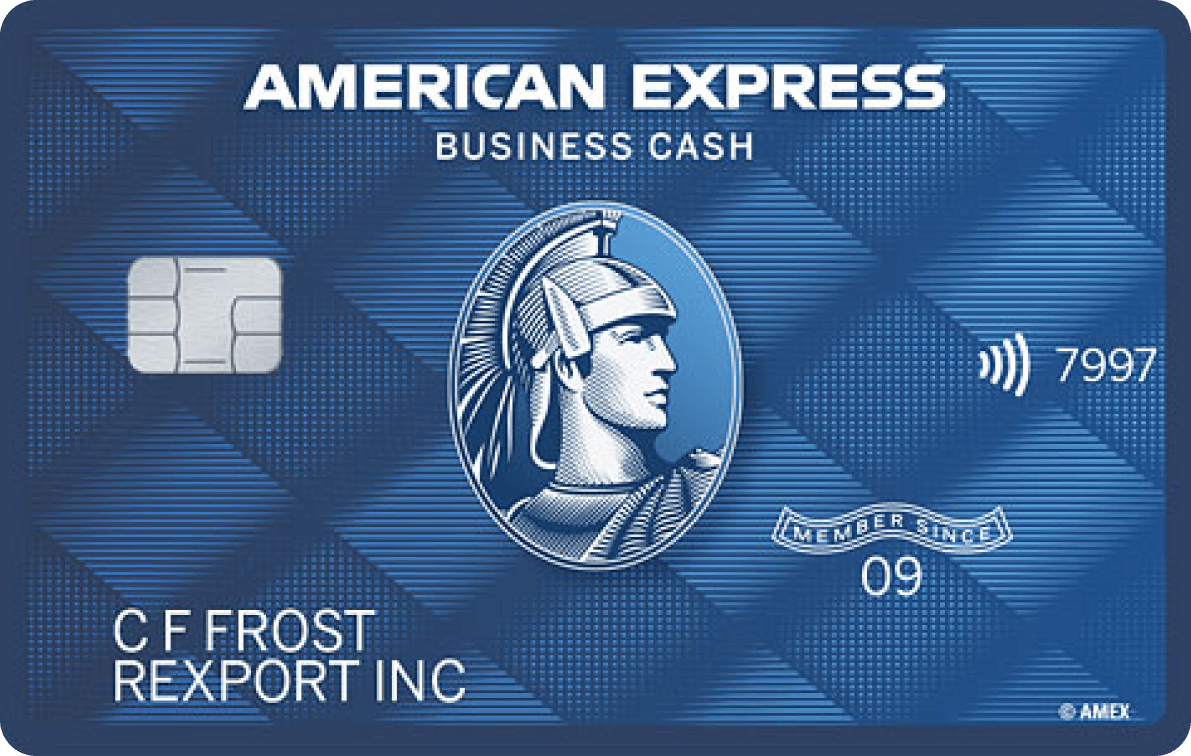
The American Express Blue Business Cash® Card: For straightforward cash back
Intro APR: 0% on purchases for 12 months from date of account opening. After, 16.99% - 28.74% Variable applies.
Welcome offer: As High As a $500 Statement Credit after you spend $5,000 in purchases on your new Card within the first 3 months of Card Membership. Apply and find out your welcome offer. Welcome offers vary and you may not be eligible for an offer.
Balance transfer fee: If eligible, either $5 or 3% of the amount of each transfer, whichever is greater.
Annual fee: $0
Foreign transaction fee: 2.7% of each transaction after conversion to US dollars.
Ongoing rewards: Earn 2% cash back on all eligible purchases on the first $50,000 of purchases each calendar year, 1% thereafter.
Credit needed: Good to excellent. The American Express Blue Business Cash® Card earns cash back that is automatically applied to your statement, making it easier to manage rewards. It can work well for businesses with predictable expenses that want a simple way to earn rewards while taking advantage of a 0% intro APR.
The card’s 2% cash-back rate is competitive, but it applies only to the first $50,000 in card purchases each year — after that, the rate drops to 1% cash back. In addition, you can’t redeem rewards for a bank deposit or check, because cash back is automatically applied to your statement each month.
Best for: Business owners who prefer automatic cash back; businesses that won’t spend more than $50,000 annually on the card.
Considerations: Only one redemption option available .
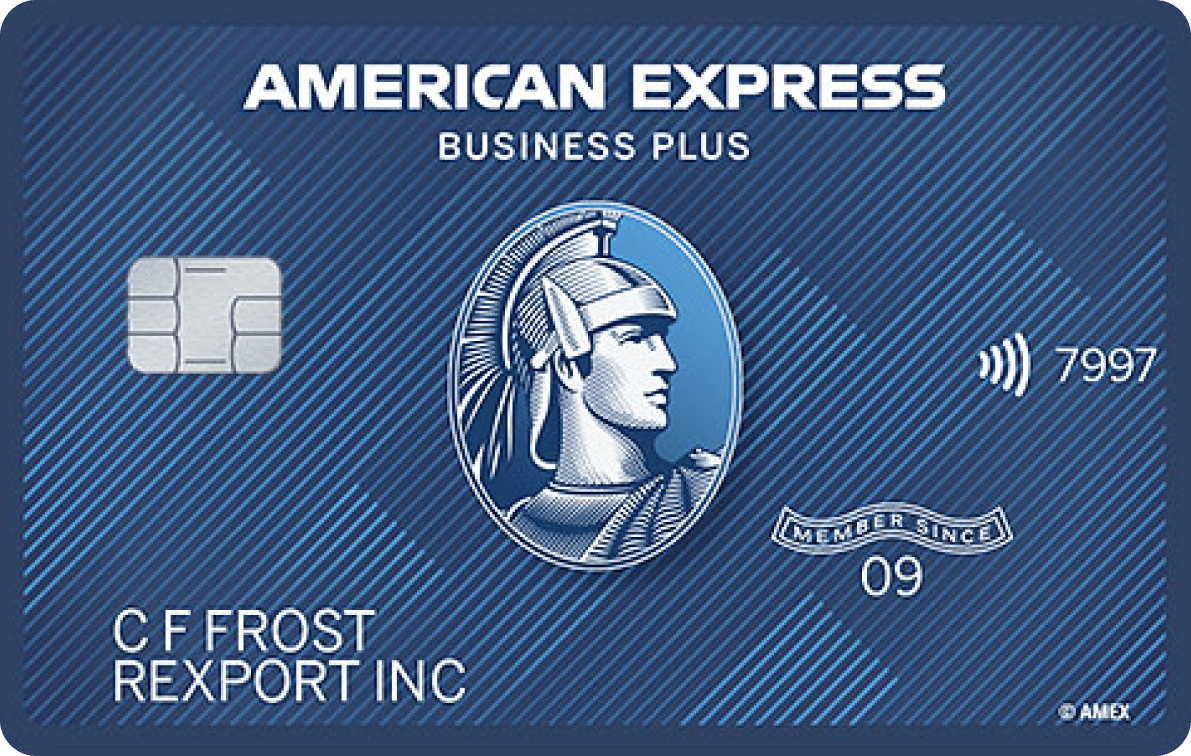
The Blue Business® Plus Credit Card from American Express: For flexible points value
Intro APR: 0% on purchases for 12 months from date of account opening.
Welcome offer: 0% on purchases for 12 months from date of account opening.
Balance transfer fee: If eligible, either $5 or 3% of the amount of each transfer, whichever is greater.
Annual fee: $0
Foreign transaction fee: 2.7% of each transaction after conversion to US dollars.
Ongoing rewards: Earn 2X points on everyday business purchases such as office supplies or client dinners. 2X applies to the first $50,000 in purchases per year, 1 point per dollar thereafter. Terms and limitations apply.
Credit needed: Good to excellent.
The Blue Business® Plus Credit Card from American Express earns Amex Membership Rewards points instead of cash back, which may offer more flexibility depending on how you redeem them. You’ll typically get the most value by transferring rewards to airline and hotel partners to book award travel, although cash back as a statement credit is an option, too (albeit at a poor rate of 0.6 cents per point).
This card is a good choice if you value travel rewards or want more control over how you use them. However, since the top rewards rate is capped at $50,000 in spending per year (1% thereafter), it’s not ideal for businesses with significantly higher annual spending.
Best for: Businesses that want flexible redemption options, especially for travel.
Considerations: Not a good choice if you prefer simple cash back.
U.S. Bank® Business Shield Card: For ongoing travel rewards
Intro APR: 0% introductory APR on purchases and balance transfers for the first 12 billing cycles of account opening. Then, a 16.24%-25.24% variable APR applies.
Welcome offer: None.
Balance transfer fee: Either 5% of the amount of each transfer or $5 minimum, whichever is greater.
Annual fee: $0
Foreign transaction fee: 3% of each foreign transaction.
Ongoing rewards: Earns 5% cash back on prepaid air, hotel, and car rentals booked directly in the U.S. Bank Travel Center (plus, you can earn a $50 annual statement credit after $5,000 in purchases made through the Travel Center with the card).
Credit needed: Good to excellent.
The U.S. Bank Business Shield Card, which replaced the since-sunset U.S. Bank Business Platinum Card, is a compelling choice if you need a 0% APR business balance transfer in addition to purchases.
It’s also a strong option for businesses that book travel, earning 5% cash back on prepaid flights, hotels, and car rentals booked through the U.S. Bank Travel Center. There’s an additional incentive to book this way, since the card offers a $50 annual statement credit after you spend $5,000 on U.S. Bank Travel Center purchases. However, purchases outside of this category don’t earn rewards.
Best for: Businesses that need a 0% intro APR on balance transfers in addition to purchases.
Consider: Rewards are minimal compared to other options.
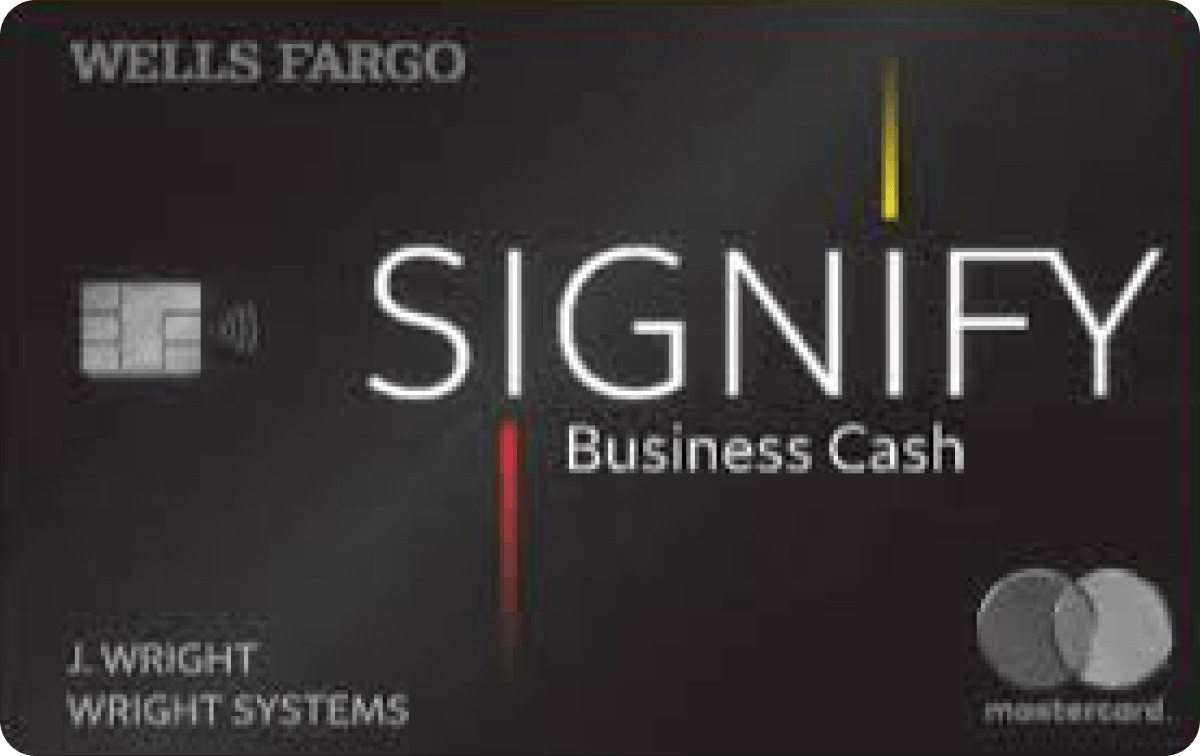
Wells Fargo Signify Business Cash® Card: For ongoing cash back after 0% APR ends
Intro APR: 16.99% - 24.99% Variable APR
Welcome offer: Earn a $500 cash rewards bonus when you spend $5,000 in purchases for your business in the first 3 months.
Balance transfer fee: N/A (balance transfers aren’t available).
Annual fee: $0
Foreign transaction fee: 3%
Ongoing rewards: Earn unlimited 2% cash rewards on purchases for your business – without caps or spending categories.
Credit needed: Good to excellent.
With a generous flat-rate rewards structure, the Wells Fargo Signify Business Cash Card is worth considering both for the intro APR on purchases and the ongoing rewards-earning potential. Given the lack of bonus categories (purchases earn unlimited 2% cash rewards), it’s also ideal for business owners who prefer a straightforward approach.
Keep in mind the card doesn’t allow balance transfers, even at a regular APR.
Best for: Businesses that want strong, simple ongoing rewards value.
Considerations: Balance transfers aren’t an option.
U.S. Bank Triple Cash Rewards Visa® Business Card: For gas, dining, office supplies, and cellphone bills
Intro APR: 0% introductory APR for the first 12 billing cycles on purchases and balance transfers made within the first 30 days of account opening. Then, a 17.24%-26.24% variable APR applies.
Welcome offer: Earn $750 cash back after the account owner spends $6,000 on purchases within the first 180 days from account opening (spending made by authorized employees doesn’t count toward the welcome offer).
Balance transfer fee: Either 5% of the amount of each transfer or $5 minimum, whichever is greater.
Annual fee: $0
Foreign transaction fee: 3% of each foreign transaction.
Ongoing rewards: 3% cash back on eligible purchases at gas and EV charging stations (transactions of $200 or less, excluding discount stores, supercenters, and wholesale clubs), office supply stores, cellphone service providers, and restaurants; 1% cash back on other purchases.
Credit needed: Good to excellent.
The U.S. Bank Triple Cash Rewards Visa Card offers an introductory APR on purchases and balance transfers (which must be completed within the first 30 days of account opening to qualify for the promotional rate). Its 3% bonus categories cover a range of business-friendly expenses, including gas and dining, and the card offers a $100 annual statement credit following 11 consecutive months of eligible software service purchases made directly with a software service provider.
Business owners who don’t spend in the 3% categories, or who prefer flat-rate rewards, would likely do better with a different card.
Best for: Businesses looking for an intro APR on both purchases and balance transfers, and those that spend heavily in the 3% bonus categories.
Considerations: Balance transfers must be completed quickly after account opening.
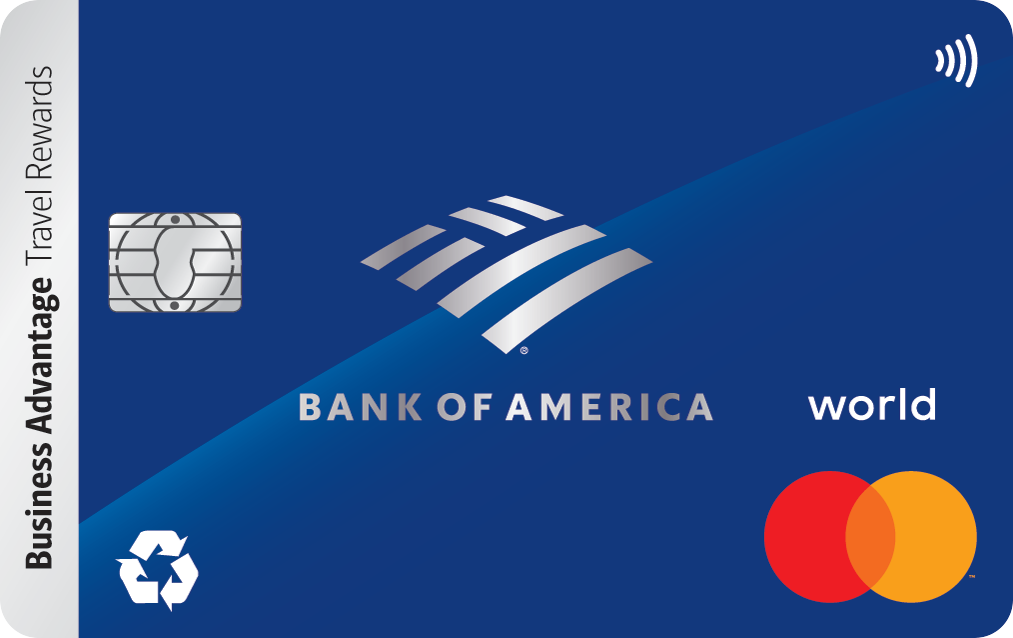
Bank of America® Business Advantage Travel Rewards World Mastercard® credit card: For international spending
Intro APR: 0% for 7 billing cycles on purchases, then 16.99% - 26.99% Variable APR on purchases.
Welcome offer:50,000 online bonus points after you make at least $5,000 in purchases in the first 90 days of your account opening.
Balance transfer fee: 5% of the amount of each transaction.
Annual fee: $0.00
Foreign transaction fee: None.
Ongoing rewards: 1.5 rewards points for every $1 spent on all purchases and 3 points for every $1 spent for travel booked through the Bank of America® Travel Center.
Credit needed: Excellent.
If you travel abroad or make purchases from international vendors for your business, the could save you money, thanks to its lack of foreign transaction fees. Other cards on our list charge a fee of up to 3% for purchases made in foreign currency, which can quickly add up.
That said, the card’s intro APR offer is comparatively short and applies only to purchases — not to balance transfers. However, like all rewards-earning Bank of America business credit cards, you could earn up to 75% more rewards for your spending if you qualify for the issuer’s Preferred Rewards for Business program.
Best for: Businesses that spend a lot on foreign purchases.
Considerations: A short promotional period for the intro APR on purchases may not be adequate for longer-term financing; excellent credit required.
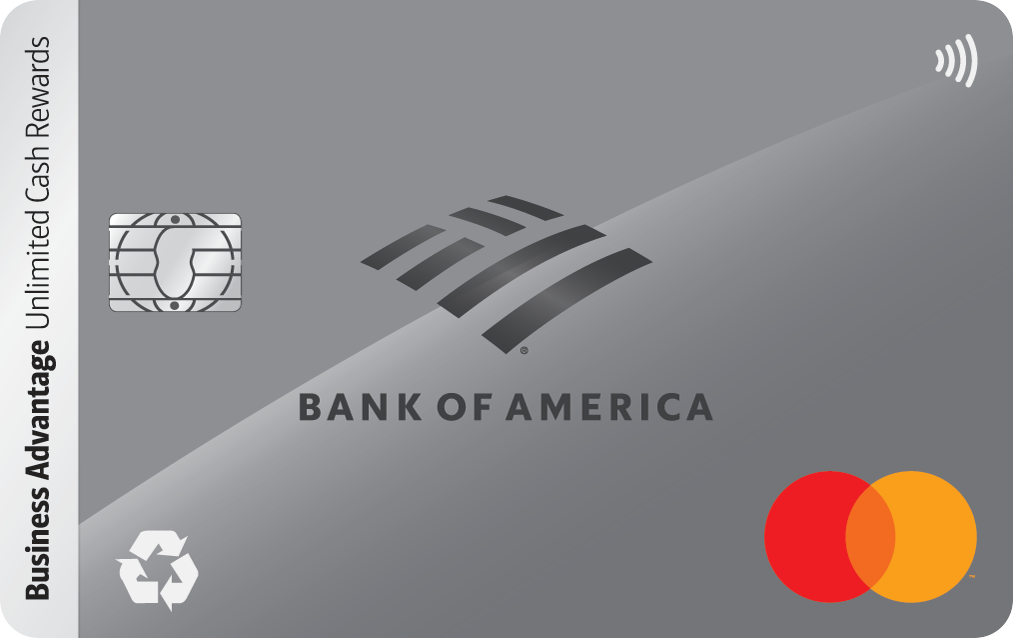
Bank of America® Business Advantage Unlimited Cash Rewards Mastercard® credit card: For no-frills cash back
Intro APR: 0% for 7 billing cycles on purchases. Then, 16.99% - 26.99% Variable APR on purchases.
Welcome offer: $500 online cash rewards bonus after you make at least $5,000 in purchases in the first 90 days of your account opening.
Balance transfer fee: 5% of the amount of each transaction.
Annual fee: $0.00
Foreign transaction fee: 3% of the U.S. dollar amount of each transaction.
Ongoing rewards: 1.5% cash back on all purchases..
Credit needed: Excellent.
The Bank of America® Business Advantage Unlimited Cash Rewards Mastercard® credit card is worth considering if your business doesn’t need a long introductory APR and you prefer simple rewards. The card earns 1.5% cash back on all purchases., with no bonus categories to track.
As with other BofA business cards, if you qualify for the Bank of America Preferred Rewards for Business program, you could earn up to 75% more cash back.
Best for: Businesses that prefer flat-rate cash back.
Considerations: A short promotional period for the intro APR on purchases may not be adequate for longer-term financing; excellent credit required.
Bank of America® Business Advantage Customized Cash Rewards Mastercard® credit card: For customizing rewards
Intro APR: 0% for 7 billing cycles on purchases. Then, 16.99% - 26.99% Variable APR on purchases applies.
Welcome offer: $500 online cash rewards bonus after you make at least $5,000 in purchases in the first 90 days of your account opening.
Balance transfer fee: 5% of the amount of each transaction.
Annual fee: $0.00
Foreign transaction fee: 3% of the U.S. dollar amount of each transaction.
Ongoing rewards: 3% cash back in the category of your choice (for the first $50,000 in combined choice category/dining purchases each calendar year, 1% thereafter), 2% cash back on dining purchases (for the first $50,000 in combined choice category/dining purchases each calendar year, 1% thereafter), and 1% cash back on all other purchases.
Credit needed: Excellent
The Bank of America® Business Advantage Customized Cash Rewards Mastercard® credit card takes a unique approach to earning rewards. Cardholders can choose their 3% cash-back category from a list of options, along with earning 2% back on dining (a $50,000 combined annual cap applies to the 3% and 2% categories, after which you’ll earn 1% back).
Business owners who like this hands-on approach could do very well with this card, though it also requires excellent credit and has a shorter promo APR period. Again, if you qualify for the Bank of America Preferred Rewards for Business program, your rewards earnings could get a boost of up to 75%.
Best for: Owners who want customizable rewards.
Considerations: A short promotional period for the intro APR on purchases may not be adequate for longer-term financing; excellent credit required.
Bank of America® Platinum Plus® Mastercard® Business card: Best for competitive ongoing APR
Intro APR: 0% introductory APR on purchases for the first 7 billing cycles (followed by a 14.74%-25.74% variable APR).
Welcome offer: Earn a $300 online cash rewards bonus after you spend $3,000 on purchases within the first 90 days of account opening.
Balance transfer fee: 5% of the amount of each transaction.
Annual fee: $0
Foreign transaction fee: 3% of the U.S. dollar amount of each transaction made in a foreign currency.
Ongoing rewards: None.
Credit needed: Excellent.
For those who may need to carry a balance outside of an intro APR period, the Bank of America Platinum Plus Card is worth a look. It charges a potentially lower ongoing APR than most BofA business cards, making it a respectable option for continued financing.
However, there’s a tradeoff: It doesn’t earn rewards beyond its welcome offer, and the intro APR period is shorter than average.
Best for: Business owners who may carry a balance after the intro APR promo period ends
Considerations: A short promotional period for the intro APR on purchases may not be adequate for longer-term financing; excellent credit required.
0% APR business credit card comparison snapshot
Here’s a side-by-side look at the top 0% APR business credit card offers. Note that none charge an annual fee. All rates and fees valid as of March 24, 2026.
Card | Best for | Intro APR | Rewards | |
Ink Business Cash® Credit Card | Office supplies and internet spend | 0% Intro APR on Purchases for 12 months(then a 18.49% - 24.49% Variable) | Earn 5% cash back on the first $25,000 spent in combined purchases at office supply stores and on internet, cable and phone services each account anniversary year. Earn 2% cash back on the first $25,000 spent in combined purchases at gas stations and restaurants each account anniversary year. Earn 1% cash back on all other card purchases with no limit to the amount you can earn. | |
Ink Business Unlimited® Credit Card | Simple flat-rate rewards | 0% intro APR on purchases for 12 months. Then, 21.24%-26.24% Variable. | Earn unlimited 1.5% cash back on every purchase made for your business. | |
The American Express Blue Business Cash® Card | Straightforward cash back | 0% on purchases for 12 months from date of account opening. Then, 16.99% - 28.74% Variable. | Earn 2% cash back on all eligible purchases on the first $50,000 of purchases each calendar year, 1% thereafter. | |
The Blue Business® Plus Credit Card from American Express | Flexible points value | 0% on purchases for 12 months from date of account opening. Then, 16.99% - 28.74% Variable. | Earn 2X points on everyday business purchases such as office supplies or client dinners. 2X applies to the first $50,000 in purchases per year, 1 point per dollar thereafter. Terms and limitations apply. | |
U.S. Bank Business Shield | Ongoing travel rewards | 0% introductory APR on purchases and balance transfers for the first 12 billing cycles of account opening (then a 16.24%-25.24% variable APR) | 5% cash back on prepaid air, hotel, and car rentals booked directly in the U.S. Bank Travel Center | |
Wells Fargo Signify Business Cash | Ongoing cash back after 0% APR ends | 0% introductory APR on purchases for 12 months from account opening (then a 16.74%-24.74% variable APR) | Unlimited 2% cash rewards on purchases | |
U.S. Bank Triple Cash Rewards | Gas, dining, office supplies, and cellphone bills | 0% introductory APR for the first 12 billing cycles on purchases and balance transfers made within the first 30 days of account opening (followed by a 17.24%-26.24% variable APR) | 3% cash back on eligible purchases at gas and EV charging stations (transactions of $200 or less, excluding discount stores, supercenters, and wholesale clubs), office supply stores, cellphone service providers, and restaurants; 1% cash back on other purchases | |
Bank of America® Business Advantage Travel Rewards World Mastercard® credit card | International spending | 0% for 7 billing cycles on purchases. Then, 16.99% - 26.99% Variable APR on purchases | 1.5 rewards points for every $1 spent on all purchases and 3 points for every $1 spent for travel booked through the Bank of America® Travel Center. | |
Bank of America® Business Advantage Unlimited Cash Rewards Mastercard® credit card | No-frills cash back | 0% for 7 billing cycles on purchases. Then, 16.99% - 26.99% Variable APR on purchases. | 1.5% cash back on all purchases. | |
Bank of America® Business Advantage Customized Cash Rewards Mastercard® credit card | Customizing rewards | 0% for 7 billing cycles on purchases. Then, 16.99% - 26.99% Variable APR on purchases. | 3% cash back in the category of your choice (for the first $50,000 in combined choice category/dining purchases each calendar year, 1% thereafter), 2% cash back on dining purchases (for the first $50,000 in combined choice category/dining purchases each calendar year, 1% thereafter), and 1% cash back on all other purchases. | |
Bank of America Platinum Plus Business | Competitive ongoing APR | 0% introductory APR on purchases for the first 7 billing cycles (then a 14.74%-25.74% variable APR) | None |
How to choose the best 0% APR business credit card
A business credit card with no interest may help support business expenses or free up cash flow for other purposes during the introductory period, but there’s a lot of variation between the different cards available. Here’s what to consider while you’re evaluating these 0% APR business credit card offers.
Match the card to your goal
Not all businesses have the same financing needs. Before comparing specific offers, it helps to think about how you plan to use the card. For example:
- If you’re financing a large purchase, a longer intro period may matter most.
- If you’re transferring a balance, fees and eligibility can be more important.
- If you want long-term value, rewards may play a bigger role.
Starting with your goal can make it easier to narrow down your options.
Compare intro APR details and fees
You’ll want to evaluate the offer details before you apply — particularly if you’re seeking a 0% APR business card for startups and don’t have strong personal credit. Most 0% APR business credit cards require at least a good credit score to apply, so if you’re not there yet, you may want to weigh a 0% APR vs. a business line of credit, for instance.
As you review different cards, look closely at the details of the offer:
- Does the 0% APR apply to purchases, balance transfers, or both?
- How long is 0% APR period?
- Is there a balance transfer fee?
- What is the APR after the intro period ends?
These factors can affect your total cost of borrowing, both during and after the intro period.
Evaluate rewards and value after 0% ends
Some cards offer strong rewards even after the intro APR expires, while others are primarily focused on short-term financing. If you plan to keep the card long term, it may be worth choosing one that continues to provide value.
Consider your typical business expenses and, all else being equal, pick a card whose rewards align with your purchase habits.
Consider credit limits and spending needs
Credit limits can vary based on your credit profile, business revenue, and the issuer’s policies. If you’re planning a large purchase, make sure the expected limit will meet your needs. An intro APR when you don’t have a large credit limit won’t make much of a dent in your borrowing costs.
Check issuer rules and approval odds
Each issuer has its own approval criteria and application rules. Applying for a card that aligns with your credit profile may improve your chances. For example, Bank of America business cards typically require excellent credit to be considered, while Chase, Amex, Wells Fargo, and U.S. Bank may consider applicants with personal credit in the good range.
You’ll also want to be mindful of card-specific rules. Chase, for instance, may not approve you for a new card if you’ve opened five or more personal cards (from any bank) in the previous 24 months. This is known as the (unofficial) Chase 5/24 rule.
How do 0% intro APR business cards work?
A 0% intro APR means you won’t be charged interest on eligible balances during the promotional period. However, you’re still required to make at least the minimum payment each month.
"'No interest' is a powerful selling point for 0% intro APR credit cards. They're popular for good reason: roughly a quarter of all credit card debt currently carries an introductory promotional rate — usually 0% APR for more than a year — according to a 2023 working paper by Federal Reserve Bank of Philadelphia researchers Lukasz A. Drozd and Michal Kowalik, The Conundrum of Zero APR: An Analytical Framework.
If a balance remains after the intro period ends, interest will begin to accrue at the card’s standard variable rate.
Purchases vs. balance transfers
It’s important to note whether a card offers an intro 0% APR on purchases, balance transfers, or both.
An intro APR on purchases is useful for current spending, allowing you to take advantage of an interest-free period on new card charges for a set time. Meanwhile, an intro APR on balance transfers can save you money by consolidating existing high-interest debt on the new card.
Let’s look at how intro 0% APRs on purchases versus balance transfers compare.
Feature | Purchases | Balance transfers |
What it covers | New spending | Existing debt |
Common fees | None | Typically 3%-5% of the transferred balance |
Best use case | Financing new expenses | Consolidating debt |
Common pitfalls | Overspending | Balance transfer fees offset savings |
How long do 0% intro APR periods last?
While some personal cards offer intro APR periods up to 21 months, 0% intro APR business credit cards aren’t usually as generous. Even the best intro APR business credit cards have promotional periods lasting only seven to 12 months.
The promotional period starts the day your account is opened — not when you receive your card or make your first purchase/balance transfer. It’s also important to note the fine print: Some cards extend the promotion for a certain number of days, some by months, and others by billing cycles.
What can end your 0% intro APR early
Can you lose 0% APR on your card? Yes, you can, if you don’t make your monthly minimum payment, pay late, or violate other terms of your cardholder agreement. Setting a calendar reminder to avoid missing your payment due date is the best way to avoid this pitfall.
What happens when the intro period ends
Once the promotional period expires, any remaining balance will be subject to the card’s standard APR. Credit card interest rates can be very high; once your intro APR expires, you may choose to:
- Pay off the balance in full to avoid interest altogether
- Transfer the balance to another card with a lower interest rate
- Refinance with another funding option, such as a business line of credit or business loan
How to qualify for a 0% intro APR business credit card
An intro APR business credit card can be more challenging to qualify for since they often require a stronger credit profile than other funding options, such as alternative credit cards that don’t require a personal guarantee or bad-credit business loans.
Credit score expectations and personal guarantee basics
Most business credit cards require good to excellent personal credit. In many cases, you’ll also need to provide a personal guarantee. Issuers aren’t likely to lend you money if they think you’re a credit risk; that’s why building and maintaining your personal credit, even as a business owner, is key to securing the best financing.
Business details issuers consider
Issuers may also look at other factors when deciding whether to approve you for a 0% APR business card, including:
- Time in business (established ventures may have better luck than startups, for instance)
- Revenue (which can indicate how likely you are to pay back what you borrow)
- Industry (some fields may be more appealing to lenders than others)
- Existing obligations (such as loan or credit card balances)
Tips to improve approval chances
You may be able to improve your chances of approval by lowering your credit utilization (the amounts you’ve borrowed relative to the amount of credit available to you). You can also review your credit reports for errors that may be dragging your scores down.
Applying for cards that match your credit profile will help boost your chances of a successful application. Avoid applying for too much credit in a short time frame; spacing out applications can prevent issuers from seeing you as a risky borrower.
How to maximize a 0% intro APR offer
You’ve applied for an intro APR business credit card, gotten approved, and received the card in the mail. Now it’s time to be strategic about making the most of your 0% intro APR offer.
Build a payoff plan before you use the card
Before using the card, it can help to estimate how much you’ll need to pay each month to avoid interest. Here’s a comparison table using two common 0% intro APR periods — seven months and 12 months — with various starting balances:
Starting balance | Intro APR duration | Monthly payment | Target payoff |
$2,500 | 7 months | ~$357 | Before intro period ends |
$2,500 | 12 months | ~$208 | Before intro period ends |
$5,000 | 7 months | ~$714 | Before intro period ends |
$5,000 | 12 months | ~$417 | Before intro period ends |
$10,000 | 7 months | ~$1,429 | Before intro period ends |
$10,000 | 12 months | ~$833 | Before intro period ends |
$15,000 | 7 months | ~$2,143 | Before intro period ends |
$15,000 | 12 months | ~$1,250 | Before intro period ends |
$20,000 | 7 months | ~$2,857 | Before intro period ends |
$20,000 | 12 months | ~$1,667 | Before intro period ends |
Automate payments to protect the intro rate
Setting up automatic payments for at least the minimum due may help you avoid accidentally losing the promotional APR. It’s also helpful to set calendar reminders for before your payment due date to ensure you’re on top of your payment obligations.
Avoid common traps that trigger interest
Don’t make these mistakes that can prematurely trigger interest. Some common issues to watch for include:
- Missing payments
- Mixing purchases with balance transfers
- Taking cash advances
- Overlooking fees
Use balance transfers strategically
If you’re transferring a balance, compare the transfer fee with the interest you may save. In some cases, the fee may still be worthwhile.
For example, suppose you’re carrying a $10,000 balance on a card with a 22% APR. To pay it off over 12 months, you’d need to make a monthly payment of ~$936 and pay ~$1,231 in interest over that period.
By transferring the balance to a card with a 0% APR on balance transfers for the first 12 months and a 5% balance transfer fee, you’d owe a total of $10,500. Spread over 12 months, your monthly payment would be $875, with no interest charged.
Risks of accepting a 0% intro APR offer
Understanding potential risks can help you avoid them. Here are the major risks to watch out for when taking advantage of one of these offers:
- Your credit score typically dips when applying for new cards
- Your credit score may be affected by the new balance
- Carrying a balance past the intro period, which triggers the card's regular (often high) interest rate
- Falling far enough behind on payments that you default, which can seriously damage your credit.
You can minimize these risks by having a repayment plan in place. Create a Repayment Plan Before Applying
Come up with a plan to repay the debt before the intro APR expires. For example, let’s say you borrow $2,000 on a card with an intro APR that lasts for 12 billing cycles. $2,000 divided by 12 is $167. Set up automatic payments for $167 a month and you’ll pay off the debt before the interest rate goes up. (Make sure the last payment is made before the intro rate expires.)
Read the fine print to make sure you understand when the intro APR period expires, and the regular APR will apply. Often the lower rate will apply for a certain number of days or billing cycles from the account opening (rather than the date when you receive your card).
Business vs. personal 0% APR cards
Opening and using a business credit card can make it easier to keep track of business expenses. However, there may be situations where a personal 0% APR card is the smarter strategy.
When a business 0% APR card makes more sense
When a personal 0% APR card might be a better fit
- Easier approval in some cases
- Simpler application process
- Access to consumer protections
While using a personal credit card for business expenses can be convenient, many issuers forbid the practice in their terms and conditions. It can also muddy your financial records and make tax preparation more challenging — and if you have an LLC or corporation, you’re legally required to keep finances separate to protect your personal assets. Using a separate business credit card can help you stay in the clear.
How business cards can affect personal credit
Applying for a business card may result in a hard credit inquiry, which can temporarily lower your personal credit score. Some issuers also report activity to personal credit bureaus, especially in cases of missed payments or serious delinquency.
Alternatives to 0% APR cards
If a 0% APR business credit card isn’t a good option for you — whether you can’t qualify or need longer repayment terms — consider these alternatives.
Business lines of credit
A business line of credit may offer more flexibility for ongoing expenses or longer-term needs. Business line of credit interest rates can often be much lower than ongoing credit card APRs, and it’s possible to get significantly higher credit limits.
Term loans and SBA options
A small business loan or SBA working capital line of credit may be a better fit for larger purchases that require more time to repay.
Vendor terms and financing
Some vendors offer payment terms (such as net-30 or net-60), which can help manage cash flow without using a credit card.
You might also consider a product like the Revenued Business Card, which functions more like a merchant cash advance (MCA) than a credit card and offers an alternative financing option for those with less-than-perfect personal credit. Merchant cash advance products can carry higher costs than traditional credit and should be reviewed carefully.
How we chose top 0% intro APR business credit cards
As we evaluated 0% intro APR business credit cards, we considered several factors, including:
- Length of the intro APR period
- Whether the offer applies to purchases, balance transfers, or both
- Fees and ongoing APR
- Rewards and long-term value
- Accessibility for small business owners
Bottom line
A 0% intro APR business credit card can be a useful financing tool when used strategically. The right choice depends on how you plan to use it. For some businesses, that may mean financing a large purchase. For others, it may be about managing cash flow or consolidating debt.
Regardless of your needs, having a plan to pay off the balance before the promotional period ends is critical. If that’s not possible, you could get stuck with high-interest debt that can be difficult to pay down. In this case, it could be worth exploring other financing options.