How to get a high-limit business credit card in 2026
-480x480.webp)

Written byJason Steele & Robin Saks Frankel

Summary
- Many small business owners rely on their credit cards for the spending power they need to keep their companies running.
- Even if you’re approved for a small business credit card, it’s sometimes a challenge to receive a high enough credit limit for your needs.
- If this is a problem that you’re facing, the answer can be a high limit business credit card.
- Learn more about high limit business credit cards, and if it's right for your needs.
Editorial note: Our top priority is to give you the best financial information for your business. Nav may receive compensation from our partners, but that doesn’t affect our editors’ opinions or recommendations. Our partners cannot pay for favorable reviews. All content is accurate to the best of our knowledge when posted.
What is a high-limit business credit card?
A high-limit business credit card is a card that is designed for small business use, and has either a higher-than-typical credit limit, or no preset spending limit at all. What counts as a high limit will vary based on the type of credit card, and the financial institution that issues it.
Know that the credit limit that you receive will be based on your personal credit and your business credit history, and can change over time.
Credit limit vs. spending limit vs. no preset spending limit
When it comes to a card’s limit, there’s a few different terms–and differences–between each type. Your credit limit is the absolute maximum amount you could theoretically charge to your card. Card issuers determine your credit limit based on a combination of factors including your creditworthiness, ability to repay any expenses put on the card and your prior payment history.
A spending limit is the maximum amount a cardholder can spend on a card. For example, if you get a card for an employee, you may choose to set a specific spending limit to deter overspending.
A card with no preset spending limit,technically doesn’t issue a hard stop on how much you can charge. But that doesn’t mean you can buy whatever you’d like and pay for it with your card. Issuers that offer cards without present spending limits will assess how much they’re willing to lend you based on your payment history and other factors. If you’re hoping to make a much larger than typical purchase on a card with no preset spending limit, it may be wise to contact the issuer and see if you can get clearance in advance for the purchase.
Definition | Who imposes the limit | |
Credit limit | The total amount of outstanding debt | The card issuer |
Spending limit | The amount that you can spend on a card over a set period of time | Either the card issuer or the primary cardholder |
No preset spending limit | A card that allows you to make purchases without a fixed credit limit. The limit is flexible, but not unlimited. | The card issuer imposes a flexible limit depending on the user’s payment history |
Why do high limits matter for businesses?
A credit card with a high limit can allow a business to make the purchases it needs from vendors that accept credit cards. Putting a bigger purchase on a credit card can provide some breathing room before the bill is due, earn rewards, and include other valuable benefits such as travel insurance and purchase protection. Using a high limit credit card may help build business credit, depending on the issuer’s reporting practices, if you make your payments in full and on time.
However, a high limit business credit card isn’t always the best solution. For example, you may need to make large purchases from a vendor that doesn’t accept credit cards, or one that charges a significant transaction fee to do so. In other cases, even a high limit credit card might not be enough leeway to cover very large purchases. In these cases, your business might be better served by opening a revolving line of credit, or taking out a term loan.
How are business credit card limits determined
Here's a breakdown of what issuers consider when granting a cardholder a credit limit.
What impacts your business card limit
Factor | Why it matters | How to improve it | How fast it can change |
Personal credit | Most small business cards use the primary account holder’s personal credit | Reduce debt and make your payments on-time | Reducing debt will show up when the next statement cycle closes. However, missed payments and other negative information will affect your credit for many years |
Revenue and cash flow | Having strong revenue indicates the business can repay a loan | This improves naturally as your business grows. | You can update your card issuer with your current revenue and expenses as needed |
Industry risk | Some industries are considered riskier than others | There is little you can do other than accurately state what industry your business is in | If your business has changed or you chose the wrong industry on your application, you can update that with the card issuer |
Personal credit profile factors
There are five factors that make up your personal FICO® Score: payment history (35%), the amounts owed (30%), the length of credit history (15%), as well as the credit mix and new credit (10% each). Paying your bills on time and keeping your debt levels as low as possible are by far, the two most important factors.
Business strength factors
Business credit card issuers can also look at the strength of your business, including factors such as its revenue and its expenses. Other important factors can include how long your company has been in business, as well as the industry you are in. Businesses in more consistently profitable and less risky industries will be favored over those in new industries and those that are not as stable.
Issuer relationship and existing exposure
Card issuers are more likely to approve applicants that they have a pre-existing relationship with. Having a business checking or savings account with a card issuer may help improve the chances of being approved for a card with a high limit.
Also, card issuers generally want to limit their exposure to default, so having little or no debt may help. Additionally, applicants can offer to transfer part of their existing line of credit from one card to another, new card which prevents the issuer from incurring any additional exposure to default.
Types of cards that can offer higher limits
There are several types of business credit cards that can offer higher limits.
Traditional business credit cards
Traditional small business cards may offer higher limits based on the applicant’s personal credit score and the business’s financial statement. These are fixed lines of credit, but you can request an increase from time to time. Most major card issuers, and several smaller ones offer small business credit cards that can feature high limits.
Business charge cards
There are also charge cards, that have no preset spending limit, but which require the balance to be paid in full each month. Without a preset spending limit, it’s possible to make large charges on these cards, so long as you have a strong payment history with the card issuer.
Fintech cards
A newer product is a fintech card, which is a product of a company that works in partnership with a bank but is not a bank itself. These types of cards may feature flexible spending power by connecting (with your permission) to your business bank account to analyze your company’s cash flow and adjust your credit limits as your business grows. Often, these cards will require that repayments are made directly from your business checking account as charges are made.
Corporate cards for teams
Corporate cards that are made for medium and large companies and government entities. These cards generally require a business to have a certain amount of revenue and/or employees to qualify. Unlike traditional small business cards, many corporate cards do not require a personal guarantee to qualify, but may require an Employee Identification Number (EIN), though requirements vary by issuer. It’s also possible for certain teams or corporate departments to have their own cards.
High-limit requirements by product type
Product type | Best for | What underwriting looks at | Repayment style | Limit style | Common dealbreakers |
Traditional business credit cards | Small business owners who may need financing | The owner’s personal credit | Pay in full or carry a balance | Fixed | Typically requires strong personal credit. |
Business charge cards | Businesses that need flexible limits and don’t need financing | The owner’s personal credit | Pay in full | Flexible | Can’t extend payment |
Fintech cards | New businesses that need buying power | Analysis of business cashflow | Pay in full | Flexible | Payment may be immediate and automatic |
Corporate cards | Large, established businesses and government entities | Business credit | Pay in full | Fixed or flexible | Not for small businesses or those without established business credit |
Compare high-limit business credit cards for 2026
Card | Best for: | Rewards style | Annual fee* | Limit style | Constraint | |
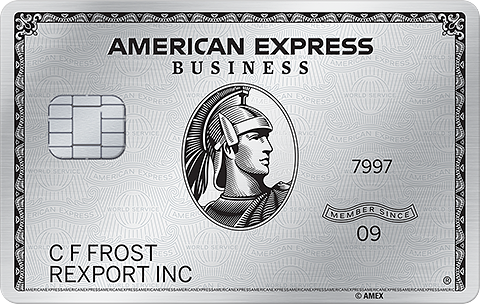
The Business Platinum Card® from American Express | Robust travel rewards and benefits | Earns Membership Rewards points that can be transferred to travel partners | $895 | Flexible | High annual fee | |
Ramp Credit Card | No personal credit check, strong expense tracking | Earns cash back | $0 | Flexible | Need cash in an account, not available to unincorporated businesses | |
Brex | Startup businesses | Earns rewards points | $0 | Flexible | Automatically debits your business bank account | |
Chase Ink Business Premier | High spending | Cash back | $195 | Flexible | Must have excellent personal credit | |
Capital One Venture X Business | Earning 2x miles on all purchases | Earns Miles that can be transferred to travel partners | $395 | Fixed | Must pay in full every month | |
The Blue Business® Plus Credit Card from American Express | No annual fee | Earns Membership Rewards points that can be transferred to travel parters | $0 | Fixed | May not offer a large credit limit |
*Rates and fees accurate as of Feb. 25, 2026 and may be subject to change
The Business Platinum Card® from American Express: For robust travel rewards and benefits
For frequent travelers who book airfare or can book hotels through Amex Travel, The Business Platinum Card® from American Express earns Membership Rewards points that can be transferred to airline and hotel partners. There’s no preset spending limit, but you must pay your balance in full every month. You need to have excellent personal credit to be approved for this card. Terms and offers subject to change. See issuer website for current details.
- Best if: You want impressive travel rewards, airport lounge access and a slew of credits you’re likely to maximize, and you have excellent personal credit.
- Avoid if: You don’t want to pay a high annual fee and the rewards rate doesn’t align with where you spend the most.
Ramp Credit Card: For no personal credit check, strong expense tracking
The Ramp card is designed for companies that need strong expense tracking, and for business owners who don’t want to rely on their personal credit. To open this card, you need to cash in an account, and it’s not available to unincorporated businesses. There’s no annual fee and it does earn cash back.
- Best if: You need expense tracking and you don’t want to rely on your personal credit
- Avoid if: You don’t have a lot of cash in the bank.
Brex: For startup businesses
Brex is a corporate card that offers flexible credit limits. It works by deducting charges from your bank account either daily or monthly. It has no annual fee and offers reward points, and it doesn’t require a personal credit check.
- Best if: You want flexible limits and no personal credit check
- Avoid if: You don’t want payments deducted automatically
Chase Ink Business Premier: For high spending
This card offers as much as 2.5% cash back on purchases, has flexible spending limits and must be paid in full each month. New applicants earn $1,000 cash back after spending $10,000 within three months of account opening. You must have excellent personal credit to qualify, and it has a $195 annual fee.
- Best if: You have high spending requirements and you want to earn cash back.
- Avoid if: If you need flexible payment options
Capital One Venture X Business: For earning 2x miles on all purchases
This card offers double miles on all purchases, and rewards can be transferred to airline and hotel partners. This card relies on your personal credit and must be paid in full each month. New applicants can earn 150,000 bonus miles when you spend $30,000 in the first three months. There’s a $395 annual fee for this card.
- Best if: You want to earn double miles on all purchases
- Avoid if: You need to carry a balance
The Blue Business® Plus Credit Card from American Express: For no annual fee rewards
Earn 2X points on everyday business purchases such as office supplies or client dinners. 2X applies to the first $50,000 in purchases per year, 1 point per dollar thereafter. Terms and limitations apply.There’s no annual fee for this card and it comes with a sweet welcome offer. Earn 15,000 Membership Rewards® points after you spend $3,000 in eligible purchases on the Card within your first 3 months of Card Membership.
- Best if: You want to earn rewards with no annual fee
- Avoid if: You need a very large line of credit
How to qualify for a high-limit business credit card
Although no credit card issuer will spell out exact requirements to qualify for a business credit card with a high limit, underwriting criteria looks more favorably to those with either a high credit score, a strong business credit history or both. You may also want to consider a fintech card that relies on an analysis of your cash and spending patterns via your bank account.
How to increase your business credit card limit
To maximize your chance of increasing your business line of credit, it helps to follow a few rules of thumb.
Use and pay strategically
The best way to show a card issuer that you’re responsible enough for a higher credit limit is to manage your card strategically. Keep your spending levels consistent, and don’t consistently max out your credit limit. If you do need to make large purchases, make your payment as early as possible to minimize your outstanding balances. And most importantly, avoid missing payments or making payments late.
Request a credit line increase
If you’re aiming for a credit line increase, ideally you’ll have your credit score in the best shape possible. Aim to pay off any outstanding balances to show a low debt-to-available credit ratio. Consider having a deposit account with the bank that issues your card, which can demonstrate your ability to repay your card balance.
When you contact your card issuer to request a larger credit line, be prepared to show updated revenue and expense information and explain why you’re seeking a larger line of credit.
What to do if you’re denied
If your request is denied, be sure to ask why, and if there’s anything else you can do to have them reconsider. If you have more than one card with the same bank, it may be possible to transfer a credit limit from one card to another in order to get a higher credit limit.
If you are unable to have your credit line increase approved, ask how long to wait before you can resubmit your request, which will vary by card issuer. Finally, you may wish to consider applying for a different type of product, such a fintech card.
When a high-limit card isn’t the best tool
While it’s great to have access to a high limit business credit card as a method of purchase, it’s not always the best tool for financing. When you need to make very large purchases, or if the vendor is imposing a fee for paying with a credit card, consider alternate means of financing. Credit cards can have very high interest rates compared to other types of financing.
One alternative is a business line of credit, which can offer you capital in the form of cash. You could also consider a term loan, which is less flexible, but may offer lower interest rates. Inventory financing is an option that uses your existing inventory as collateral. Purchase-specific financing can offer you loans to purchase supplies meant to fulfill existing orders.
Frequently asked questions
Rate this article
This article currently has 24 ratings with an average of 5 stars.
Jason Steele
Contributor
As a freelance writer and an expert in credit cards and travel rewards, Jason has contributed to over 100 outlets since 2008. As an industry leader, Jason has spoken at dozens of conferences and is the founder and producer of CardCon, an annual conference for credit card media, and the Canadian Financial Affiliate Marketing Forum (FAMF).
Jason is also the author of the book Travel for Free: How to Use Points and Miles to See the World. Jason also consults with individuals and small business owners to create customized plans to help them earn and spend travel rewards. He can be reached via his website: JasonSteele.com
Robin Saks Frankel
Managing Editor
Robin has worked as a personal finance writer, editor, and spokesperson for over a decade. Her work has appeared in national publications including Forbes Advisor, USA TODAY, NerdWallet, Bankrate, the Associated Press, and more. She has appeared on or contributed to The New York Times, Fox News, CBS Radio, ABC Radio, NPR, International Business Times and NBC, ABC, and CBS TV affiliates nationwide.
Robin holds an M.S. in Business and Economic Journalism from Boston University and dual B.A. degrees in Economics and International Relations from Boston University. In addition, she is an accredited CEPF® and holds an ACES certificate in Editing from the Poynter Institute.