
Compare EIN-only business credit cards

Lyle Daly
Financial Writer

Robin Saks Frankel
Senior Content Editor

Summary
- An EIN-only business credit card is tied to your business’s employer identification number and credit history instead of your own.
- Your personal credit takes a backseat during the application process and may not come into play at all.
- With many of these cards, you don’t need to go through a personal credit check or even provide your Social Security number when you apply.
Editorial note: Our top priority is to give you the best financial information for your business. Nav may receive compensation from our partners, but that doesn’t affect our editors’ opinions or recommendations. Our partners cannot pay for favorable reviews. All content is accurate to the best of our knowledge when posted.
Business owners often look for EIN-only business cards to avoid a credit check, especially if they don’t have great credit, or to get a card without agreeing to a personal guarantee. This type of card can also help keep business and personal finances completely separate.
EIN-only business credit cards aren’t the norm. Most major issuers require personal credit checks for their small business credit cards. However, viable options are available for many business types and stages.
Top EIN-only business credit cards with no credit check or soft pull requirement
Here are several top EIN-only business credit cards that you can get without a hard credit check:
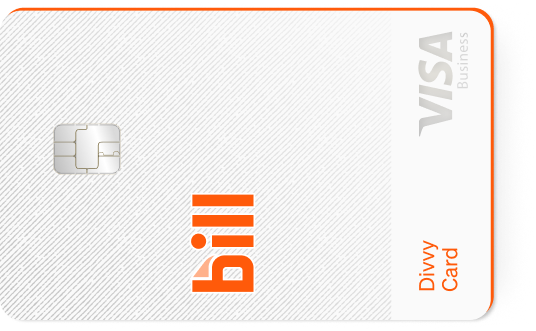
BILL Divvy Corporate Card
Eligibility based more on revenue, requires full repayments monthly.
Pros
- Free and flexible expense management platform
- No annual fee.
Cons
- No early spend bonus and lower rewards than other cards
- Must pay off all balances in full each month.
Intro APR
Purchase APR
Annual Fee
Welcome Offer
Card | Annual fee | APR | Qualification requirements | Ideal for |
Capital on Tap Business Credit Card | $0 | 16.74%-70.24% on purchases | Business revenue of at least $2,500 per month; business is active and running for at least six months; business makes money mostly from goods and services | Earning cash back |
BILL Divvy Corporate Card | $0 | All charges made on this charge card are due and payable when you receive your periodic statement | Varies, BILL typically requires cash balance greater than $20,000 in an active account and a good to very good credit score | Sole proprietors |
FairFigure Capital Card | $0 | N/A (technically a debit card with funding offers available from FairFigure) | At least three months in business and $2,500 in deposits | Building business credit |
Ramp Corporate Card | $0 | 0% (charge card that requires payment in full each billing cycle) | At least $25,000 in a U.S. business bank account linked to the application; have most operations and corporate spend in the U.S.; be registered in the U.S. | Applying without a Social Security number (passport required) |
*Rates, fees, and terms are current as of January 26, 2026 and subject to change by the issuer.
Capital on Tap Business Credit Card
The Capital on Tap Business Credit Card earns 1.5% cash back on purchases or 2% if you choose weekly AutoPay. Credit limits of up to $50,000 are available based on creditworthiness. This card doesn’t charge annual fees, foreign exchange fees, or account maintenance fees, and you can also get free employee cards with spending controls.
BILL Divvy Corporate Card
The BILL Divvy Corporate Card provides credit lines from $1,000 to $5 million, allowing you to scale up as your business’s spending needs increase. This is also one of few corporate cards available to sole proprietors, and it earns points on purchases. With this card you can earn: Up to 7x points, based on payment settings. (weekly, semi-monthly, or monthly).
FairFigure Capital Card
The FairFigure Capital Card reports as two monthly tradelines and includes business credit monitoring, both of which can help with building business credit. Unlike other options, this isn’t a charge card or a credit card. When you have the card, FairFigure provides you with funding offers based on your business data and future revenue expectations. You can choose the offers and payback terms (with four- or eight-week payback periods) that work for you.
Ramp Corporate Card
The Ramp Corporate Card is a charge card with a 30-day payback period. It simplifies expense management by allowing you to submit receipts via SMS, mobile app, or auto-routing through app integrations. If you don’t have a Social Security number, you can apply for this card by providing your passport and proof of address.
What is an EIN-only business credit card?
An EIN-only business credit card is a term used to describe a credit card that allows you to apply without providing your Social Security number (SSN), relying on your personal credit history, or agreeing to be personally liable for business debt. The idea is that you use your business’s EIN rather than your SSN when you apply for the card.
If you’re not familiar with an EIN, it’s short for Employer Identification Number (EIN), a nine-digit tax identification number issued by the IRS. EINs are mostly used by businesses to file taxes, and are available to most businesses, ranging from large companies to sole proprietorships.
Your business must obtain an EIN if it has employees, is a corporation or partnership, files certain types of tax returns, or if it has certain types of retirement plans. (Find out if your business needs an EIN here.) You may also request an EIN if you operate as a freelancer or independent contractor and want to use a tax ID number separate from your SSN.
Getting an EIN is simple and straightforward. You can request an EIN for free from the IRS. It’s easiest and fastest to use their online request form but you can also request it by mail. If you work with a business formation company, they may include or offer this service.
There are several reasons why you may want an EIN-only business credit card:
- To build business credit.
- Your personal credit isn’t great.
- To avoid personal liability for debt on your business card.
- To separate your business card activity from your personal credit.
Pros and cons of EIN-only business credit cards
EIN-only business credit cards have several advantages and disadvantages compared to other business cards. While exact features vary depending on the card, here’s what to consider.
Pros
- Build business credit
- Approval is based on business finances without a personal credit check
- No personal guarantee
- High spending limits that can scale up as your business grows
Cons
- Strict qualification requirements that often include high revenue and great business credit
- Most options are charge cards that require full repayment each billing cycle and don’t allow you to carry a balance
- Fewer rewards than other business credit cards
- May have more expensive fees
How to qualify for a business credit card with an EIN
For most small business owners, especially those with newer businesses or modest revenues, qualifying for an EIN-only business credit card presents challenges.
Major card issuers like American Express, Bank of America, Capital One, Chase, and Wells Fargo often require the following during the application process:
- Personal credit checks
- Good to excellent personal credit scores
- Personal guarantees
You may notice these requirements are similar to personal credit cards. That’s because a small business (and especially a new business) is considered a higher credit risk, and issuers want to be reasonably sure they’ll recoup their money if the business fails.
Most EIN-only business credit cards from major issuers are corporate cards, and for those cards, most providers want to see:
- Established business history (typically 2+ years in operation.)
- Substantial annual revenue (often at least $2 million or more.)
- Strong business credit profile.
- Positive cash flow demonstrated through business bank account statements.
Typical requirements of each traditional small business cards vs. EIN-only
Small business credit cards from major issuers | EIN-only business credit cards |
Good to excellent personal credit | Multiple years in business |
A personal guarantee from the business owner | High annual revenue (possibly $2 million or more) |
Business revenue isn’t required – can qualify based on personal income | Business bank account with at least $25,000 to $50,000 |
Business gas cards with EIN-only approval
For businesses where fuel is a major business expense, gas cards may be a good choice.
- Perks are often focused on fuel discounts within a specific network of gas stations.
- Cards often offer detailed reporting and spending controls for employee cards.
Many fleet fuel cards base eligibility on business revenue and data, and may use a business credit check rather than a personal credit check.
Options include:
- Shell Fleet cards: Shell offers two cards that feature fuel rebates. There may be a hard credit check and a personal guarantee required depending on the size of the business. Businesses with substantial revenue and good credit could qualify with no personal guarantee.
- WEX Fleet cards: WEX offers several fleet cards featuring fuel discounts. Like with Shell, there may be a hard credit check and personal guarantee depending on your business and its finances.
- Fuelman Fleet cards: Fuelman offers three business fleet cards featuring fuel discounts, including the Fuelman Mixed Fleet Card. If you operate as a business entity, there will be a credit check using our EIN first. If the business doesn’t qualify on its own, the issuer will run a hard credit check and may request a personal guarantee.
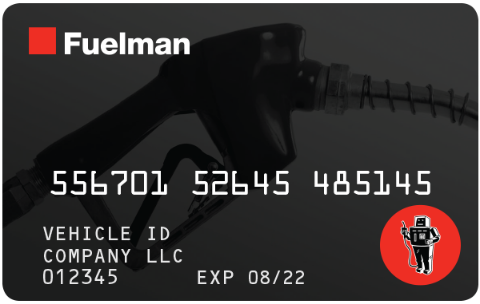
Fuelman Mixed Fleet Card
Business owners get $0.08 off every gallon at 40,000+ locations.
Pros
- gas card
Cons
- gas card
Intro APR
Purchase APR
Annual Fee
Welcome Offer
Here’s a breakdown of how these cards compare.
Card | Shell Fleet cards | WEX Fleet cards | Fuelman Fleet cards |
Fuel savings | Up to 6 cents per gallon (Shell Card Business); up to 5 cents per gallon (Shell Card Business FlexTM) | 3-15 cents per gallon with WEX Fleet Card | 3-12 cents per gallon |
Acceptance | 12,000+ Shell stations in the U.S. (Shell Card Business); 12,000+ Shell stations and 95% of U.S. gas stations (Shell Card Business FlexTM) | Accepted at 95% of U.S. gas stations | 40,000+ fueling locations (Fuelman Mastercard® can be used anywhere Mastercard is accepted in the U.S.) |
Monthly fee | Varies by card | Varies by card, Wex Fleet Business Account has a monthly card charge of up to $2 per card | $59 |
Business credit reporting | Dun & Bradstreet (D&B), Equifax Business, Experian Business | Dun & Bradstreet (D&B), Experian Business | Dun & Bradstreet (D&B), Equifax Business, Experian Business |
Secured business credit cards
Another popular option with business owners who have no credit history or bad credit, secured business cards allow you to place a security deposit with the credit card company to help ensure repayment. There may be a soft credit check, a hard credit check, or no personal credit check.
The deposit amount often determines the credit limit, but if you pay on time, the issuer may raise the spending limit.
Options include:
- Bank of America Business Advantage Unlimited Cash Rewards Mastercard secured credit card: Requires a $1,000 minimum security deposit and a personal guarantee. Earns 1.5% cash back on all purchases and doesn’t charge an annual fee.
- Business Edition® Secured Mastercard® Credit Card: Requires a security deposit between $2,000 and $10,000 and a personal guarantee. Charges a $39 annual fee.
Alternative business financing options without personal credit
If the reason you want a business credit card is to get financing for your business, there are a number of business financing options that either use a soft credit check or don’t check personal credit at all.
Merchant cash advances
For businesses with strong sales volume, a business cash advance or merchant cash advance can offer fast funding in the form of a lump sum advance against future sales:
- Rarely requires strong personal credit.
- Based on your business’s sales history, not personal credit.
- Daily or weekly repayment from sales.
If your business doesn’t meet the requirements for a business credit card, but it has consistent debit and credit card sales, merchant cash advances could be a convenient option.
Pros
- Fast funding, potentially within 48 to 72 hours
- Doesn’t require good personal or business credit
- No collateral or security deposit required
Cons
- High interest rates
- Doesn’t build business credit
- Requires frequent repayment
Invoice factoring and financing
For B2B businesses that invoice other companies, invoice factoring offers faster payments of outstanding invoices:
- Typically no personal guarantee required.
- Focus on invoice quality rather than business owner’s credit.
- Qualification based on customers’ creditworthiness.
You may want to consider invoice factoring over a business credit card if you don’t have good credit. Invoice factoring is a popular choice with growing businesses that need additional cash for expansion and seasonal businesses managing their slow periods.
Pros
- Fast funding as quickly as one business day
- May not require a credit check or personal guarantee
Cons
- Fees can be expensive
- Usually not available for B2C businesses
Supplier credit and vendor terms
Supplier or vendor accounts allow businesses to purchase goods and services and pay for them later, typically within 30 to 90 days:
Terms range from net-10 to net-180 (days to pay from the invoice date).
- Many net-30 accounts don’t involve personal credit checks.
- Some report payment history to business credit bureaus.
- Can help establish initial business credit history.
Qualifying for a vendor account is often easier than qualifying for a business credit card. You might prefer this option if you frequently order supplies or services from a specific vendor and need affordable, short-term financing.
Pros
- May build business credit
- Many vendors don’t require credit check or personal guarantee
- Affordable fees with some vendors offering zero interest
Cons
- Risk of excessive debt if overused
- Less flexible than credit cards and loans as you can only order through a specific vendor
- May have an annual fee
Crowdfunding
Raise money from supporters or investors interested in your business. Options may include rewards-based crowdfunding which offers tangible rewards or presells a product, investment crowdfunding which allows you to raise money from a pool of investors, and loan-based crowdfunding, which must be repaid.
- Successful campaigns can raise a lot of money.
- Funding is usually based on the business, rather than creditworthiness.
- Only loan-based crowdfunding typically checks credit while other types rarely do.
Consider crowdfunding instead of a business credit card if you only need a one-time influx of cash and you’re confident in your ability to market your campaign.
Pros
- Multiple types of crowdfunding available
- Available without a credit check (except with loan-based crowdfunding)
Cons
- Marketing is required for a successful campaign
How to build business credit with an EIN
Using your EIN to apply for credit is one way to separate your business and personal finances. If a lender requests an EIN on a credit application but doesn’t request a Social Security number, it’s possible the lender won’t check your personal credit. However, keep in mind that a lender may still require a personal guarantee. Read the application and cardholder agreement carefully to understand your responsibility.
One common misconception is that an EIN is used to match business credit report data to a business, similar to the way a Social Security number is used to help match consumer credit information in personal credit reports.
Commercial credit reporting agencies typically use their own proprietary identifiers to track business credit history; D&B uses the D-U-N-S® Number, Experian uses the Business Identification Number and Equifax uses an Equifax ID. While lenders may request an EIN on a credit application, it’s not required to report an account to business credit bureaus.
The credit accounts you open using an EIN can help you build business credit, though. Here are the steps you can take to establish credit for your business:
- Get a D-U-N-S® Number from D&B and an EIN from the IRS (both are free). A D-U-N-S® Number ensures D&B has a file on your business, and you can use the EIN for business credit applications.
- Open business tradelines, such as EIN-only business credit cards or vendor accounts, that report to business bureaus.
- Always pay your tradelines on time or early so your business has a spotless payment history.
- Consider opening new tradelines as needed for your business. Additional tradelines can help your business’s credit score by showing it can manage multiple credit accounts.
- Use a service, such as Nav Prime, to monitor your business’s credit with the major business bureaus.
It normally takes about one to three months for new tradelines to appear on business credit reports. Your business might have a credit score with one or more bureaus after about 90 to 120 days. From there, if you consistently make on-time payments, your business credit should improve.
The timeline varies, but if you follow those steps, you could have a solid business credit profile within about a year. As you build your business credit, you’ll have more and more financing options available.
Frequently asked questions
Rate this article
This article currently has 2 ratings with an average of 5 stars.
Lyle Daly
Financial Writer
Lyle Daly has been a financial writer for over a decade, covering credit, investing, banking, and more. His work has appeared in The Motley Fool, USA Today, MSN, and Yahoo Finance. As a self-employed writer, he has firsthand experience with managing personal and business finances.
Robin Saks Frankel
Senior Content Editor
Robin has worked as a personal finance writer, editor, and spokesperson for over a decade. Her work has appeared in national publications including Forbes Advisor, USA TODAY, NerdWallet, Bankrate, the Associated Press, and more. She has appeared on or contributed to The New York Times, Fox News, CBS Radio, ABC Radio, NPR, International Business Times and NBC, ABC, and CBS TV affiliates nationwide.
Robin holds an M.S. in Business and Economic Journalism from Boston University and dual B.A. degrees in Economics and International Relations from Boston University. In addition, she is an accredited CEPF® and holds an ACES certificate in Editing from the Poynter Institute.