
Compare business credit cards for startups with no credit history 2026

Summary
- Many startup founders search for business credit cards with no credit, but the phrase often causes confusion. In most cases, “no credit” means no business credit history, not a complete lack of personal credit.
- New companies need time to establish credit files with the business credit bureaus. So card issuers may review the owner’s personal credit when evaluating applications in the meantime.
- Your best card option depends on your credit profile, business finances, and how you plan to use it.
Editorial note: Our top priority is to give you the best financial information for your business. Nav may receive compensation from our partners, but that doesn’t affect our editors’ opinions or recommendations. Our partners cannot pay for favorable reviews. All content is accurate to the best of our knowledge when posted.
Startup founders generally have three main paths to qualify for a business credit card before they establish business credit. Traditional business credit cards typically rely on the owner’s personal credit profile during underwriting. With corporate cards, issuers evaluate factors like revenue or cash balances instead of credit scores. Secured business credit cards require a refundable security deposit that usually becomes the account’s credit limit.
Approval odds depend heavily on the card issuer’s underwriting model. Traditional cards usually require a personal guarantee and personal credit check. Corporate cards may focus on cash flow instead of credit history, but they often expect strong revenue or bank balances. Business credit cards with no personal guarantee and no credit check are less common, especially for brand-new businesses.
Compare business credit cards for startups with no credit history
Small business owners rely heavily on credit cards as a financing tool. Over 50% of employer firms use credit cards for funding, according to the Federal Reserve.
Startup founders have more business credit card options than many realize. Some issuers evaluate personal credit instead of business credit, while others focus on cash flow or deposits. All credit products are subject to credit approval. Rewards rates and terms vary by issuer. Terms and conditions apply.
Compare several options at a glance
Card | Best for | Underwriting type | Personal guarantee | Credit check | Rewards | Key limitation |
BILL Divvy Corporate Card | Cash-flow based approvals | Revenue and bank data | No | May vary | Points | Must pay balance in full each month |
Ramp Business Credit Card | High-spend startups | Cash flow underwriting | No | No personal credit check | Cash back | Must pay balance in full each month |
Brex Business Credit Card | Venture- | Company financial strength | No | No personal credit check | Points | Limited eligibility |
The Business Platinum Card® from American Express | Travel rewards enthusiasts with excellent credit | Personal credit review | Yes | Personal credit check | Points | High annual fee |
Chase Ink Business Premier® Credit Card | Large purchases | Personal credit review | Yes | Personal credit check | Cash back | Large spending requirement for welcome bonus |
Capital One Spark Classic | Fair personal credit | Personal credit review | Yes | Personal credit check | Cash back | Lower rewards rate |
Bank of America Business Advantage Unlimited Cash Rewards Secured | Secured business credit card | Security deposit | Yes | Personal credit check | Cash back | Requires security deposit |
Corporate cards and cash-flow based options
Corporate cards give startups another path when they lack established business credit. Instead of relying on credit scores, card issuers analyze business data such as revenue, business bank account activity, or payment processing history. Most corporate cards require strong business financials, such as consistent revenue or significant cash balances.
Many corporate cards operate as charge cards, which require full repayment each billing cycle. This structure lowers lender risk and can help some startups qualify without personal guarantees or personal credit checks.
No personal guarantee / EIN first
For cash-flow based approvals:BILL Divvy Corporate Card
The BILL Divvy Corporate Card may suit startups that want approvals based on businesses finances instead of personal credit. Divvy reviews factors like company revenue, business bank account activity, and overall financial health when evaluating applications.
The business charge card earns cash back on eligible purchases: Up to 7x points, based on payment settings.a nd includes expense management tools that let founders issue employee cards, set spending limits, and track team purchases. Startups with inconsistent revenue or limited cash flow, however, may struggle to qualify because the issuer usually expects strong business finances.
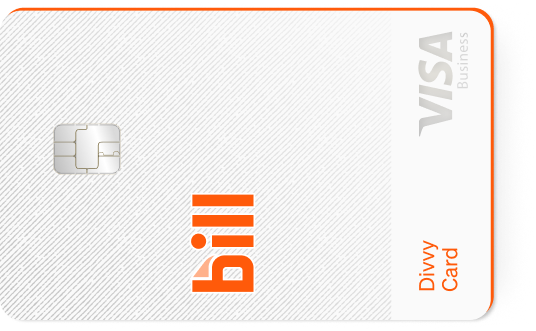
BILL Divvy Corporate Card
Eligibility based more on revenue, requires full repayments monthly.
Pros
- Free and flexible expense management platform
- No annual fee.
Cons
- No early spend bonus and lower rewards than other cards
- Must pay off all balances in full each month.
Intro APR
Purchase APR
Annual Fee
Welcome Offer
For high-spend startups: Ramp Business Credit Card
The Ramp Business Credit Card may appeal to startups with significant monthly expenses and strong business finances. Ramp evaluates factors like company revenue and bank balances rather than relying on the owner’s personal credit score.
Ramp offers a flexible 1.5% cash back on all purchases while also focusing on expense management and financial automation. The platform includes real-time spend tracking, automated expense categorization, and customizable employee spending controls. Businesses with limited revenue or early-stage finances may have difficulty qualifying because Ramp typically requires strong financials.
For venture-backed startups: Brex Business Credit Card
The Brex Business Credit Card targets venture-backed startups and high-growth companies. Brex evaluates factors like company funding, cash balances, and financial strength instead of the founder’s personal credit.
The card offers a modest welcome bonus and rewards in several startup spending categories including 7X points on rideshare, 4X points on travel, 3X points on restaurants, 2X points on software subscriptions, and 1X points on all other eligible purchases. Brex also provides built-in expense management tools that may suit growing teams. However, startups without venture funding or strong financial backing could struggle to qualify.
Traditional business credit cards for founders with strong personal credit
Traditional business credit cards remain the most common option for startups. Many founders qualify even without business credit because card issuers rely primarily on personal credit profile during underwriting. Most of these cards also require a personal guarantee.
No established business credit
For premium travel: The Business Platinum Card® from American Express
may appeal to founders who travel frequently and want premium travel benefits. Approval typically requires excellent personal credit and a personal guarantee from the business owner.
Cardholders can earn valuable Membership Rewards points at a rate of5X points on flights and prepaid hotels on AmexTravel.com. 2X points on purchases at U.S. construction material & hardware suppliers, electronic goods retailers and software & cloud system providers, and shipping providers, as well as on each eligible purchase of $5,000 or more, up to $2 million of these purchases per calendar year. 1X points on other eligible purchasesYou'll also earn 2X points on U.S. construction material and hardware supplies, electronic goods retailers and software & cloud system providers, shipping providers, and eligible purchases of $5,000 or more. Other benefits include a generous welcome offer, airport lounge access, numerous travel credits, and elite hotel perks. As a trade-off, the business charge card charges a high annual fee, which may not make sense for startups who travel infrequently.
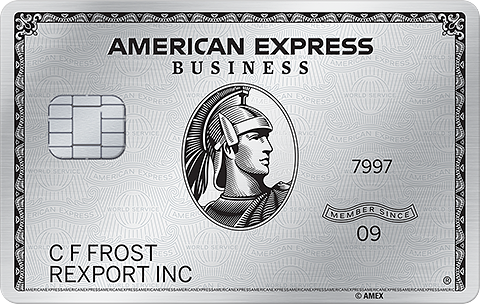
Earn elite status membership and premium perks for business travel.
Pros
- Access to multiple airport business lounges, $200 annual airline fee credits, elite status with hotel and rental car programs, and strong purchase protection policies
- This card also earns points in Amex’s excellent Membership Rewards program.
Cons
- This card has a steep annual fee.
Intro APR
Purchase APR
Annual Fee
Welcome Offer
For large purchases: Chase Ink Business Premier® Credit Card
The Chase Ink Business Premier® Credit Card may work well for startups that regularly make large purchases. Strong personal credit may improve approval odds since Chase evaluates the owner’s personal credit during underwriting.
The card offers solid cash back rewards (5% on travel booked through Chase Travel, 2.5% on purchases of $5,000 or more, and 2% on all other eligible purchases), and potentially higher credit limits to suit well-qualified businesses. However, the welcome bonus requires significant spending, and the annual fee may be too high to make sense for some small business startups.
Business credit cards for thin files or rebuilding credit
Some startups have limited credit history or founders who want to build stronger business credit. In these cases, secured business credit cards or credit-building cards may help establish payment history and business credit scores.
Secured business credit cards
For secured business credit card: Bank of America Business Advantage Unlimited Cash Rewards Secured Business Credit Card
The Bank of America Business Advantage Unlimited Cash Rewards Secured Business Credit Card is a secured card may work well for startups that need to build credit history from scratch. Applicants provide a refundable security deposit, which typically determines the credit limit.
The card earns unlimited 1.5% cash-back rewards and can help businesses establish credit history with responsible use. Startups should watch for deposit requirements and confirm how the issuer reports activity to the credit bureaus.
What “no credit” really means for startup business cards
For startups, “no credit” usually means no business credit history, not no personal credit. That distinction matters because many issuers will approve a new business credit card based on personal credit, business revenue, or banking activity. Lenders may also review time in business and industry risk.
How to choose the best startup business credit card
The best startup business credit card depends on more than rewards and is different for everyone’s needs. Approval requirements, repayment terms, and reporting policies can all affect a card’s long-term value.
1. Match the card to your spending and operations
Different startups spend money in different ways. Choose a card that aligns with your biggest expenses, such as software, advertising, travel, or inventory, to maximize your rewards-earning capabilities.
2. Compare fees and repayment terms
Corporate charge cards typically require full repayment each billing cycle. Traditional business credit cards, however, usually allow owners to carry balances with interest. Make sure the repayment structure fits your startup’s cash flow before you apply.
3. Confirm business credit bureau reporting
If your goal is to build business credit, verify that the issuer reports account activity to one or more of the business credit bureaus. Consistent reporting of on-time payments may help establish your company’s credit profile and improve access to financing in the future.
Business credit cards vs. corporate cards for startups
Startup founders often compare traditional business credit cards vs. business charge cards, but they serve different needs. Traditional credit cards rely on personal credit and usually require a personal guarantee. Corporate cards focus more on business finances, and a personal guarantee may not be necessary.
Feature | Traditional business credit card | Corporate charge card | Secured business credit card |
Personal guarantee | Usually required | Often avoidable | Usually required |
Credit check | Personal credit check common | Often none | Personal credit check or none |
Repayment | Revolving | Pay in full | Revolving |
Approval basis | Personal credit common | Revenue or cash flow common | Security deposit |
Best for | Strong personal credit | Strong business finances | No credit or bad credit |
Charge cards vs. revolving credit cards
Charge cards require full repayment each billing cycle, which makes cash flow management essential. Many offer short-term flexibility with 30- to 60-day payment windows, but balances don’t roll over.
Revolving credit cards, by comparison, let you carry balances and pay interest over time. They offer more flexibility but costs can add up quickly.
Personal guarantee and credit checks explained
Most startup business credit cards require a personal guarantee. This agreement makes the business owner personally responsible if the business fails to repay its debt. Issuers rely on personal credit checks because new businesses often lack financial history. Business credit cards with no personal guarantee exist, but they’re less common.
Startup business credit card requirements
Most business credit card applications require only basic information about you and your business. Many startups can apply online in minutes.
What you’ll typically need to apply
- Personal details: Legal name, contact information, and Social Security number
- Business information: Legal name, address, phone number, industry, structure (e.g., sole proprietor, corporation, LLC, etc.), and employer Identification Number (EIN)
- Additional business details: Time in business, number of employees, and estimated monthly spending
- Revenue estimates: Annual or projected business revenue
- Owner information: Details for any owners with significant ownership stakes
If you’re a sole proprietor or new LLC
Sole proprietors and new LLCs can often qualify for business credit cards using personal credit and estimated income. Getting an EIN and opening a business bank account can help separate your business identity and build business credit for the future.
Application readiness scorecard
Factor | What helps |
Time in business | 3-6+ months helpful, but not always required |
Monthly spend | Consistent business expenses |
Credit profile | Good personal credit may help improve approval odds |
Bank balance | Stable cash flow or deposits |
Documentation | EIN, D-U-N-S® number, business address, business bank statements, basic business details, etc. |
How to build business credit more efficiently with a business credit card
A well-managed business credit card can help you build credit if the issuer reports activity to the business credit bureaus. Here are some tips that may help.
1. Use the card strategically
Use your business credit card for small purchases and always pay on time. Next, keep your credit utilization ratio low and avoid carrying large balances. Consistent, on-time payments are key if you want to establish positive credit history.
2. Monitor and correct your business credit profiles
Review your business credit reports regularly to confirm your account information and other details remain accurate. Make sure your business name, address, and phone number stay consistent across all financial records to avoid credit reporting errors.
What to do if you get denied
A denial doesn’t mean you’ll never qualify for a business credit card. Instead, it often means you need to adjust your approach or strengthen your credit profile before applying for credit again.
Quick next steps after a denial
After a denial, it can be wise to:
- Review the denial reason
- Verify your application details
- Consider alternative card types (e.g., secured, corporate, or traditional)
- Improve credit before reapplying
Build a stronger approval profile
Every credit card company’s qualification criteria is different. However, you may be able to improve your qualification chances with a few smart steps (and a bit of patience). Reducing credit utilization, maintaining steady cash flow, and building on-time payment history could all be steps in the right direction.
How we chose the best startup business credit cards
Nav focuses on cards that startups can realistically qualify for, even without established business credit. That includes options based on personal credit, business cash flow, or security deposits.
Nav also considers real-world value. Business credit cards on our list must offer practical benefits like useful rewards, credit-building potential, expense-management capabilities, or other features that support growing businesses.
Bottom line
Startup founders can qualify for business credit cards without established business credit, but the right option depends on several factors. Your personal credit, business finances, rewards preferences, and goals all matter. Choosing the right business credit card and using it responsibly can help you build business credit and access better financing over time.
Frequently asked questions
Rate this article
This article has not yet been rated

Michelle Lambright Black
Contributor
Michelle Lambright Black is a credit expert and finance writer with more than 20 years of experience covering consumer credit, business credit, lending, small business financing, and money management. She specializes in translating complex credit reporting, credit scoring, and underwriting concepts into clear, practical guidance for business owners and consumers.
Michelle’s work has appeared in national publications including USA Today, Forbes Advisor, Fortune Recommends, Reader’s Digest, Experian, FICO, LendingTree, Bankrate, Yahoo Finance, Business Insider, and Buy Side from The Wall Street Journal. She is the founder of CreditWriter.com, an award-winning personal finance and credit education platform, and has served as an expert witness in credit-related legal matters. Michelle holds a B.A. in Spanish and French from Winthrop University, where she graduated summa cum laude.
Robin Saks Frankel
Senior Content Editor
Robin has worked as a personal finance writer, editor, and spokesperson for over a decade. Her work has appeared in national publications including Forbes Advisor, USA TODAY, NerdWallet, Bankrate, the Associated Press, and more. She has appeared on or contributed to The New York Times, Fox News, CBS Radio, ABC Radio, NPR, International Business Times and NBC, ABC, and CBS TV affiliates nationwide.
Robin holds an M.S. in Business and Economic Journalism from Boston University and dual B.A. degrees in Economics and International Relations from Boston University. In addition, she is an accredited CEPF® and holds an ACES certificate in Editing from the Poynter Institute.